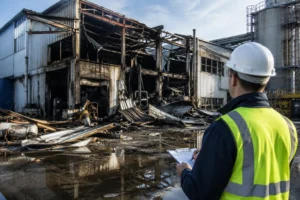

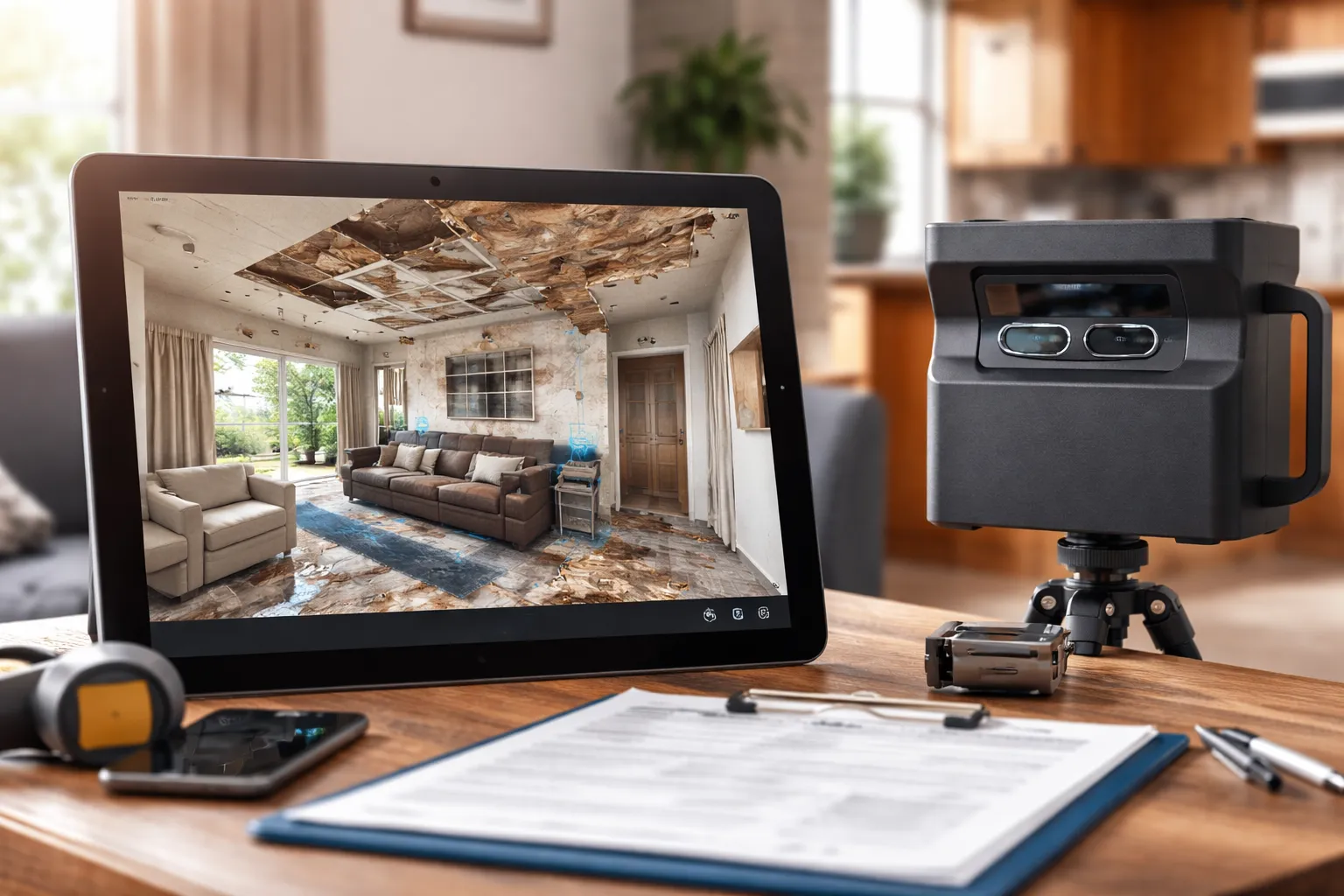
The first time I used Matterport on an insurance claim, I realized something important very quickly.
This wasn’t just another way to take pictures.
This was evidence.
If you’re asking what is Matterport, especially from an insurance appraisal perspective, the simple answer is this: Matterport creates a permanent, measurable, walk-through record of a property exactly as it existed at a specific moment in time. And in insurance claims, that changes everything.
Photos can miss context.
Videos can distort scale.
Written notes depend on interpretation.
Matterport doesn’t argue. It shows.
For insurance appraisers, desk adjusters, carriers, attorneys, and policyholders alike, Matterport has quietly become one of the most effective tools for documenting damage, validating scope, and accelerating fair claim resolution. Not because it’s flashy—but because it’s precise.
Let’s break it down.
What Is Matterport?
At its core, Matterport is a 3D spatial data platform. It captures real-world spaces and turns them into interactive digital models—often called digital twins—that anyone can explore remotely.
But that definition feels cold and technical.
In practice, Matterport allows someone who has never stepped inside a property to:
- Walk through rooms naturally
- See damage from multiple angles
- Measure walls, ceilings, and openings
- Understand layout, flow, and scale
- Review the condition exactly as it was on the day of capture
For insurance claims, this means no more guessing what a room looked like before repairs. No more relying on selective photos. No more debates about “where exactly the water stopped.”
The space speaks for itself.
How Matterport Actually Works (Without the Tech Headache)
Matterport doesn’t rely on a single photo or a stitched-together video. It captures spatial data.
Here’s what happens during a scan:
- A Matterport camera—or supported mobile device—is placed inside the property
- The device captures 360-degree imagery and depth data
- Each scan point is connected to the next
- The system builds a fully navigable 3D model in the cloud
The result is a virtual environment you can move through as if you were physically there.
You don’t just see damage.
You understand it.
And that difference matters when claims stall.
Capture Methods Used in Insurance Claims
Not all Matterport scans are created equal. For insurance documentation, capture method matters.
Common options include:
- Professional Matterport Pro cameras (highest accuracy)
- Mobile device capture using supported smartphones
- Tripod-based guided capture systems
For insurance appraisers, professional cameras are often preferred because:
- Measurements are more reliable
- Room geometry is cleaner
- Large losses are documented accurately
That doesn’t mean mobile capture has no value. It simply means the tool should match the complexity of the loss.
What a Matterport Model Actually Includes
When people hear “3D tour,” they often think it’s just something you click through for fun.
That’s not what matters here.
A Matterport model includes several critical views that are especially useful in insurance claims:
Walkthrough View
A natural, first-person navigation of the property. This is where damage patterns become obvious.
Dollhouse View
A full 3D cutaway of the entire structure. It shows how rooms connect and how damage travels.
Floor Plan View
A top-down perspective that helps reviewers understand layout and dimensions instantly.
Measurement Tools
You can measure walls, ceilings, openings, and distances directly inside the model.
Time-Stamped Condition Record
The scan locks the condition of the property at a specific moment. This is huge for disputes.
Together, these elements turn Matterport into a condition archive, not just a visual aid.
Why Insurance Appraisers Care About Matterport
Insurance appraisers live in the details.
Scope disagreements don’t happen because people don’t want to agree.
They happen because people see different things.
Matterport reduces that gap.
Key benefits for appraisers include:
- Objective documentation that doesn’t rely on opinion
- Fewer site revisits
- Stronger support for estimates
- Easier collaboration with carriers and umpires
- Clear evidence in appraisal and dispute settings
When everyone can walk the same space, discussions become faster—and calmer.
Matterport vs Traditional Claim Documentation
Let’s be honest. Traditional documentation still dominates most claims.
But it has limits.
| Method | Strength | Weakness |
| Photos | Easy to capture | Miss context and scale |
| Video | Shows movement | Hard to reference later |
| Written notes | Adds explanation | Subjective |
| Matterport | Shows everything | Requires proper capture |
Matterport doesn’t replace photos or notes.
It anchors them.
Instead of explaining where a photo was taken, you show it inside the model.
How Matterport Supports the Claims Process
Matterport fits into claims at multiple stages.
Pre-Loss Documentation
Some property owners now scan buildings before a loss ever occurs. This makes post-loss comparisons undeniable.
Post-Loss Capture
This is where Matterport shines. Damage is documented once, accurately, and permanently.
Desk Review
Adjusters and reviewers can examine the property remotely without delay.
Supplements and Reinspections
When scope questions arise, the original condition is still there—unchanged.
This continuity alone can shave weeks off a claim timeline.
Using Matterport for Different Types of Property Damage
Matterport is especially effective for complex losses.
Water Damage
Water spreads unpredictably. Matterport shows staining patterns, affected rooms, and vertical movement.
Fire and Smoke Loss
Smoke migration is easier to understand when you can see the entire structure at once.
Wind and Hail Claims
Interior damage tied to exterior openings becomes easier to visualize.
Structural Damage
Cracks, movement, and deformation make more sense when viewed spatially.
Residential or commercial—the value holds.
Matterport in Appraisals and Disputes
Appraisal clauses exist for a reason.
So do disagreements.
Matterport doesn’t take sides.
It documents reality.
In appraisal settings, Matterport allows:
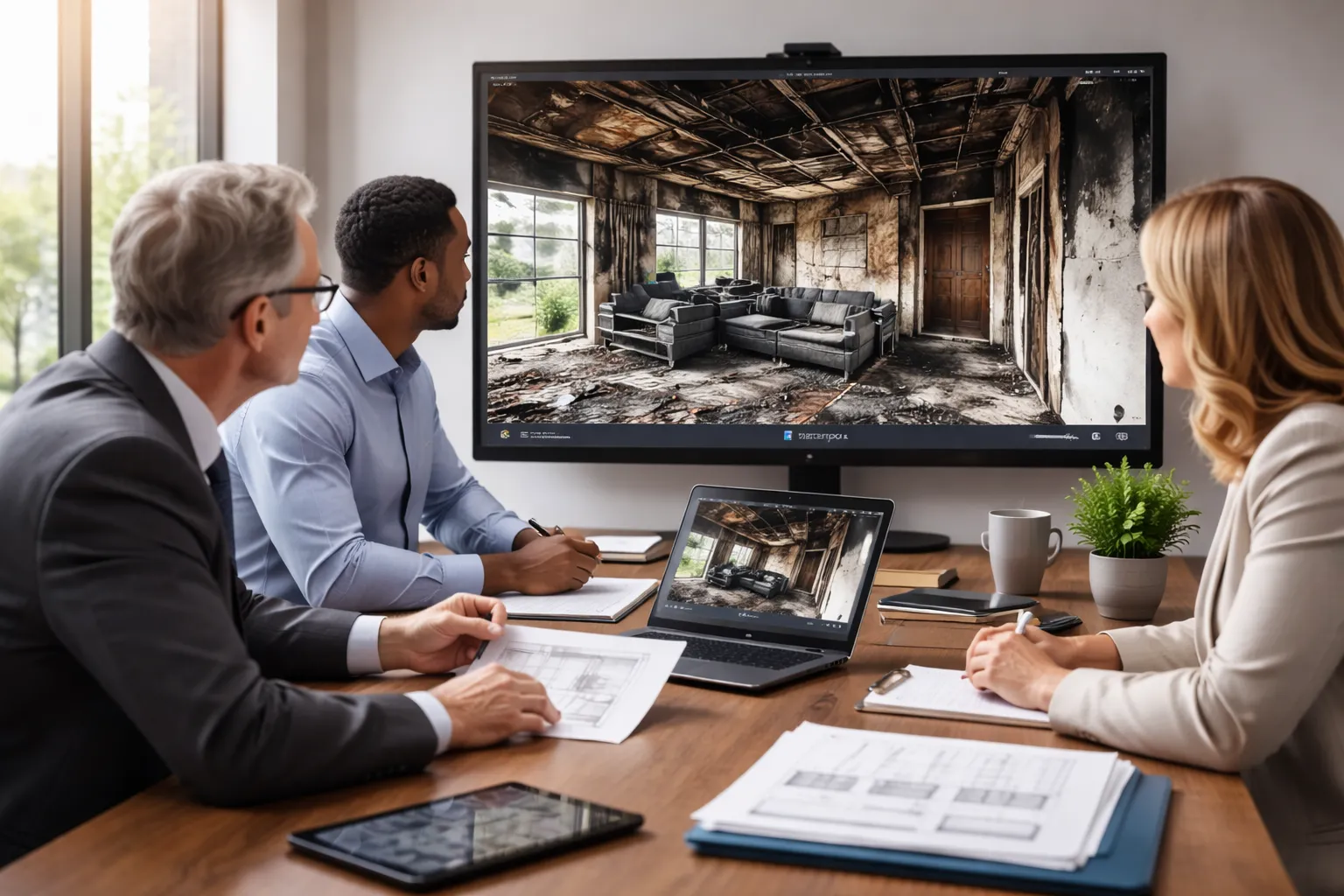
- Umpires to review conditions remotely
- Attorneys to understand scope without site visits
- Appraisers to support valuations visually
It removes emotion from the conversation and replaces it with clarity.
That alone can de-escalate tense claims.
Measurement Accuracy: What Matters and What Doesn’t
Matterport measurements are generally accurate enough for:
- Room dimensions
- Ceiling heights
- Opening sizes
They are not meant to replace:
- Engineering surveys
- Structural assessments
The key is knowing how to use the data responsibly.
For insurance appraisers, Matterport measurements support estimates—they don’t override professional judgment.
Data Security and Control
Insurance documentation carries responsibility.
Matterport models are stored securely in the cloud and shared by permission. Access can be limited to:
- Specific individuals
- Specific timeframes
- Read-only viewers
The data belongs to the party that commissioned the scan.
That matters.
Common Myths About Matterport
Let’s clear a few things up.
- “It’s only for real estate.”
Not anymore. - “Photos are enough.”
Until they’re not. - “It replaces adjusters.”
It supports them. - “It’s too expensive.”
Not compared to delayed claims.
Matterport is a tool. Like any tool, its value depends on how it’s used.
When Matterport Makes the Most Sense
Not every claim needs a 3D scan.
But Matterport is especially valuable when:
- The loss is high-value
- The scope is complex
- Disputes are likely
- Commercial properties are involved
- Appraisal or litigation is possible
In those situations, documentation quality matters more than speed alone.
Limitations You Should Know About
Matterport isn’t magic.
Exterior capture can be limited.
Lighting matters.
Timing matters—especially before demolition.
That’s why professional capture is important.
Used correctly, limitations are manageable. Used carelessly, they create gaps.
How Insurance Appraisers Use Matterport Strategically
Experienced appraisers don’t use Matterport to impress people.
They use it to reduce friction.
It helps align scope discussions.
It supports estimates.
And it improves credibility.
And perhaps most importantly, it builds trust—because everyone can see the same thing.
Faster, Fairer Claim Outcomes
Claims slow down when facts are unclear.
Matterport clarifies.
That doesn’t mean every claim gets approved instantly. It means fewer arguments revolve around “what was there.”
And that’s progress.
Real-World Claim Scenarios
I’ve seen Matterport resolve:
- Water loss disputes over affected rooms
- Fire claims where smoke spread was questioned
- Commercial claims where access was restricted
In each case, the scan became the reference point.
Not opinions.
Not memory.
Reality.
Is Matterport Worth It for Insurance Claims?
Short answer? Often, yes.
Long answer? It depends on the claim—but when accuracy, transparency, and efficiency matter, Matterport pays for itself quickly.
Final Thoughts: Why Matterport Is Becoming a Standard
So, what is Matterport in the insurance appraisal world?
It’s not a trend.
It’s not a gimmick.
And it’s not just a virtual tour.
Matterport is documentation that doesn’t fade, forget, or argue back.
As claims grow more complex and scrutiny increases, tools that create clarity will always win. Matterport does exactly that.
And that’s why more insurance professionals are adopting it—not to replace expertise, but to strengthen it.
Clear evidence leads to clearer outcomes.
And in insurance, clarity is everything.
Frequently Asked Questions (FAQs)
Matterport is used to create a detailed 3D record of a property that helps appraisers, adjusters, and carriers review damage accurately.
Matterport captures an entire space in 3D, allowing viewers to walk through, measure, and understand context that photos often miss.
Yes, Matterport is widely used by insurance appraisers as supporting documentation for scope, condition, and dispute resolution.
No, Matterport supports inspections by preserving conditions and reducing the need for repeat site visits.
Measurements are generally accurate for room dimensions and layout, making them useful for estimating and scope validation.
Yes, it allows desk reviewers and carriers to assess damage remotely, reducing delays and back-and-forth requests.
Absolutely. It provides objective, time-stamped evidence that helps clarify disagreements over damage extent.
Water, fire, smoke, and complex structural losses benefit most due to their spread across multiple areas.
The party who orders the scan typically controls ownership and sharing permissions.
For high-value or complex claims, Matterport often pays for itself by reducing disputes and speeding resolution.