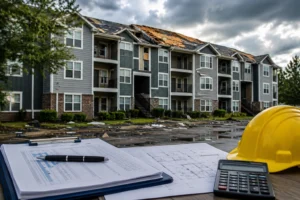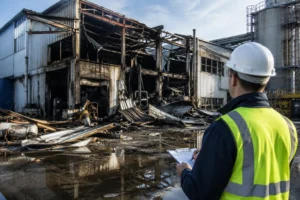

Roof inspections are evolving rapidly. Traditionally, inspectors relied on ladders, physical roof access, and manual documentation. However, drone technology is transforming the process. As a result, many property owners now ask: Can Drones Be Used for Insurance Roof Inspections? The answer is yes. Today, insurance carriers, roofing contractors, public adjusters, and insurance appraisers regularly use drones to document roof conditions and evaluate damage. Although drones have not completely replaced traditional inspections, they have become valuable tools for improving efficiency, safety, and documentation accuracy throughout the claims process.
What Is a Drone Roof Inspection?
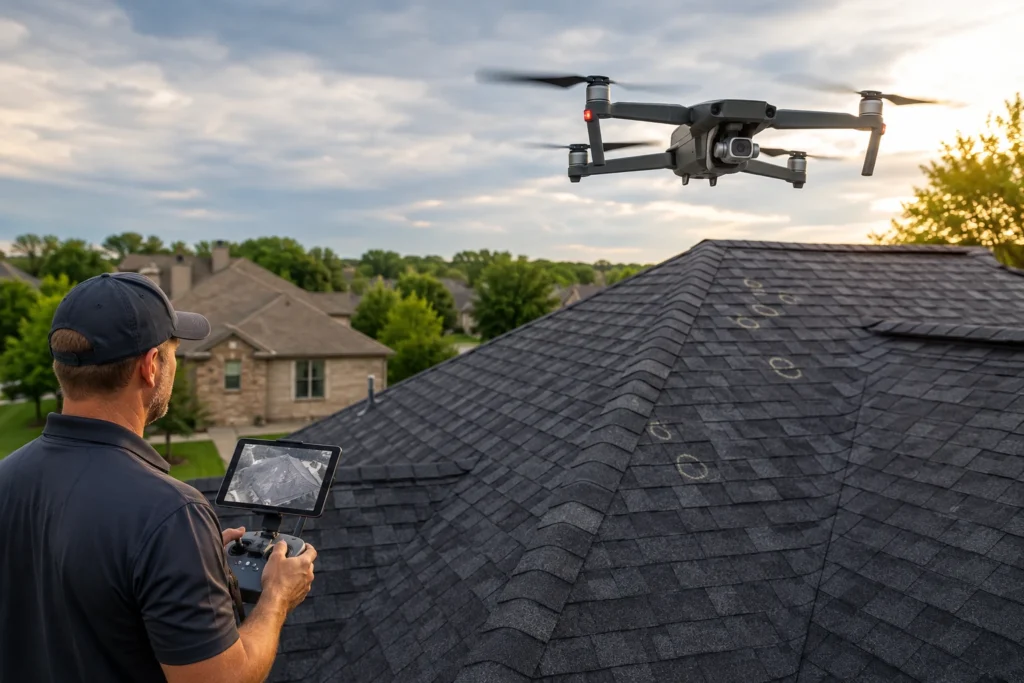
A drone roof inspection uses an unmanned aerial vehicle equipped with cameras and imaging technology to evaluate a roof from above. Rather than relying solely on a person physically walking the roof, the drone captures detailed images and videos from multiple angles. Modern inspection drones often include:
- High-resolution cameras
- Zoom capabilities
- GPS mapping systems
- Measurement software
- Thermal imaging equipment
- Three-dimensional modeling tools
The resulting data can provide an incredibly detailed view of roof conditions. For insurance purposes, these images often become part of the claim file and may later serve as evidence if disagreements arise regarding the extent of damage.
How the Process Works
A typical drone inspection follows several steps. First, the operator programs a flight path around the property. Next, the drone flies over the roof while capturing hundreds of images from different positions. The software then stitches these images together into a detailed visual map. Some of these mapping techniques rely on principles similar to photogrammetry, which uses photographs to create measurements and models. Finally, inspectors analyze the collected data and prepare a report. The process is often completed in less time than a traditional roof inspection. For larger commercial properties, the efficiency gains can be significant.
Why Insurance Companies Use Drones
The insurance industry constantly searches for ways to improve claim accuracy while reducing delays. Drone technology helps accomplish both goals.
Improved Efficiency
After major storms, insurance carriers may need to inspect thousands of damaged properties. Traditional inspections can create substantial backlogs. Drones allow adjusters to inspect more properties within a shorter period. This speed can help move claims through the process faster. For policyholders waiting on claim decisions, that matters.
Enhanced Safety
Roof inspections can be dangerous. Steep slopes, wet surfaces, loose shingles, and storm damage all increase the risk of falls. Drone inspections reduce the need for inspectors to physically access hazardous areas. This creates a safer working environment while still allowing detailed documentation.
Better Access
Not all roofs are easy to inspect. Some properties feature:
- Multi-story structures
- Steep roof pitches
- Delicate roofing materials
- Large commercial roof systems
- Restricted access areas
Drones can safely reach locations that would otherwise require specialized equipment. This accessibility often results in more comprehensive inspections.
Types of Roof Damage Drones Can Identify
One common misconception is that drones only capture general photographs. Modern systems are far more capable. When operated correctly, drones can identify many forms of roof damage commonly involved in insurance claims.
Hail Damage
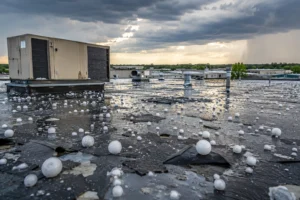
Texas property owners are no strangers to hail. Drone imagery can help identify:
- Impact marks
- Bruised shingles
- Granule displacement
- Metal dents
- Damaged roof accessories
High-resolution images often allow inspectors to zoom in on individual damage points without physically standing on the roof.
Wind Damage
Strong winds can create obvious damage. They can also create subtle damage that becomes worse over time. Drone inspections frequently reveal:
- Missing shingles
- Lifted shingles
- Creased shingles
- Detached flashing
- Damaged ridge caps
These conditions often play a significant role in insurance claim evaluations.
Water-Related Problems
Water damage can be difficult to diagnose. While drones cannot always see moisture beneath roofing materials, they can identify visible warning signs such as:
- Ponding water
- Drainage issues
- Damaged flashing
- Roof penetrations
- Debris accumulation
These indicators may warrant further investigation.
Fire and Storm Damage
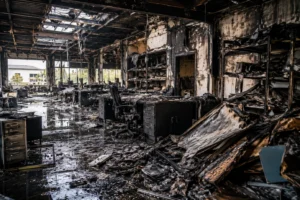
Following severe storms or fire events, drone inspections provide valuable documentation. The ability to quickly survey damaged structures without exposing inspectors to unsafe conditions makes drones particularly useful after catastrophic losses.
Advantages of Drone Roof Inspections for Insurance Claims
The growing popularity of drone inspections is driven by several practical benefits.
Better Documentation
Documentation drives insurance claims. The stronger the evidence, the easier it becomes to evaluate damage accurately. Drone inspections generate:
| Documentation Benefit | Why It Matters |
|---|---|
| High-resolution images | Clear damage visibility |
| Date-stamped records | Establishes inspection timeline |
| Multiple viewing angles | Reduces missed areas |
| Comprehensive coverage | Captures entire roof system |
When disputes arise, detailed documentation often becomes extremely valuable.
Faster Claims Processing
Time matters after a loss. Property owners want repairs completed as quickly as possible. Drone inspections can accelerate several stages of the process:
- Initial inspection
- Damage review
- Report preparation
- Estimate development
- Claim evaluation
The faster accurate information is gathered, the sooner claim decisions can occur.
More Accurate Measurements
Roof measurements directly affect claim values. Errors can lead to underpayments or disagreements. Drone software can generate highly accurate measurements for:
- Roof area
- Roof pitch
- Material quantities
- Waste calculations
- Perimeter dimensions
This information can help create more precise repair estimates.
Permanent Records
One major benefit often overlooked is record preservation. Drone images create a lasting visual record of roof conditions at a specific moment in time. Months or even years later, these images may still serve as valuable evidence. That can become particularly important if a claim enters the appraisal process.
Can Drone Inspections Replace Traditional Roof Inspections?
This is where things become more nuanced. Although drones are powerful tools, they are not perfect. The question is not whether drones are useful. The question is whether drones can completely replace hands-on inspections. In many situations, the answer is no.
When Drones Perform Extremely Well
Drone inspections excel in situations involving:
- Large commercial roofs
- Initial claim evaluations
- Catastrophe response
- High-risk roof access
- Preliminary damage documentation
They provide excellent visual data quickly and safely. For many claims, that alone delivers tremendous value.
Where Physical Inspections Still Matter
Some forms of damage require direct contact. Examples include:
- Soft roofing materials
- Underlying deck deterioration
- Moisture intrusion
- Structural movement
- Interior leak investigations
A photograph cannot always reveal what lies beneath the surface. Experienced inspectors often combine drone imagery with traditional inspection techniques to achieve the most accurate assessment. The best results usually come from using both methods together rather than relying exclusively on one approach. Additionally, some advanced drone platforms now incorporate technology related to computer vision, which can assist with identifying damage patterns and analyzing large amounts of visual data. However, professional judgment remains essential when evaluating insurance claims and roof conditions.
Drone Inspections and Insurance Appraisal Disputes
Insurance claims do not always proceed smoothly. Sometimes the insurance company and property owner agree on the scope of damage. Other times, significant disagreements arise regarding repair costs, replacement requirements, or even whether damage exists at all. In these situations, drone inspections can become valuable pieces of evidence.
When Roof Damage Becomes Disputed
Roof claims commonly involve disagreements concerning:
- Cause of loss
- Extent of damage
- Repair versus replacement
- Quantity of damaged materials
- Code upgrade requirements
- Estimated repair costs
Because roofs are elevated and often difficult to access, documentation becomes critical. The more objective evidence available, the easier it becomes to evaluate competing opinions.
How Drone Evidence Supports Appraisal
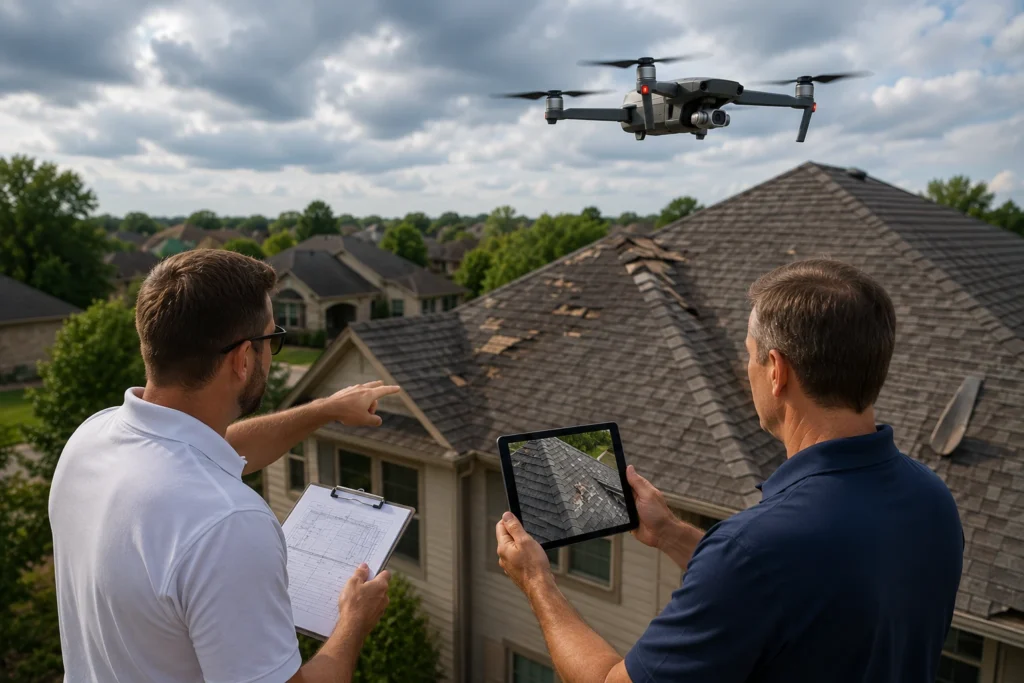
The insurance appraisal process focuses on determining the amount of loss. Drone imagery can help by providing:
- Detailed roof photographs
- Wide-angle property views
- Date-specific documentation
- Measurement data
- Historical condition records
Insurance Appraisal is a formal dispute-resolution process found inside many property insurance policies. It is designed to resolve disagreements over the value of a loss. Not coverage. When appraisers review claim files, high-quality drone images often provide valuable context that may not be available through written reports alone.
Objective Documentation Matters
Insurance disputes often involve differing interpretations. One inspector may believe damage is limited. Another may conclude full replacement is necessary. Drone imagery does not eliminate disagreement entirely, but it provides objective visual evidence that supports informed decision-making. The goal is not simply to collect photographs. The goal is to create documentation that helps establish an accurate scope of loss.
Common Limitations of Drone Roof Inspections
Drone technology is impressive. However, no inspection method is perfect. Property owners should understand the limitations before relying exclusively on drone-generated information.
Weather Restrictions
Drones perform best under favorable weather conditions. Inspection quality may be affected by:
- High winds
- Rain
- Fog
- Poor lighting
- Heavy cloud cover
In some situations, flights may need to be postponed until conditions improve.
Regulatory Requirements
Drone operations are regulated. Commercial operators generally must comply with applicable Federal Aviation Administration (FAA) requirements. Depending on the location, operators may encounter:
- Airspace restrictions
- Flight limitations
- Licensing requirements
- Safety regulations
Choosing a qualified drone operator helps ensure inspections are performed legally and safely.
Image Interpretation Challenges
Capturing images is only part of the process. Interpreting those images requires experience. A photograph may reveal discoloration, impact marks, or material irregularities, but determining the significance of those findings often requires professional expertise. This is why inspection reports should always be reviewed by qualified professionals.
Hidden Damage Concerns
Some roof problems simply cannot be photographed. Examples include:
- Wet insulation
- Decking deterioration
- Internal moisture intrusion
- Structural movement beneath roofing materials
These conditions may require physical inspections, moisture testing, or additional diagnostic procedures. As useful as drones are, they cannot see through roofing systems.
Drone Technology and the Future of Insurance Claims
The role of drones continues to expand. What began as a photography tool has evolved into a sophisticated inspection platform. The future promises even greater capabilities.
Artificial Intelligence and Damage Detection
Many drone systems now incorporate artificial intelligence. These programs can assist with:
- Damage identification
- Pattern recognition
- Measurement verification
- Automated reporting
Rather than replacing human inspectors, these tools help improve consistency and efficiency.
Improved Thermal Imaging
Thermal imaging technology continues to advance. Modern systems can help identify:
- Potential moisture intrusion
- Insulation deficiencies
- Temperature variations
- Areas requiring further investigation
While thermal images do not always confirm damage, they can identify locations that deserve closer inspection.
Increased Industry Adoption
Drone usage is becoming increasingly common among:
- Insurance carriers
- Roofing contractors
- Public adjusters
- Engineers
- Insurance appraisers
As technology improves and costs decrease, adoption will likely continue to grow. For property owners, this means more inspections may involve drones in the years ahead.
What Texas Property Owners Should Know Before a Drone Inspection
Not all drone inspections provide the same level of detail. Before scheduling an inspection, property owners should ask a few important questions.
Questions Worth Asking
Consider asking:
- Is the operator FAA-certified?
- What type of drone will be used?
- Will measurement reports be provided?
- Is thermal imaging included?
- How will the final report be delivered?
- Will high-resolution images be available?
The answers can help determine the quality and usefulness of the inspection.
Review the Final Report Carefully
Receiving a report is only the first step. Property owners should review:
- Damaged areas identified
- Roof measurements
- Missing components
- Photographic evidence
- Repair recommendations
If findings appear inconsistent with observed damage, additional clarification may be warranted.
When an Insurance Appraiser May Become Necessary
Despite advances in technology, claim disputes still occur. Drones can improve documentation, but they do not guarantee agreement. When disputes persist, the appraisal process may become an important option.
Signs a Roof Claim May Be Disputed
Property owners should pay attention to situations involving:
- Claim underpayments
- Partial denials
- Scope disagreements
- Replacement disputes
- Significant estimate differences
These issues frequently lead to further claim review.
The Role of an Insurance Appraiser
An insurance appraiser serves as an independent evaluator during the appraisal process. Their responsibilities may include:
- Reviewing documentation
- Evaluating damage
- Assessing repair scopes
- Analyzing estimates
- Determining the amount of loss
Drone imagery often becomes one component of the evidence reviewed during this process. The stronger the documentation, the easier it becomes to evaluate competing positions fairly.
Conclusion
Ultimately, the answer to Can Drones Be Used for Insurance Roof Inspections? is a clear yes. Drones provide safer access, faster documentation, and highly detailed imagery that can strengthen insurance claims and appraisal proceedings. However, they are most effective when combined with professional expertise and, when necessary, traditional inspection methods. Therefore, property owners should view drones as powerful tools rather than complete replacements for experienced inspectors. As technology continues to evolve, drone inspections will likely play an even larger role in roof claims. Nevertheless, accurate documentation, thorough evaluations, and informed decision-making will remain the keys to achieving fair claim outcomes.
FAQs
Yes. Many insurance carriers use drone technology during claim investigations because it provides detailed photographic documentation and accurate roof measurements.
Drones can often identify visible hail impacts, dents, granule loss, and damage to roofing components. However, some damage may still require a hands-on inspection for confirmation.
Drone inspections provide highly detailed imagery and measurements, but they are most effective when combined with professional analysis and, in some cases, physical inspections.
Yes. Drone images can provide objective visual evidence that may help support a property owner’s position during claim negotiations or appraisal proceedings.
Most residential drone inspections can be completed within an hour, although larger commercial properties may require additional time.
Yes. One of the biggest advantages of drone technology is its ability to safely inspect roofs that are steep, tall, or otherwise challenging to access.
Yes. Drones are commonly used after hailstorms, windstorms, hurricanes, and other catastrophic events because they can quickly document roof conditions.
Drones may identify visible signs associated with leaks, such as damaged flashing or ponding water. However, hidden moisture issues often require additional testing or inspection methods.
A drone inspection can provide valuable documentation and help establish the condition of the roof following a storm or other covered loss.
Yes. Drone photographs, measurements, and reports are often reviewed during the appraisal process when determining the amount of a disputed roof loss.