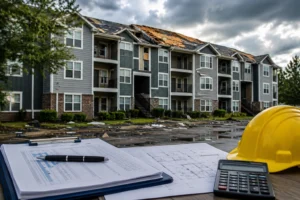

Industrial facilities face risks every day. A fire, severe storm, equipment failure, or water intrusion event can quickly disrupt operations and create significant financial losses. Consequently, understanding Industrial Property Insurance Claims is essential for facility owners, managers, and business operators. While insurance exists to help businesses recover, the claims process is often more complex than many people expect. Furthermore, industrial properties typically contain specialized equipment, valuable inventory, and critical infrastructure that require careful evaluation after a loss. Therefore, knowing how claims work before disaster strikes can help businesses recover faster and avoid costly mistakes. In this guide, we’ll explore common causes of industrial losses, insurance coverage considerations, claim challenges, and practical strategies for protecting your operation.
What Are Industrial Property Insurance Claims?
Industrial property insurance claims involve requests for compensation after covered damage occurs to an industrial facility or its assets. Unlike standard commercial buildings, industrial properties often contain specialized infrastructure, expensive machinery, extensive inventory, and critical production systems. Examples of industrial properties include:
- Manufacturing plants
- Warehouses
- Distribution centers
- Food processing facilities
- Fabrication shops
- Logistics hubs
- Storage terminals
- Industrial parks
When covered damage occurs, the property owner submits a claim seeking reimbursement under the terms of the insurance policy.
Common Types of Covered Losses
Industrial facilities face numerous risks every year. Some of the most common causes of Industrial Property Insurance Claims include:
| Cause of Loss | Potential Impact |
|---|---|
| Fire | Structural damage, equipment loss, inventory destruction |
| Windstorms | Roof damage, siding damage, water intrusion |
| Hail | Roofing impacts, HVAC damage, skylight damage |
| Water Damage | Equipment corrosion, inventory loss |
| Theft | Missing inventory, damaged security systems |
| Vandalism | Building repairs, operational interruptions |
| Explosion | Major structural and equipment losses |
The scale of these losses often makes industrial claims far more complex than claims involving smaller commercial properties.
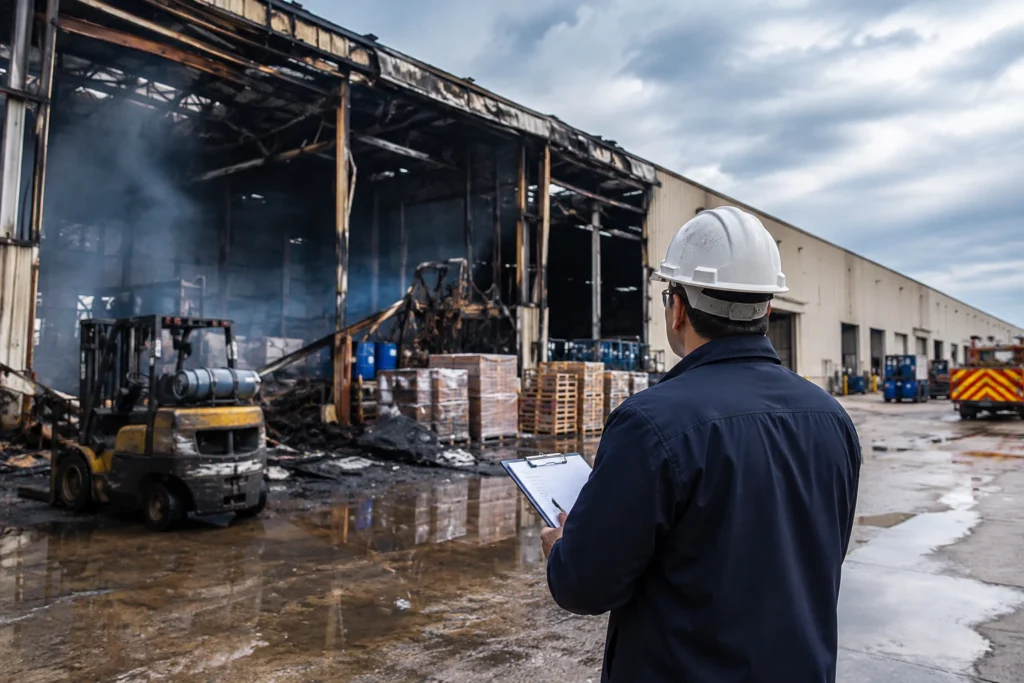
Why Industrial Claims Are Different
A damaged office building presents challenges. A damaged manufacturing plant presents entirely different challenges. Industrial claims frequently involve:
- High-value machinery
- Production equipment
- Automated systems
- Large inventories
- Specialized building components
- Regulatory compliance requirements
For example, replacing a damaged roof may be relatively straightforward. Replacing a production line worth several million dollars is not. The financial impact extends beyond physical repairs. Operational downtime can create substantial losses long before rebuilding is complete.
Common Causes of Industrial Property Damage
Understanding how losses occur helps facility owners identify vulnerabilities before problems arise.
Fire and Explosion Events
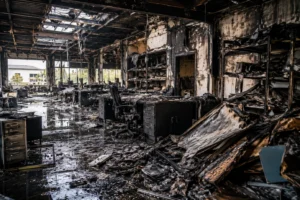
Fire remains one of the most devastating threats to industrial properties. Potential causes include:
- Electrical failures
- Overheated machinery
- Welding operations
- Combustible dust accumulation
- Chemical reactions
- Improper storage practices
Even a relatively small fire can halt operations if it damages critical equipment or infrastructure.
Severe Weather Events
Weather-related claims occur across virtually every region. Industrial facilities may experience:
- Wind damage
- Tornado damage
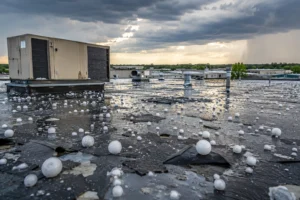
- Hail impacts
- Roof failures
- Flooding
- Lightning strikes
Roof systems are often among the most vulnerable components. Unfortunately, damage is not always immediately visible from ground level.
Water Damage Incidents
Water damage can quietly create substantial losses. Common sources include:
- Broken pipes
- Frozen plumbing
- Roof leaks
- Sprinkler malfunctions
- Drainage failures
Water can damage electrical systems, inventory, machinery, and structural materials simultaneously. The longer moisture remains present, the greater the resulting damage.
Equipment and Machinery Failures
Many industrial operations rely on specialized machinery. When critical systems fail, losses can include both physical damage and production interruptions. Examples include:
- Mechanical breakdowns
- Power surges
- Motor failures
- Conveyor system damage
- Hydraulic failures
- HVAC system malfunctions
Equipment-related losses frequently become major Industrial Property Insurance Claims due to repair complexity and replacement costs.
Understanding Industrial Property Insurance Coverage
Coverage varies significantly from one policy to another. Facility owners should thoroughly review policy language before a loss occurs. Modern industrial facilities often contain interconnected systems where damage to one component can trigger unexpected consequences elsewhere, a phenomenon similar to emergence in complex systems.
Building Coverage
Building coverage generally applies to structural components such as:
- Walls
- Roofing systems
- Foundations
- Loading docks
- Electrical systems
- Plumbing systems
Repairs involving industrial buildings often require specialized contractors and materials.
Equipment and Machinery Coverage
Many industrial facilities contain equipment that represents a substantial portion of total property value. Examples include:
- Manufacturing equipment
- Production machinery
- Robotics
- Processing systems
- Packaging lines
Accurate valuation becomes extremely important when filing a claim.
Inventory and Raw Materials Coverage
Industrial operations frequently store:
- Raw materials
- Finished products
- Packaging materials
- Components
- Work-in-progress inventory
Proper inventory documentation can significantly influence claim outcomes.
Business Personal Property Coverage
This category may include:
- Computers
- Office furniture
- Technology infrastructure
- Communication equipment
- Security systems
While smaller than machinery losses, these damages can still be significant.
Business Interruption Coverage
This is often one of the most valuable portions of an industrial insurance policy. Business interruption coverage may help compensate for:
- Lost revenue
- Continuing expenses
- Payroll obligations
- Temporary operating costs
Many facility owners focus primarily on physical damage and overlook these potentially substantial losses.
The Industrial Property Insurance Claims Process
Knowing what to expect can reduce confusion during a stressful situation.
Step One: Document the Damage
Documentation begins immediately. Photograph:
- Exterior damage
- Interior damage
- Equipment damage
- Inventory damage
- Safety hazards
Video footage can provide additional context. The goal is preserving evidence before conditions change.
Step Two: Protect the Property
Most insurance policies require reasonable efforts to prevent additional damage. Examples include:
- Temporary roof coverings
- Water extraction
- Emergency board-up services
- Equipment protection measures
Keep records of all emergency expenses. These costs may become part of the claim.
Step Three: Notify the Insurance Carrier
Claims should generally be reported promptly. Delays can complicate investigations and create unnecessary disputes. When reporting a loss, prepare to provide:
- Date of loss
- Description of damage
- Contact information
- Initial photographs
- Emergency mitigation details
Step Four: Insurance Inspection
The insurer typically assigns an adjuster to investigate. The inspection may involve:
- Site visits
- Photographs
- Measurements
- Interviews
- Equipment evaluations
Large losses often involve multiple specialists, engineers, or consultants.
Step Five: Claim Evaluation
After the investigation, the insurer evaluates:
- Cause of loss
- Coverage applicability
- Repair costs
- Replacement costs
- Business interruption damages
This process may take time, particularly when significant losses are involved.
Challenges Frequently Encountered in Industrial Property Insurance Claims
Not every claim proceeds smoothly. Several recurring issues often complicate industrial losses.
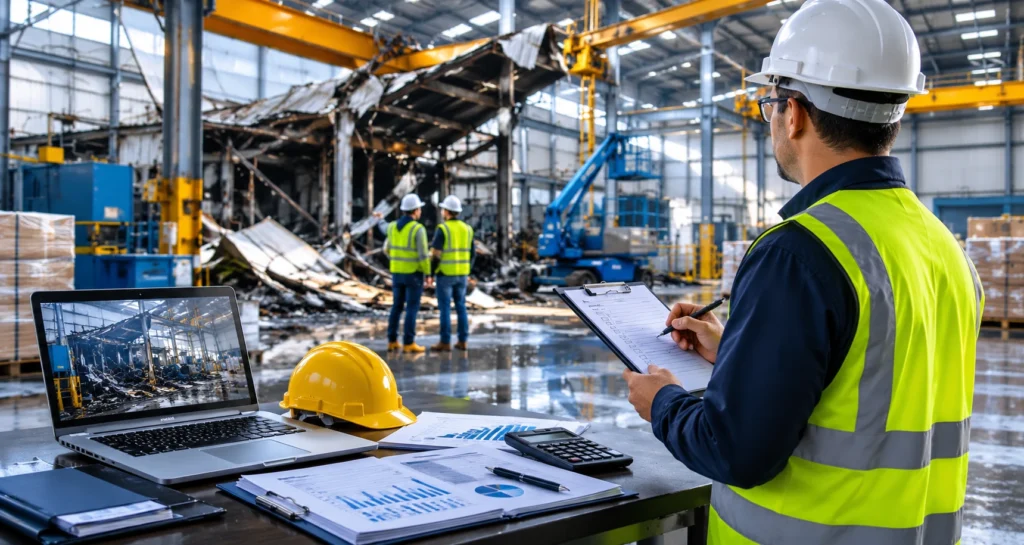
Complex Equipment Valuation
Determining the value of industrial machinery can be difficult. Factors influencing valuation include:
- Age
- Condition
- Availability
- Customization
- Replacement costs
A custom-built production machine may have no direct market equivalent. That makes valuation disputes more likely.
Hidden Structural Damage
Industrial facilities often contain concealed systems that are difficult to inspect. Examples include:
- Structural supports
- Utility lines
- Mechanical systems
- Roofing assemblies
Damage may not become apparent until repairs begin.
Production Downtime Losses
A facility may remain standing while operations remain halted. Lost production can create losses that exceed the cost of physical repairs. Calculating those losses accurately requires detailed financial documentation. Large industrial losses often create an environment of operational uncertainty that can resemble the concept of entropy, where systems become increasingly difficult to organize without a structured recovery plan.
Business Interruption: The Most Overlooked Portion of Industrial Claims
Physical damage often receives the most attention after a loss. However, business interruption losses can sometimes exceed repair costs. Consequently, facility owners should understand this coverage before disaster strikes.
What Business Interruption Coverage May Include
Depending on the policy, coverage may help with:
- Lost revenue
- Continuing payroll expenses
- Lease obligations
- Loan payments
- Temporary operating costs
- Relocation expenses
Even when equipment remains repairable, production delays can significantly affect profitability.
Calculating Lost Income
Business interruption claims rely heavily on documentation. Common records include:
- Financial statements
- Tax returns
- Sales reports
- Production records
- Purchase orders
- Customer contracts
Therefore, maintaining organized records before a loss occurs can simplify the claims process considerably.
Extra Expense Claims
Businesses often incur unexpected costs while attempting to continue operations. Examples include:
- Temporary facilities
- Equipment rentals
- Overtime labor
- Expedited shipping
- Emergency contractors
These expenses may qualify for reimbursement depending on policy language.
Common Business Interruption Mistakes
Unfortunately, many facility owners make avoidable mistakes. Examples include:
- Failing to track lost production
- Underestimating downtime impacts
- Missing expense documentation
- Delaying claim reporting
As a result, recoverable losses may go uncompensated.
How to Strengthen an Industrial Property Insurance Claim
Strong claims rarely happen by accident. Instead, they result from preparation, documentation, and organization.
Maintain Detailed Asset Records
Asset documentation should include:
- Equipment inventories
- Serial numbers
- Purchase dates
- Replacement costs
- Maintenance records
The more detailed the records, the easier valuation becomes.
Conduct Routine Inspections
Preventive inspections provide valuable documentation. Recommended inspections include:
- Roofing systems
- Electrical systems
- Mechanical equipment
- Fire suppression systems
- HVAC equipment
Furthermore, inspection reports can help establish pre-loss conditions.
Create a Documentation Plan
A disaster documentation plan should identify:
- Who takes photographs
- Where records are stored
- Who contacts the insurer
- Emergency response procedures
Preparation often reduces confusion during stressful situations.
Preserve Damaged Property
One common mistake is disposing of damaged materials too quickly. Whenever possible, preserve:
- Damaged equipment
- Roofing materials
- Structural components
- Inventory samples
These items may become valuable evidence later.
Obtain Independent Assessments
In large Industrial Property Insurance Claims, independent evaluations may provide additional insight. Examples include:
- Engineers
- Contractors
- Equipment specialists
- Financial consultants
Independent assessments can help identify damage that may otherwise be overlooked.
Industrial Property Insurance Claim Mistakes to Avoid
Even strong claims can encounter problems when avoidable mistakes occur.
Delaying Claim Reporting
Prompt reporting allows insurers to begin investigations quickly. Delays can create unnecessary complications.
Making Permanent Repairs Too Soon
Emergency mitigation is important. However, permanent repairs completed before proper documentation may eliminate valuable evidence.
Disposing of Damaged Equipment
Damaged machinery often becomes a critical component of claim investigations. Therefore, retain equipment whenever practical.
Accepting the First Settlement Without Review
Initial estimates may not always capture the full scope of damage. Reviewing repair requirements carefully can help identify omissions.
Failing to Track Business Interruption Losses
Many businesses focus entirely on physical damage. Meanwhile, lost production and operating disruptions continue accumulating.
Ignoring Policy Deadlines
Policies often contain reporting and documentation requirements. Missing deadlines can jeopardize portions of a claim.
When Professional Assistance May Be Beneficial
Many claims proceed without significant disputes. However, some losses become far more complicated.
Large-Loss Claims
Substantial property damage often involves:
- Multiple inspections
- Engineering evaluations
- Equipment specialists
- Extensive documentation
As claim complexity increases, additional expertise may become beneficial.
Machinery Damage Disputes
Industrial equipment valuation can become highly technical. Disagreements may involve:
- Repairability
- Replacement costs
- Depreciation
- Useful life calculations
Business Interruption Disputes
Lost income calculations often generate differing opinions. Accurate financial analysis becomes particularly important in these situations.
Coverage Disagreements
Policy interpretation occasionally becomes a point of contention. Consequently, facility owners may need additional guidance when coverage questions arise.
Appraisal-Related Disputes
In some large Industrial Property Insurance Claims, disagreements may arise regarding the extent of damage, repair costs, or replacement requirements. When disputes cannot be resolved through normal negotiations, policyholders may encounter the appraisal process. At this stage, many facility owners begin asking, “What Does an Insurance Umpire Do?” An insurance umpire serves as a neutral third party who helps resolve differences between appraisers and assists in reaching a final decision regarding the value of a covered loss.
Preparing Your Facility Before a Loss Occurs
The best time to prepare for a claim is before one happens.
Review Insurance Policies Annually
Coverage needs evolve over time. Regular reviews help ensure policies remain aligned with current operations.
Update Asset Valuations
Equipment values change. Inventory levels fluctuate. Consequently, periodic valuation updates can help avoid coverage gaps.
Improve Record-Keeping Systems
Digital record storage can improve accessibility after a disaster. Important records may include:
- Insurance policies
- Equipment inventories
- Maintenance logs
- Financial statements
- Emergency contacts
Train Employees
Employees often become the first responders after an incident. Training should cover:
- Safety procedures
- Damage documentation
- Emergency communication
- Loss reporting protocols
Develop a Recovery Plan
Every industrial facility should maintain a recovery strategy. The plan should address:
- Emergency response
- Temporary operations
- Vendor relationships
- Equipment replacement procedures
- Communication protocols
Preparation today can significantly improve recovery tomorrow.
Conclusion
Ultimately, Industrial Property Insurance Claims involve far more than repairing damaged buildings. Equipment losses, business interruption, inventory damage, and operational disruptions can all influence recovery. Therefore, facility owners who maintain strong documentation, understand their coverage, and prepare before a loss occurs often place themselves in a stronger position during the claims process. Most importantly, a proactive approach can help businesses recover faster and return to normal operations with fewer surprises along the way.
FAQs
An industrial property insurance claim is a request for compensation after covered damage affects an industrial facility, equipment, inventory, or operations.
Coverage often includes losses from fire, wind, hail, water damage, theft, vandalism, and certain equipment-related incidents, depending on the policy.
Claims should generally be reported as soon as possible to avoid delays and preserve important evidence needed during the investigation.
Many policies provide coverage for machinery and equipment, although coverage limits and exclusions vary by policy.
Photographs, maintenance records, equipment inventories, invoices, financial statements, and repair estimates can all strengthen a claim.
Business interruption coverage may help reimburse lost income and certain operating expenses when a covered loss disrupts normal operations.
Industrial facilities typically contain specialized equipment, large inventories, and interconnected systems that can make damage evaluation more challenging.
Yes, many industrial policies provide coverage for damaged inventory, raw materials, and finished goods if the loss is covered.
Depending on the policy, disputes may be resolved through negotiation, appraisal, or other claim-resolution processes.
Regular policy reviews, detailed asset records, routine inspections, and a documented recovery plan can help improve claim outcomes and speed recovery.