
Commercial Roof Hail Damage Claims can become expensive very quickly. A single hailstorm may damage roofing systems, rooftop equipment, insulation, and building interiors. Consequently, property owners often face both repair challenges and insurance disputes. Therefore, understanding how commercial hail claims work can help protect your property, reduce delays, and improve claim outcomes.
Understanding Commercial Roof Hail Damage
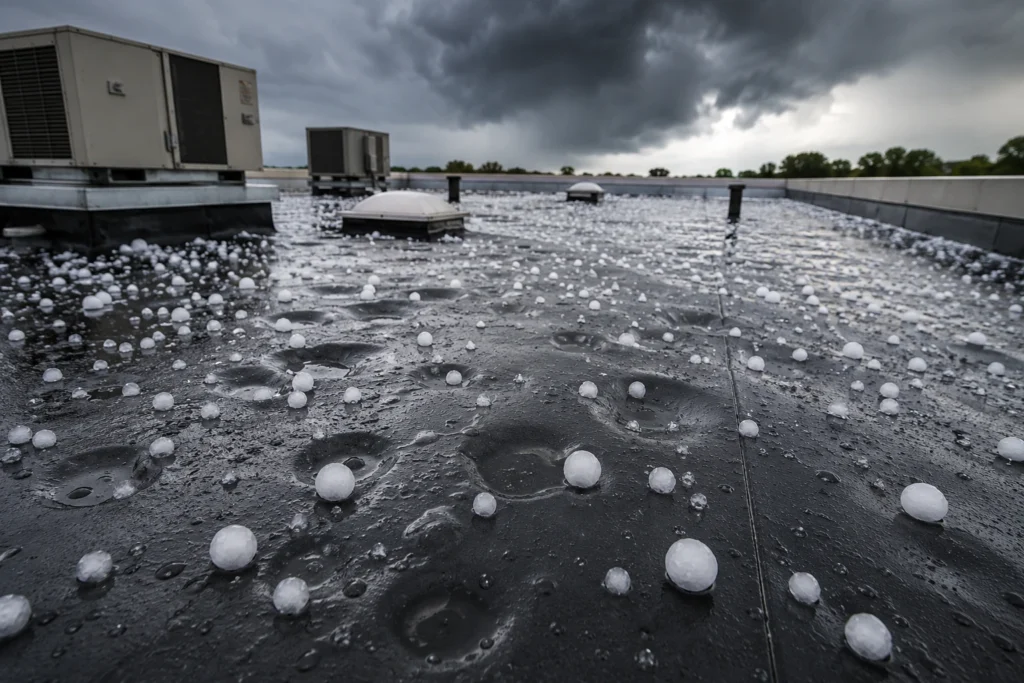
Not all hailstorms produce the same level of destruction. The size of the hail matters. The wind matters. The age of the roof matters. Even the angle at which hail impacts a building can influence damage patterns. Commercial roofing systems are designed to withstand harsh weather, but repeated impacts from hail can compromise their integrity. Sometimes the damage is obvious. Other times, it remains hidden beneath the surface. A single storm may create:
- Punctures in roofing membranes
- Cracked flashing components
- Damaged skylights
- Dented metal panels
- Compromised seams
- Water infiltration pathways
- Insulation damage
What makes Commercial Roof Hail Damage Claims particularly challenging is that many forms of damage are not immediately visible from ground level.
How Hail Affects Different Commercial Roofing Systems
Commercial properties use a variety of roofing materials. Each reacts differently when impacted by hail.
| Roofing System | Common Hail Damage |
|---|---|
| TPO Roofing | Membrane punctures, seam damage |
| EPDM Roofing | Tears, stretching, impact marks |
| PVC Roofing | Surface fractures, membrane weakening |
| Modified Bitumen | Granule loss, cracking |
| Built-Up Roofing | Surface displacement, cracking |
| Metal Roofing | Dents, coating damage, seam separation |
A dent in a metal roof may appear cosmetic initially. However, protective coatings can become compromised, creating future corrosion issues. Similarly, membrane roofs may show only small impact marks while suffering significant underlying damage. Therefore, professional inspections are often critical after severe hail events.
Factors That Influence Damage Severity
Two buildings located side by side may experience completely different outcomes from the same storm. Several factors affect the extent of hail damage:
Hail Size
Larger hailstones generally create more severe impacts. Even hail measuring one inch in diameter can damage many commercial roofing systems.
Wind Speed
Wind increases impact force. As a result, fast-moving hail can cause damage similar to much larger hailstones.
Roof Age
Older roofing systems are often more vulnerable. Materials naturally weaken over time.
Roof Condition Before the Storm
Existing maintenance issues can worsen storm-related damage. Pre-existing cracks or deteriorated seams may fail under hail impacts.
Roof Design
Flat roofs, low-slope roofs, and roofs with extensive mechanical equipment may experience unique damage patterns. Consequently, understanding these factors becomes important when evaluating Commercial Roof Hail Damage Claims because insurers frequently review them during investigations.
Common Signs of Commercial Roof Hail Damage
Some forms of hail damage are easy to identify.Others require trained eyes. Property owners should look for warning signs immediately after a storm.
Visible Surface Damage
The most obvious indicators include:
- Dents in metal components
- Cracks in skylights
- Membrane punctures
- Torn roofing materials
- Granule displacement
- Damaged roof coatings
These signs often provide the first indication that further investigation is necessary.
Damage to Roof Accessories
Many claim investigations focus primarily on the roof surface. However, that can be a mistake. Commercial properties contain numerous rooftop components that may sustain damage. These include:
- HVAC systems
- Exhaust fans
- Flashings
- Vents
- Satellite equipment
- Solar panels
- Gutters
- Downspouts
Damage to these components may significantly increase overall repair costs.
Hidden Damage
The most expensive damage is often the hardest to see. Hidden issues may include:
- Moisture infiltration
- Saturated insulation
- Damaged waterproofing layers
- Compromised roof seams
- Structural deterioration
These conditions may not become apparent until months after the storm. Consequently, repair costs may increase dramatically. Hidden roof damage often develops gradually as multiple building systems interact over time. This phenomenon can resemble emergence, where small changes within a complex system eventually produce larger and more noticeable outcomes. What appears to be minor hail damage today may contribute to significant moisture-related problems months later.
Immediate Steps After a Hailstorm
The hours following a storm are important. Actions taken during this period can influence both repair outcomes and Commercial Roof Hail Damage Claims.
Prioritize Safety
Safety comes first. Before accessing any roof:
- Evaluate structural conditions
- Check for electrical hazards
- Restrict access if damage appears severe
- Follow all workplace safety requirements
Never place personnel on a roof that may be unsafe.
Document Everything
Documentation is one of the most valuable tools available during an insurance claim. Capture:
- Roof photographs
- Rooftop equipment damage
- Building exterior damage
- Interior leaks
- Water stains
- Broken skylights
- Damaged vehicles on-site
Take wide-angle and close-up images. Video documentation can also be valuable. The goal is to create a clear visual record before repairs begin. Effective claim documentation is ultimately about establishing reliable evidence. In many ways, the process mirrors principles found in epistemology the study of how knowledge is verified and supported through evidence. The stronger the documentation, the stronger the claim file becomes.
Preserve Storm Evidence
Many property owners focus solely on photographs. However, additional evidence can strengthen a claim. Helpful records include:
- Weather reports
- Storm tracking data
- Maintenance logs
- Prior inspection reports
- Roofing warranties
These documents help establish the roof’s condition before the storm occurred.
Schedule a Professional Inspection
One of the most important steps is arranging a qualified commercial roofing inspection. Professional inspectors understand how hail affects different roofing systems. Furthermore, they often identify damage that would otherwise go unnoticed. Early inspections also help prevent further deterioration.
The Commercial Roof Hail Damage Claims Process
Filing a claim may sound straightforward. However, commercial claims often involve multiple parties, extensive documentation, and detailed evaluations. Understanding the process helps reduce surprises.
Reporting the Loss
The process begins by notifying the insurance carrier. Most policies contain reporting requirements. Delays can create complications. When reporting damage, prepare to provide:
- Date of loss
- Property address
- Description of observed damage
- Photographs
- Contact information
The sooner the carrier receives notice, the sooner the investigation can begin.
Insurance Adjuster Inspection
After the claim is filed, an adjuster typically schedules an inspection. During this visit, the adjuster may:
- Inspect roofing materials
- Examine rooftop equipment
- Review photographs
- Measure affected areas
- Document damage patterns
The inspection becomes a critical component of Commercial Roof Hail Damage Claims because it often influences the initial settlement estimate.
Scope Development
Once the inspection is completed, the insurer develops a repair scope. This document outlines:
- Covered damages
- Repair recommendations
- Replacement requirements
- Estimated costs
Property owners should review these estimates carefully. Missing items are not uncommon. Complex commercial roofing systems can contain numerous components that require specialized evaluation.
Settlement Evaluation
The carrier eventually presents a settlement offer. At this stage, owners should compare the estimate against:
- Roofing contractor proposals
- Engineering assessments
- Independent inspections
- Building code requirements
A thorough review often reveals discrepancies that require clarification.
Challenges Commonly Encountered in Commercial Roof Hail Damage Claims
Commercial claims rarely proceed without questions. Several common disputes arise repeatedly.
Damage Causation Disputes
Insurers may argue that observed conditions result from:
- Aging
- Wear and tear
- Maintenance deficiencies
- Prior storm events
Property owners must often demonstrate that hail directly caused the damage. Therefore, documentation becomes critical.
Hidden Damage Concerns
Some damage cannot be identified through a simple visual inspection. Moisture intrusion, insulation saturation, and membrane degradation may require additional testing. As a result, these issues frequently become points of disagreement during Commercial Roof Hail Damage Claims.
Why Insurance Companies Underscope Roof Damage
One of the most common frustrations property owners encounter during Commercial Roof Hail Damage Claims is discovering that the initial estimate does not fully capture the extent of the damage. Large commercial roofing systems contain multiple layers, drainage components, flashings, insulation materials, and rooftop equipment that may not reveal damage during a basic visual inspection. In many cases, adjusters must evaluate extensive roof areas within limited timeframes. Consequently, hidden moisture intrusion, compromised insulation, damaged seams, or code-required upgrades may be overlooked. This helps explain Why Insurance Companies Underscope Roof Damage and why many building owners choose to obtain independent inspections before accepting a settlement offer. A thorough review of repair estimates, inspection findings, and contractor proposals can help identify missing items and ensure the scope more accurately reflects the true cost of restoring the property.
Underestimated Repair Scope
Large roofs contain numerous interconnected systems. Damage to one component may require work on several others. Insurers sometimes focus only on visible damage while overlooking related repair needs. Consequently, this can create significant differences between contractor estimates and insurance evaluations.
Repair vs. Replacement: Determining the Right Solution
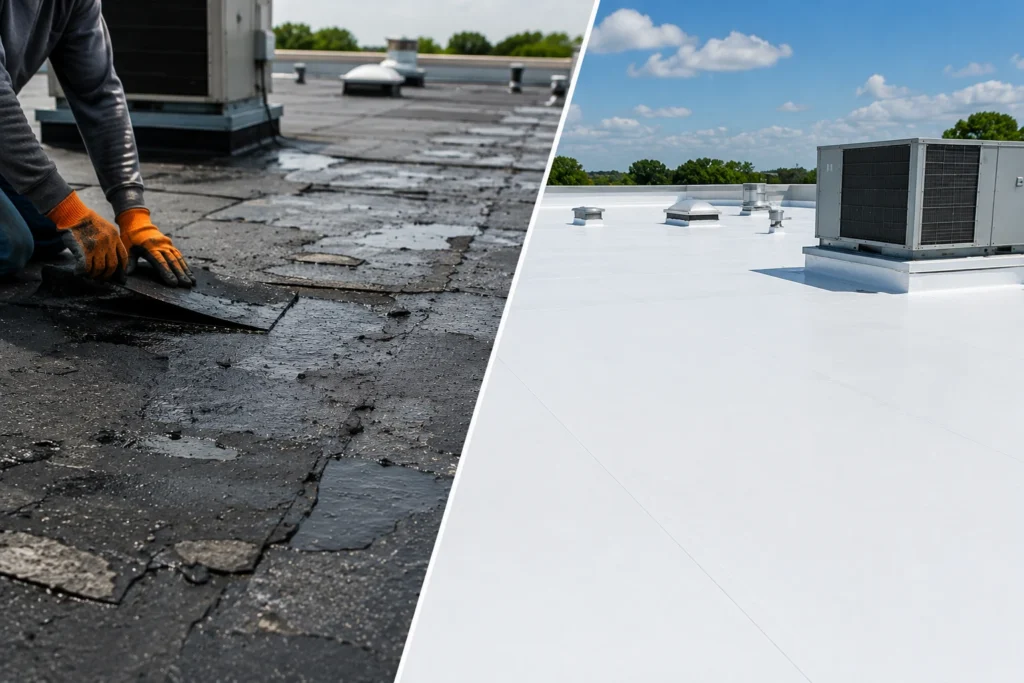
One of the biggest decisions following a hailstorm involves determining whether repairs are sufficient or if a full roof replacement is necessary. The answer depends on several factors. Most importantly, property owners should focus on long-term performance rather than short-term cost savings.
When Repairs May Be Appropriate
In some situations, targeted repairs can restore roof performance effectively. Repairs may be suitable when:
- Damage is isolated to a small area
- Roofing materials remain readily available
- Insulation remains dry
- Membranes have not suffered widespread impacts
- Roof warranties remain intact after repairs
For example, replacing several damaged flashings or repairing isolated membrane punctures may fully address the problem. However, repairs only make sense when they solve the entire issue.
When Full Roof Replacement May Be Necessary
Conversely, some situations justify complete replacement. Examples include:
- Extensive membrane damage
- Multiple roof sections impacted
- Significant insulation saturation
- Structural concerns
- Repeated repair history
- Widespread seam failures
A roof may continue functioning after a hailstorm while still experiencing hidden deterioration. Consequently, delaying replacement can lead to larger expenses later.
Long-Term Financial Considerations
The cheapest solution today is not always the least expensive solution over time. Property owners should evaluate:
| Consideration | Potential Impact |
|---|---|
| Future Repairs | Increased maintenance expenses |
| Energy Efficiency | Higher utility costs |
| Water Intrusion Risk | Interior damage exposure |
| Tenant Satisfaction | Occupancy concerns |
| Property Value | Asset performance |
Therefore, repair decisions should consider the entire lifecycle of the roofing system.
Critical Evidence That Strengthens Commercial Roof Claims
Strong documentation often separates successful claims from disputed claims. Insurance carriers rely heavily on evidence. The stronger the evidence, the stronger the position of the property owner.
Professional Inspection Reports
Independent inspections frequently provide valuable support. These reports may include:
- Damage assessments
- Moisture testing
- Photographic documentation
- Repair recommendations
- Replacement analyses
Furthermore, specialized commercial roofing professionals often identify issues that standard inspections miss.
Weather Documentation
Weather records can help establish storm severity. Useful sources include:
- Hail reports
- Storm tracking data
- Radar information
- Historical weather databases
These records can help demonstrate that hail conditions were capable of producing the observed damage.
Historical Maintenance Records
Maintenance records often become valuable evidence. Examples include:
- Prior inspection reports
- Service invoices
- Roof maintenance contracts
- Warranty documentation
These records help establish the roof’s condition before the hail event occurred.
Photographic Evidence
Photographs remain among the most persuasive forms of claim support. Best practices include:
- Date-stamped photos
- Wide-angle roof views
- Close-up damage images
- Interior water damage photos
- Rooftop equipment documentation
Comprehensive photographic records often reduce disputes during Commercial Roof Hail Damage Claims.
How Commercial Property Owners Can Maximize Claim Outcomes
Successful claims rarely happen by accident. Instead, they are usually the result of preparation, organization, and timely action.
Conduct Routine Roof Inspections
Regular inspections create valuable baseline documentation. This allows property owners to demonstrate pre-storm conditions more effectively.
Maintain Detailed Property Records
Keep organized records of:
- Repairs
- Maintenance activities
- Roof warranties
- Contractor reports
- Building improvements
These records may become important during future claims.
Respond Quickly After Storm Events
Time matters. Prompt action can:
- Prevent additional damage
- Preserve evidence
- Improve documentation quality
- Reduce claim complications
Therefore, inspections should occur as soon as practical after a storm.
Work With Qualified Roofing Professionals
Commercial roofing systems are highly specialized. Experienced professionals understand:
- Roofing assemblies
- Building codes
- Moisture intrusion risks
- Repair feasibility
- Replacement requirements
Their expertise can significantly improve claim accuracy.
Review Insurance Policies Before Losses Occur
Many claim problems begin long before a storm arrives. Property owners should understand:
- Coverage limits
- Deductibles
- Exclusions
- Reporting requirements
- Ordinance and law provisions
Preparation often pays dividends later.
Unique Considerations for Different Commercial Properties
Not all commercial properties face the same risks. Different building types present different claim challenges.
Office Buildings
Office properties often contain:
- Sensitive electronics
- Tenant improvements
- Complex HVAC systems
Even minor roof leaks can disrupt business operations.
Retail Centers
Retail properties may face:
- Tenant complaints
- Inventory exposure
- Customer safety concerns
Therefore, rapid response becomes especially important.
Industrial Facilities
Industrial properties often contain expensive equipment and manufacturing processes. As a result, water intrusion can create substantial operational losses.
Warehouses
Large roof footprints increase exposure. Consequently, even isolated damage can affect significant portions of the building.
Apartment Complexes
Multi-family properties introduce additional concerns. These may include:
- Tenant displacement
- Interior unit damage
- Liability exposure
- Occupancy disruptions
Hospitality Properties
Hotels often face heightened urgency. Guest comfort and business continuity depend heavily on maintaining a watertight building envelope.
Mistakes to Avoid During Commercial Roof Hail Damage Claims
Even strong claims can encounter problems when property owners make avoidable mistakes.
Waiting Too Long to Report Damage
Delays may:
- Complicate investigations
- Increase deterioration
- Create coverage disputes
Prompt reporting is usually the safest approach.
Relying Solely on Ground-Level Observations
Many forms of hail damage cannot be seen from the parking lot. Therefore, professional roof inspections remain essential.
Accepting Initial Estimates Without Review
Initial estimates should be carefully evaluated. Missing items are not uncommon in complex Commercial Roof Hail Damage Claims.
Discarding Documentation
Never dispose of:
- Inspection reports
- Photographs
- Invoices
- Repair records
Documentation often becomes critical later.
Ignoring Hidden Moisture Damage
Water intrusion frequently develops after the storm. Consequently, moisture testing may be necessary even when leaks are not immediately visible.
The Financial Impact of Delayed Claim Resolution
Claim delays often create consequences beyond repair costs.
Escalating Repair Expenses
Small issues can become major repairs. Moisture intrusion rarely improves with time.
Business Disruptions
Roof problems can interrupt:
- Tenant operations
- Employee productivity
- Customer access
- Manufacturing activities
These interruptions may create losses beyond physical damage.
Tenant Concerns
Tenants expect safe, functional facilities. Ongoing roof issues can affect satisfaction and retention.
Increased Future Liability
Unaddressed roof damage may contribute to:
- Slip-and-fall incidents
- Mold concerns
- Property damage claims
- Equipment failures
Therefore, delayed action can increase overall risk exposure.
Conclusion
Ultimately, Commercial Roof Hail Damage Claims require more than identifying visible damage. Instead, they demand thorough inspections, strong documentation, and prompt action. Most importantly, property owners who respond quickly and evaluate damage comprehensively are often better positioned to protect their buildings, minimize losses, and achieve more favorable claim outcomes.
FAQs
Hail damage may include dents, punctures, membrane tears, granule loss, damaged flashings, and impacts to rooftop equipment. The severity depends on the roofing material and storm conditions.
A roof should be inspected as soon as it is safe to do so. Early inspections help identify damage before it worsens and preserve valuable claim evidence.
Yes. Moisture intrusion, insulation damage, and compromised seams can exist beneath the surface without obvious signs of damage.
Coverage depends on the policy and the extent of the damage. If repairs cannot adequately restore the roof, replacement may be considered.
Some forms of damage are difficult to detect during a visual inspection. Hidden moisture, insulation issues, and code requirements can also be overlooked.
Photographs, inspection reports, maintenance records, repair invoices, and weather data can all strengthen a claim.
Yes. HVAC units, vents, skylights, and other rooftop components may be covered if they were damaged by the storm.
Temporary measures to prevent further damage are usually recommended. However, property owners should document conditions thoroughly before making repairs.
The timeline varies depending on the size of the loss, complexity of the roof system, and whether disputes arise during the evaluation process.
Waiting too long to inspect and document the damage is one of the most common mistakes. Delays can make claims more difficult and allow damage to worsen.