
A commercial fire can disrupt operations, damage valuable assets, and create significant financial challenges. However, recovering from the loss starts with understanding how Fire Damage Commercial Insurance Claims work. From structural damage and smoke contamination to equipment losses and business interruption, these claims often involve multiple layers of valuation and documentation. Therefore, business owners who understand the process are often better positioned to pursue a fair settlement and accelerate recovery.
Understanding Commercial Fire Damage Insurance Claims
Commercial fire losses are often far more complex than residential claims. While a house fire may affect a single family, a commercial fire can impact employees, customers, tenants, suppliers, and ongoing operations. Consequently, insurance carriers typically evaluate multiple categories of damage before determining the value of a claim.
What Is a Commercial Fire Damage Claim?
A commercial fire damage claim is a request for compensation under a commercial property insurance policy following a fire-related loss. These claims commonly involve:
- Office buildings
- Retail stores
- Warehouses
- Manufacturing facilities
- Hotels
- Apartment complexes
- Restaurants
- Medical facilities
- Industrial properties
The objective is to restore the property and compensate the policyholder for covered losses under the terms of the insurance policy.
Types of Fire-Related Losses Commonly Covered
Most commercial policies may provide coverage for several categories of damage.
| Damage Category | Examples |
|---|---|
| Structural Damage | Roofs, walls, framing, foundations |
| Smoke Damage | Soot contamination, odors |
| Water Damage | Sprinkler discharge and firefighting efforts |
| Equipment Damage | Machinery, electronics, production systems |
| Inventory Loss | Raw materials and finished products |
| Business Personal Property | Furniture, fixtures, computers |
| Debris Removal | Cleanup and disposal expenses |
Coverage ultimately depends on policy language, exclusions, endorsements, and the circumstances surrounding the loss.
Common Causes of Commercial Fires
Commercial fires occur for many reasons. Some of the most common include:
- Electrical failures
- Faulty wiring
- Overloaded circuits
- Commercial kitchen fires
- Equipment malfunctions
- HVAC failures
- Chemical incidents
- Welding accidents
- Arson
Regardless of the cause, the resulting damage often extends far beyond the areas directly affected by flames.
Immediate Steps After a Commercial Fire
The first few days after a fire are critical. Actions taken during this period can significantly influence both the recovery process and the outcome of Fire Damage Commercial Insurance Claims.
Prioritize Safety First
Before focusing on insurance, focus on safety. Property owners should:
- Follow instructions from emergency responders
- Restrict access to unsafe areas
- Secure the property when possible
- Prevent unauthorized entry
Safety must always come first.
Notify the Insurance Carrier Immediately
Next, report the loss as soon as possible. Most commercial policies require prompt notification following a fire. When filing an initial report, insurers often request:
- Date and time of loss
- Property address
- Description of damages
- Contact information
- Emergency mitigation actions
Early reporting helps initiate the investigation and documentation process.
Document Everything
Perhaps no step is more important than documentation. Photograph and video:
- Exterior damage
- Interior damage
- Equipment losses
- Inventory damage
- Smoke contamination
- Water intrusion
- Debris and cleanup conditions
The more evidence available, the easier it becomes to support the value of the claim. While commercial losses are significantly more complex than residential claims, many of the same principles found in “Fire Damage 101: Protect Your Home“ still apply, including prioritizing safety, documenting damage immediately, and taking reasonable steps to prevent additional losses after the fire has been extinguished.
Commercial Fire Damage Categories Adjusters Evaluate
Many business owners focus only on burned materials. However, fire claims often involve several types of damage that extend throughout the property.
Building Damage
Structural damage is usually the most visible portion of a claim. Adjusters commonly evaluate:
- Roofing systems
- Structural steel
- Framing
- Masonry
- Exterior finishes
- Drywall
- Flooring
- Ceilings
- Doors and windows
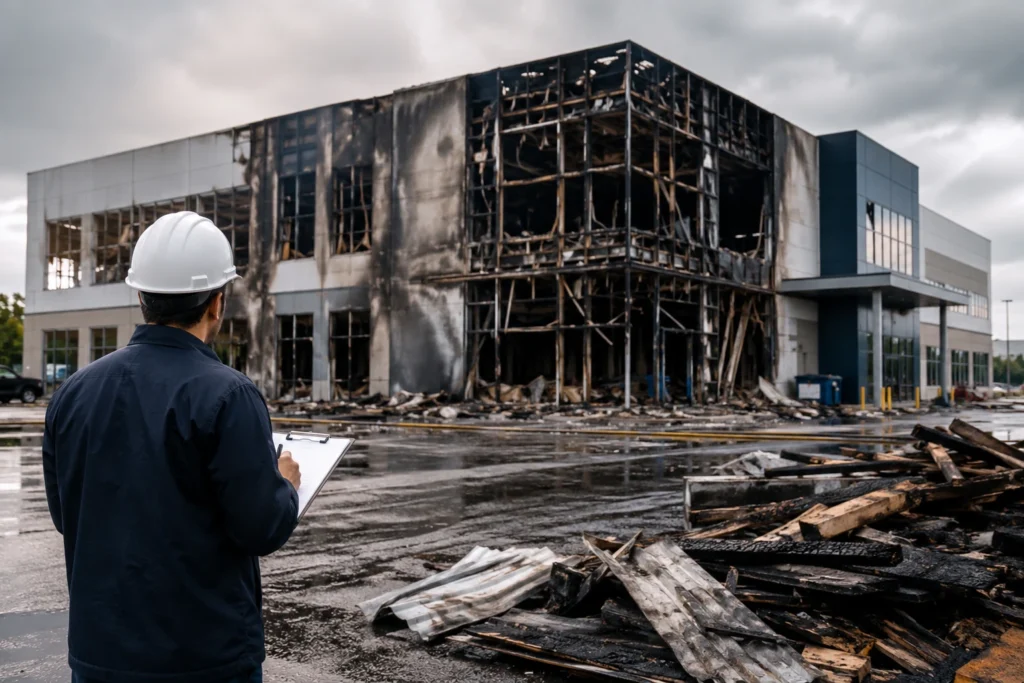
Unfortunately, not all structural damage is immediately visible. Heat exposure can weaken components that appear intact during an initial inspection.
Smoke and Soot Damage
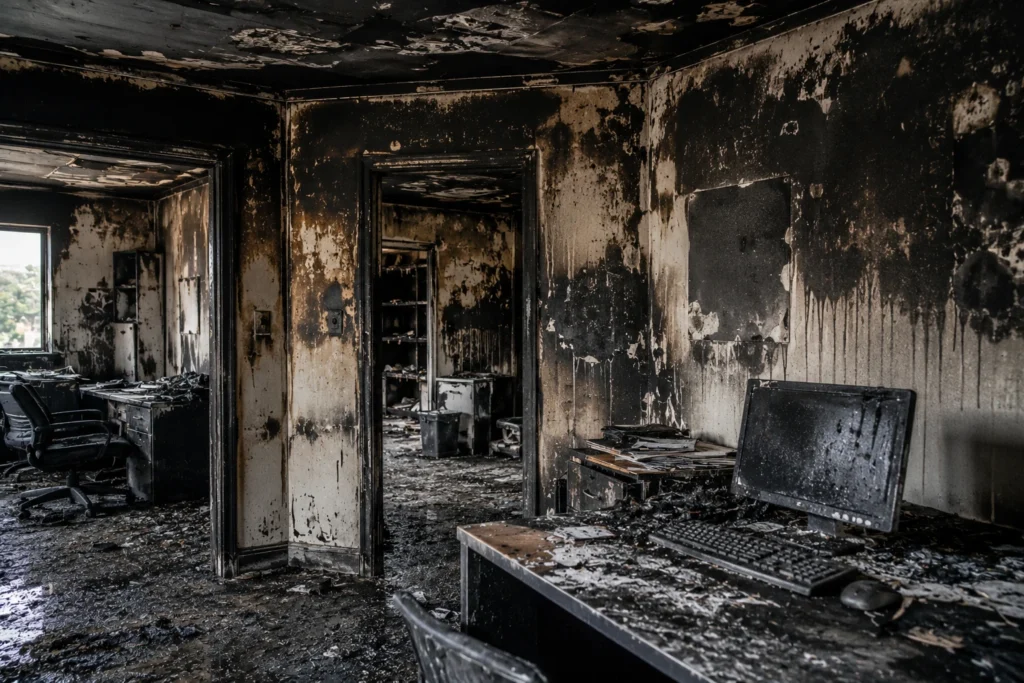
Smoke damage frequently becomes one of the most disputed aspects of Fire Damage Commercial Insurance Claims, travels throughout a structure. It can penetrate walls, ceilings, HVAC systems, electrical components, and hidden cavities. Common concerns include:
- Odor contamination
- Corrosion
- Staining
- HVAC contamination
- Electronic equipment damage
Smoke particles can spread throughout a structure in ways similar to a diffusion process, penetrating areas that may initially appear unaffected. Cleaning may be sufficient in some cases. However, replacement may be necessary when contamination cannot be fully removed.
Water Damage Following Fire Suppression
Ironically, water often causes extensive damage during firefighting efforts. Potential sources include:
- Fire hoses
- Sprinkler systems
- Fire suppression equipment
Water intrusion can affect:
- Flooring
- Drywall
- Insulation
- Electrical systems
- Machinery
- Inventory
If moisture remains untreated, secondary issues may develop rapidly.
Equipment and Machinery Damage
For manufacturing facilities and industrial properties, equipment losses may represent the largest portion of the claim. Examples include:
- Production equipment
- Assembly lines
- Commercial kitchen systems
- Refrigeration units
- Servers
- Medical equipment
In some cases, heat exposure can alter the metallurgy of critical machine components, reducing their long-term reliability even when no visible damage is present. Consequently, testing and expert evaluation are often required before determining whether repair or replacement is appropriate.
Inventory and Contents Losses
Inventory losses can become surprisingly complex. Businesses may need to determine:
- Quantity damaged
- Replacement cost
- Salvage value
- Age and condition
- Market value considerations
Accurate inventory records can significantly strengthen a claim. Without supporting documentation, valuation disputes become much more likely.
Why Commercial Fire Claims Become Disputed
Many property owners assume that the insurer’s estimate will automatically account for every loss. Unfortunately, that is not always the case. Large commercial claims frequently involve disagreements regarding scope, pricing, and valuation.
Undervalued Building Damage Estimates
One of the most common disputes involves repair scope. The insurer’s estimate may include certain repairs, while contractors identify additional damage requiring attention. Common disagreements involve:
- Hidden structural damage
- Smoke remediation
- Electrical systems
- Roofing repairs
- Mechanical equipment
- Code-required upgrades
Even minor omissions can create significant differences in claim values.
Replacement Cost vs Actual Cash Value
Valuation methods matter. Replacement cost coverage generally pays the amount necessary to replace damaged property, subject to policy terms. Actual cash value coverage often applies depreciation. As a result, settlement amounts can vary substantially depending on the valuation method used. Business owners should understand which method applies before evaluating any settlement offer.
Building Code Upgrade Disputes
Construction standards evolve over time. Consequently, a building constructed years ago may not meet today’s code requirements. After a fire, local authorities may require upgrades involving:
- Fire protection systems
- Accessibility features
- Electrical improvements
- Structural enhancements
- Life safety systems
These upgrades can add significant costs to a project. Whether those costs are covered often depends on ordinance and law provisions within the policy.
Smoke Damage Disagreements
Smoke damage often falls into a gray area. Insurers may believe cleaning is sufficient. Property owners, restoration experts, and contractors may conclude that replacement is necessary. These disputes frequently involve:
- Ceiling materials
- Insulation
- HVAC systems
- Electronics
- Interior finishes
Because contamination is not always visible, supporting documentation and expert opinions often become essential.
Business Interruption Losses Following a Fire
The flames may be extinguished quickly. However, the financial impact may continue for months. For many businesses, lost income ultimately exceeds the cost of repairing physical damage.
What Business Interruption Coverage Does
Business interruption coverage is designed to help replace income lost when operations are suspended because of a covered loss. Its purpose is to help restore the business to the financial position it would have occupied had the fire not occurred. Potential covered losses may include:
- Lost revenue
- Continuing payroll
- Rent obligations
- Loan payments
- Temporary operating expenses
Because every business operates differently, calculating these losses can become highly detailed.
Why These Claims Become Challenging
Business income claims rely heavily on projections. Therefore, disagreements frequently arise. Adjusters often evaluate:
- Historical financial performance
- Seasonal revenue trends
- Growth projections
- Market conditions
- Industry performance
Even small differences in assumptions can lead to substantial differences in claim valuations. As a result, business interruption losses frequently become one of the most disputed components of Fire Damage Commercial Insurance Claims.
The Importance of Proper Documentation
Once the immediate emergency has passed, documentation becomes one of the most important factors in a successful claim. Without sufficient records, proving the extent of losses becomes significantly more difficult. Therefore, business owners should begin collecting and organizing documentation as early as possible.
Financial Records to Preserve
Business interruption claims rely heavily on financial data. Key records often include:
- Tax returns
- Profit and loss statements
- Sales reports
- Payroll records
- Bank statements
- Vendor invoices
The more complete the records, the easier it becomes to demonstrate lost income and ongoing expenses.
Property Records That Support the Claim
In addition to financial documents, property records can help establish the value of damaged assets. Important documents may include:
- Equipment purchase invoices
- Maintenance records
- Asset inventories
- Lease agreements
- Contractor invoices
- Warranty documentation
Furthermore, organized records can reduce disputes regarding valuation.
Expert Reports That Strengthen Claims
Many commercial fire losses require expert analysis. Depending on the circumstances, professionals may include:
- Engineers
- Contractors
- Industrial hygienists
- Equipment specialists
- Forensic accountants
These experts can provide independent assessments that support the scope and value of damages.
Common Mistakes Commercial Property Owners Make
Even experienced business owners can make costly mistakes after a fire. Fortunately, many of these issues can be avoided with proper planning and attention to detail.
Accepting Initial Estimates Too Quickly
The first estimate is not always the final estimate. In many cases, hidden damages are discovered during demolition, testing, or reconstruction. Therefore, property owners should carefully review all estimates before accepting a settlement.
Disposing of Damaged Property Too Early
Damaged property often serves as evidence. Throwing away equipment, inventory, or building materials before inspection can create problems later. Whenever possible, preserve damaged items until the insurer has completed its evaluation.
Failing to Document Business Losses
Physical damage is only part of the claim. Business interruption losses can be substantial. Consequently, companies should maintain detailed records of:
- Lost sales
- Cancelled contracts
- Additional expenses
- Temporary relocation costs
- Reduced production capacity
Missing Policy Deadlines
Commercial policies frequently contain strict deadlines. These may involve:
- Notice requirements
- Proof of loss submissions
- Supplemental claim requests
- Appraisal demands
Missing a deadline can complicate claim resolution.
Underestimating Smoke and Water Damage
Not all damage is visible. Smoke contamination may spread throughout an entire building. Likewise, water intrusion can affect areas far removed from the fire itself. As a result, comprehensive inspections are essential.
Commercial Fire Claim Appraisal Process
When disagreements arise regarding value, the appraisal process may provide an effective solution. For many policyholders, appraisal offers a faster and less expensive alternative to litigation.
What Is the Insurance Appraisal Process?
Appraisal is a dispute resolution process commonly included in property insurance policies. Its purpose is to resolve disagreements regarding the amount of loss. Importantly, appraisal typically addresses valuation disputes rather than coverage disputes.
When Appraisal May Be Appropriate
Appraisal may become appropriate when both parties agree that damage exists but disagree about its value. Examples include:
- Structural damage estimates
- Smoke remediation costs
- Equipment replacement values
- Inventory losses
- Business personal property claims
These disagreements frequently occur in large Fire Damage Commercial Insurance Claims.
How the Appraisal Process Works
Although procedures vary slightly by policy, the process generally follows several steps.
| Step | Description |
|---|---|
| Policyholder Selects Appraiser | Independent appraiser represents the policyholder’s valuation |
| Insurer Selects Appraiser | Insurance company appoints its appraiser |
| Umpire Selected | Neutral third party is chosen |
| Differences Reviewed | Appraisers attempt to resolve disputes |
| Umpire Participation | Remaining disagreements are submitted to the umpire |
| Award Issued | Binding valuation decision is reached |
This process can often resolve valuation disputes without entering lengthy litigation.
Benefits of Appraisal in Fire Claims
Appraisal may offer several advantages. These include:
- Faster resolution
- Reduced legal expenses
- Independent review
- Objective valuation process
- Focus on claim value rather than legal arguments
Consequently, appraisal has become an important tool for resolving commercial property disputes.
Fire Damage Disputes Commonly Entering Appraisal
Commercial fire claims frequently involve disagreements regarding:
- Building repairs
- Smoke remediation
- Water damage
- Equipment replacement
- Inventory valuation
- Business personal property losses
Because these issues often involve substantial financial differences, appraisal can provide a structured path toward resolution.
How Commercial Property Owners Can Maximize Recovery
A successful claim rarely happens by accident. Instead, it typically results from preparation, documentation, and active involvement throughout the process.
Conduct a Comprehensive Damage Assessment
First, evaluate all affected areas. Look beyond visible fire damage. Consider:
- Structural components
- Smoke contamination
- Water intrusion
- Equipment damage
- Inventory losses
A complete assessment reduces the likelihood of overlooked damages.
Maintain Detailed Documentation
Documentation remains one of the strongest tools available to policyholders. Therefore, maintain:
- Photographs
- Videos
- Inventories
- Invoices
- Financial records
- Inspection reports
Strong documentation supports stronger claims.
Obtain Independent Repair Estimates
Insurance estimates should not be the only source of information. Independent contractors often identify damages or repair requirements that may not appear in the insurer’s initial scope. As a result, obtaining additional estimates can provide valuable perspective.
Understand Policy Coverages and Limitations
Every commercial insurance policy contains unique provisions. Business owners should review:
- Coverage limits
- Deductibles
- Exclusions
- Endorsements
- Business interruption provisions
- Ordinance and law coverage
Understanding these provisions can help prevent surprises later.
Monitor Business Interruption Calculations
Business interruption losses can become one of the largest components of a commercial fire claim. Therefore, carefully track:
- Revenue losses
- Additional expenses
- Payroll obligations
- Temporary operating costs
Accurate records improve claim support.
Seek Professional Assistance When Necessary
Complex losses often benefit from expert assistance. Engineers, contractors, accountants, and appraisers may all contribute valuable expertise during the claims process.
When to Consider Hiring an Insurance Appraiser
Not every claim requires an appraiser. However, some situations clearly warrant additional evaluation.
Signs a Claim May Be Undervalued
Business owners should pay attention to warning signs such as:
- Large differences between estimates
- Missing repairs
- Incomplete scopes
- Unexplained reductions
- Disputed equipment values
These issues may indicate that additional review is needed.
Benefits of Independent Appraisal Representation
An independent appraiser focuses on evaluating the amount of loss. Potential benefits include:
- Detailed scope review
- Cost analysis
- Independent valuation
- Support during appraisal proceedings
This can be especially valuable in large commercial claims.
How Insurance Appraisers Assist With Fire Claims
Insurance appraisers commonly assist with:
- Damage assessments
- Building valuations
- Equipment evaluations
- Smoke remediation disputes
- Appraisal preparation
- Settlement negotiations
Accordingly, they can play a meaningful role when significant valuation disagreements arise.
Conclusion
Ultimately, Fire Damage Commercial Insurance Claims involve far more than repairing burned materials. Structural damage, smoke contamination, water intrusion, equipment losses, and business interruption can all affect the final claim value. Therefore, thorough documentation, careful evaluation, and a clear understanding of policy rights are essential. When valuation disputes arise, appraisal may provide an effective path toward resolving disagreements and pursuing a fair settlement. Most importantly, proactive claim management can help businesses recover faster and move forward with greater confidence.
FAQs
A commercial fire insurance claim may cover building damage, smoke damage, water damage, equipment losses, inventory losses, and business interruption, depending on the policy.
The loss should be reported as soon as possible after the fire. Prompt reporting helps avoid delays and allows the investigation process to begin immediately.
Yes. Smoke and soot can spread throughout a property and may cause contamination that requires cleaning, restoration, or replacement.
Business interruption coverage is designed to help replace lost income and certain ongoing expenses when operations are suspended due to a covered fire loss.
Disputes commonly arise over repair scope, replacement costs, smoke remediation, equipment valuations, and business income calculations.
No. Damaged equipment should generally be preserved until inspections are completed because it may serve as important evidence supporting the claim.
Photographs, videos, inventories, invoices, maintenance records, tax returns, and profit-and-loss statements can all help support the claim.
The appraisal process is a method of resolving disagreements about the value of a loss without going through full litigation. Independent appraisers and an umpire help determine the amount of loss.
Yes. Water damage caused by fire suppression activities is often considered part of the overall covered fire loss.
A business owner may consider hiring an appraiser when there are significant differences in repair estimates, disputed valuations, or concerns that the claim has been underpaid.