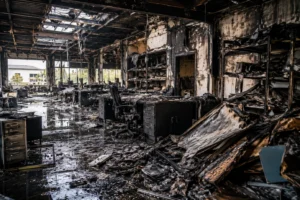

Churches across Texas face a wide range of property risks. Hailstorms, hurricanes, wind events, fires, and water damage can all result in costly repairs. However, when insurance claim disputes arise, many church leaders discover that obtaining a fair settlement is not always straightforward. Consequently, understanding Church Insurance Appraisal Texas can become extremely important. Rather than immediately turning to litigation, churches may have another option. Through the appraisal process, policyholders and insurers can resolve disagreements regarding the value of a loss. Therefore, knowing how this process works can help church boards, trustees, and pastors make informed decisions when significant property damage occurs.
Understanding Church Insurance Appraisal Texas
Insurance appraisal is a process found in many commercial property insurance policies. It is designed to resolve disputes regarding the value of a loss. Importantly, appraisal does not determine whether coverage exists. Instead, it focuses on how much damage occurred and what it should cost to repair or replace damaged property. When a church and its insurance carrier disagree on the value of a claim, either party may invoke the appraisal clause if the policy permits it. The process typically involves:
- A church-selected appraiser
- An insurance company-selected appraiser
- A neutral umpire
Together, they evaluate the loss and work toward establishing an accurate value. For many religious organizations, Church Insurance Appraisal Texas serves as an alternative dispute resolution method that can save both time and money.
Why Churches Use Insurance Appraisal
Church properties are rarely simple structures. A typical church campus may include:
- Sanctuary buildings
- Administrative offices
- Fellowship halls
- Educational facilities
- Daycare centers
- Gymnasiums
- Storage buildings
As a result, estimating repair costs becomes increasingly complicated when multiple structures are involved. Churches often pursue appraisal when:
- Repair estimates differ significantly
- Important damage is overlooked
- Settlement offers appear inadequate
- Specialized repairs are disputed
- Multiple contractors provide conflicting opinions
In many situations, appraisal allows both sides to obtain independent evaluations before a final claim amount is determined.
Common Types of Church Property Damage in Texas
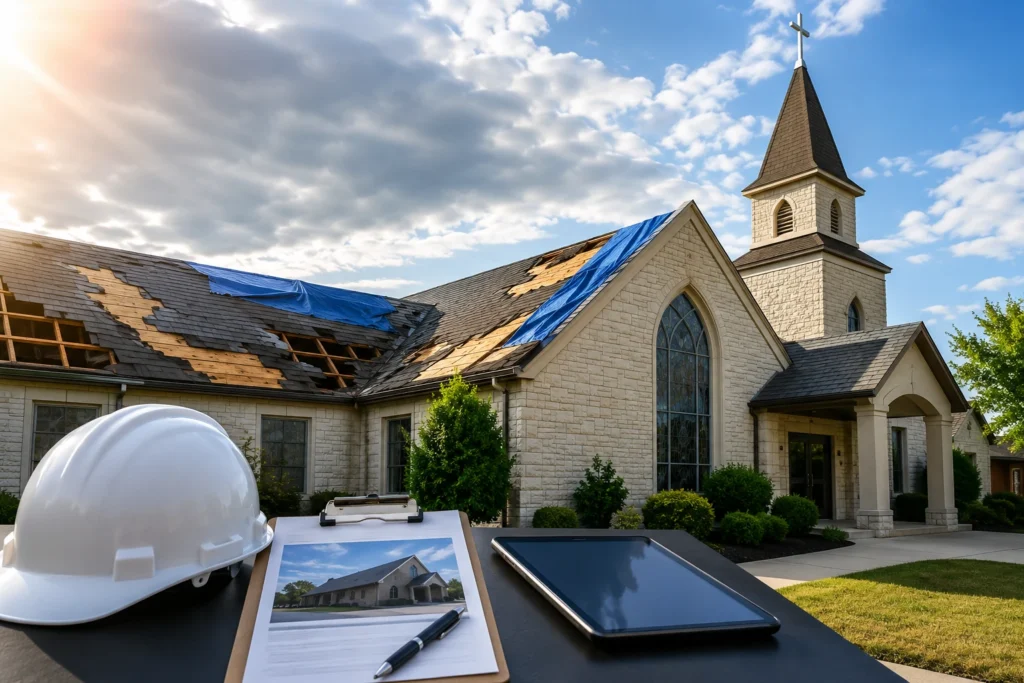
Texas weather creates unique challenges for church properties. From Gulf Coast hurricanes to North Texas hailstorms, churches routinely experience losses that trigger insurance claims.
Hail Damage
Hail remains one of the most common causes of church insurance claims in Texas. Large hailstones can damage:
- Asphalt shingles
- Metal roofing systems
- Steeples
- Gutters
- Downspouts
- Skylights
- HVAC equipment
However, visible damage is not always the complete story. Some impacts create hidden deterioration that may shorten roof lifespan or increase future maintenance costs.
Wind Damage
Strong winds can affect nearly every part of a church structure. Common wind-related issues include:
- Missing shingles
- Damaged flashing
- Detached gutters
- Broken windows
- Exterior cladding damage
- Structural impacts from falling trees
Furthermore, wind damage often occurs alongside hail damage, making inspections more complex.
Water Damage
Water losses can originate from many sources. Examples include:
- Roof leaks
- Burst pipes
- Plumbing failures
- Foundation drainage problems
- Storm-related water intrusion
Unfortunately, water damage frequently spreads beyond the original point of entry. By the time stains appear on ceilings or walls, substantial hidden damage may already exist.
Fire and Smoke Damage
Although less common than storm losses, fire claims often involve extensive repairs. A fire can affect:
- Structural components
- Electrical systems
- Interior finishes
- Furniture
- Sound systems
- Religious artifacts
Moreover, smoke damage frequently extends well beyond the actual burn area.
Storm-Related Structural Damage
Severe weather can cause major structural issues. Examples include:
- Fallen trees
- Impact damage
- Collapsed roofing sections
- Damaged masonry
- Broken support systems
Consequently, large structural losses often generate some of the most complicated claim disputes.
Why Church Insurance Claims Are Often Complicated
Many commercial property claims involve straightforward buildings. Churches are different. Their design, age, and specialized features create unique challenges.
Large and Complex Structures
A church campus may contain several buildings spread across multiple acres. Each structure may have:
- Different roofing systems
- Different construction materials
- Different ages
- Different maintenance histories
Because of this complexity, disagreements frequently arise during claim evaluations.
Specialized Building Components
Churches frequently contain features not found in standard commercial buildings. Examples include:
- Bell towers
- Steeples
- Stained glass
- Custom woodwork
- Large sanctuaries
- Religious artwork
Repairing these features often requires specialized contractors. Therefore, costs can be significantly higher than standard construction work.
Historical and Architectural Features
Many Texas churches have historical significance. Older buildings often require:
- Matching materials
- Specialty restoration techniques
- Skilled craftspeople
- Preservation-focused repairs
In some cases, restoration specialists must address issues involving spolia where architectural elements from older structures have been reused and require careful preservation during repairs. As a result, insurance estimates may not always fully account for these requirements.
High-Occupancy Facilities
Churches serve more than worship functions. Many host:
- Schools
- Community events
- Childcare programs
- Food distribution efforts
- Counseling services
Therefore, when buildings become unusable, the impact extends far beyond property damage alone.
Understanding the Church Insurance Appraisal Process
One reason Church Insurance Appraisal Texas is valuable is because it provides a structured framework for resolving valuation disputes. Understanding each stage helps church leaders prepare effectively.
Step 1: Claim Filing
The process begins when the church reports damage to its insurance carrier. During this phase:
- Damage is documented
- Initial inspections occur
- Emergency mitigation measures may be taken
Most importantly, prompt reporting is essential. Otherwise, delays can create unnecessary complications.
Step 2: Insurance Company Evaluation
The insurance company conducts its own investigation. Adjusters typically:
- Inspect the property
- Take photographs
- Measure affected areas
- Prepare repair estimates
Subsequently, the resulting estimate becomes the carrier’s position regarding the value of the loss.
Step 3: Disagreement Over Value
Disputes frequently arise because the church’s contractors identify additional damage. Common disagreements involve:
| Area of Dispute | Example |
|---|---|
| Scope | Additional roofing sections require replacement |
| Pricing | Material costs are underestimated |
| Quantity | Damaged areas are larger than reported |
| Specialty Repairs | Historic restoration costs omitted |
| Equipment | HVAC damage overlooked |
When differences become substantial, appraisal may be considered.
Step 4: Invoking Appraisal
If policy language allows appraisal, either side may invoke the clause. The request generally occurs in writing. At this stage, both parties begin selecting appraisers.
What Happens After Invoking the Appraisal Clause in Texas?
Many church leaders understandably ask, “What Happens After Invoking the Appraisal Clause in Texas?” Once the appraisal provision is formally triggered, both the church and the insurance company select their respective appraisers. Those appraisers review the loss, inspect the property, analyze repair estimates, and attempt to reach an agreement regarding the value of the damage. If disagreements remain, a neutral umpire helps resolve the disputed items. Ultimately, this process is designed to establish a fair valuation of the loss without requiring lengthy and expensive litigation, allowing churches to focus on restoring their facilities and continuing their ministry operations.
Step 5: Selecting Appraisers
Each side chooses its own appraiser. The church appraiser’s role is to:
- Review documentation
- Inspect damage
- Analyze repair estimates
- Present valuation evidence
An experienced appraiser can be particularly valuable when dealing with large church campuses and specialized building components.
Step 6: Choosing an Umpire
The two appraisers select a neutral umpire. The umpire does not immediately decide the claim. Instead, the umpire becomes involved if the appraisers cannot reach agreement on specific valuation issues. The goal is to create a fair and balanced resolution process.
Step 7: Final Appraisal Award
Once agreement is reached, an appraisal award is issued. In many cases, the award becomes binding regarding the amount of loss. The claim then proceeds toward settlement based on the determined valuation. Consequently, for churches facing significant disagreements, Church Insurance Appraisal Texas can provide clarity that might otherwise be difficult to achieve.
Damage Categories Frequently Overlooked in Church Claims
Some of the most significant claim disputes involve damage that is either hidden or underestimated. Therefore, churches should never assume that an initial inspection identifies every issue.
Roofing Systems
Church roofs are often far more complicated than residential roofs. A single campus may contain:
- Asphalt shingle roofs
- Metal roofing systems
- Flat roofing sections
- Specialty architectural roofs
Consequently, damage assessments require a thorough inspection of every roofing component. Even a small oversight can significantly affect repair costs.
Steeples and Towers
Steeples are among the most recognizable church features. Unfortunately, they are also among the most difficult to inspect. Challenges include:
- Height restrictions
- Specialized access equipment
- Structural concerns
- Weather-related deterioration
As a result, steeple damage is sometimes underestimated during initial claim evaluations.
Stained Glass Windows
Stained glass often represents both financial and historical value. Unlike standard windows, repairs may require:
- Custom fabrication
- Specialized restoration experts
- Historic preservation techniques
Historic stained glass systems may also involve intricate tracery which can significantly increase restoration complexity and replacement costs after severe weather or structural damage. Therefore, replacement costs can be substantially higher than standard window estimates suggest.
Audio and Visual Systems
Modern churches frequently invest heavily in technology. Potentially affected systems include:
- Audio equipment
- Projection systems
- Lighting systems
- Streaming equipment
- Networking infrastructure
However, technology damage is often overlooked after storms or power-related incidents.
HVAC Systems
Church campuses often rely on multiple HVAC units. Storms can damage:
- Rooftop equipment
- Condensers
- Electrical controls
- Ventilation systems
Consequently, mechanical evaluations should be included in major property claims.
Water Intrusion Damage
Water often travels far beyond the original entry point. Hidden damage may affect:
- Insulation
- Framing
- Drywall
- Flooring
- Electrical systems
Therefore, moisture testing can play an important role in documenting the full extent of damage.
Why Accurate Damage Documentation Matters
Documentation often determines the strength of a claim. The more organized the evidence, the easier it becomes to support repair costs and damage scope.
Photographing All Damage
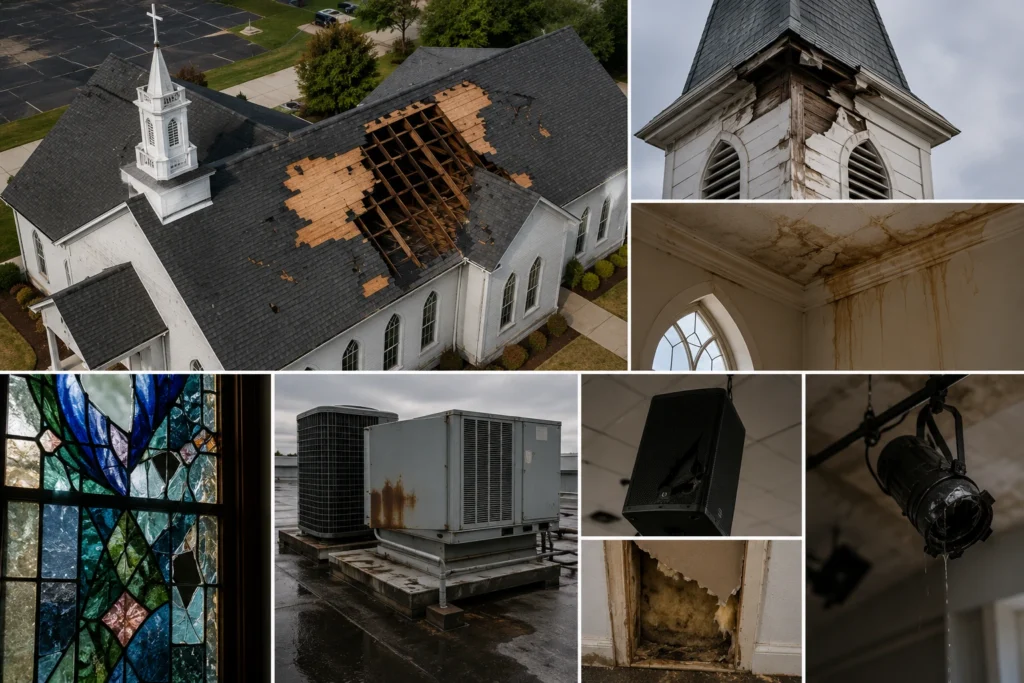
Photographs create a visual record of conditions immediately after a loss. Churches should document:
- Roof damage
- Exterior elevations
- Interior water stains
- Damaged equipment
- Structural impacts
Furthermore, photographs should be organized by date and location.
Gathering Maintenance Records
Maintenance records help establish pre-loss conditions. Helpful records include:
- Roof inspections
- Repair invoices
- Service contracts
- Building assessments
As a result, churches can better demonstrate that damage was caused by a covered event rather than long-term deterioration.
Obtaining Independent Inspections
Independent inspections often provide valuable perspectives. Examples include:
- Roofing consultants
- Engineers
- Restoration specialists
- Mechanical contractors
These evaluations may identify damage that was not included in the original estimate.
Organizing Repair Estimates
Church leaders should collect detailed estimates whenever possible. Strong estimates typically include:
- Quantities
- Material specifications
- Labor requirements
- Equipment costs
- Code-related upgrades
Consequently, appraisers have more complete information when evaluating the loss.
Benefits of Church Insurance Appraisal Texas
When disputes arise, appraisal offers several advantages.
Faster Resolution Than Litigation
Court cases can take months or even years. By comparison, appraisal often moves more efficiently. Therefore, churches may be able to begin repairs sooner.
Reduced Legal Expenses
Litigation frequently involves significant legal costs. Appraisal generally focuses on valuation issues without requiring extensive court proceedings. As a result, expenses may be lower.
Independent Evaluation Process
Each side selects its own appraiser. This structure allows competing viewpoints to be presented and evaluated. Consequently, appraisal can provide a more balanced assessment of damages.
More Comprehensive Damage Assessments
Complex church properties often require detailed analysis. Appraisers may review:
- Building systems
- Specialty construction
- Historical features
- Large-scale repair scopes
Therefore, significant issues are less likely to be overlooked.
Potential for Fairer Claim Outcomes
Every claim is unique. However, many churches find that appraisal creates a more objective environment for evaluating repair costs and property damage.
Challenges Churches Face During Appraisal
While appraisal offers benefits, it is not without challenges.
Limited Technical Expertise
Most church boards consist of volunteers. Many have limited experience with:
- Construction estimating
- Insurance claims
- Building restoration
Therefore, obtaining professional guidance may be beneficial.
Large Property Inventories
Church campuses often contain:
- Multiple buildings
- Extensive equipment
- Furnishings
- Technology systems
Managing documentation for these assets can become time-consuming.
Volunteer Leadership Structures
Decision-making frequently involves committees, boards, and church leadership. Consequently, communication and organization become especially important during the appraisal process.
Balancing Ministry Operations During Repairs
Churches must often continue serving their communities while repairs are underway. This can create logistical challenges involving:
- Worship services
- Educational programs
- Community outreach
- Childcare operations
Choosing the Right Church Insurance Appraisal Professional
Not every appraiser has experience with religious properties. Therefore, churches should carefully evaluate potential candidates.
Experience With Religious Properties
Church buildings differ significantly from standard commercial structures. Look for professionals who understand:
- Sanctuary construction
- Religious architecture
- Specialized building systems
Understanding Large-Loss Claims
Complex losses require detailed evaluation. Experience with large commercial claims can be valuable when assessing extensive church damage.
Knowledge of Texas Insurance Policies
Because appraisal procedures vary, familiarity with Texas insurance practices is important. This knowledge can help streamline the process.
Familiarity With Historic Church Structures
Older churches often present unique restoration challenges. Therefore, experience with historic buildings can be a significant advantage.
Ability to Evaluate Complex Repair Scopes
Church campuses frequently involve multiple buildings and specialized features. A qualified appraiser should be comfortable evaluating large, detailed repair projects.
Preventing Future Church Claim Disputes
While no church can eliminate all risks, proactive planning can reduce future claim challenges.
Conduct Regular Property Inspections
Routine inspections help identify issues before they become major problems. Focus on:
- Roofing systems
- Drainage systems
- Exterior walls
- Mechanical equipment
Maintain Detailed Building Records
Accurate records simplify future claims. Important documents include:
- Renovation records
- Maintenance logs
- Inspection reports
- Equipment inventories
Update Property Valuations
Construction costs change over time. Therefore, periodic valuation reviews help ensure adequate insurance coverage.
Document Renovations and Improvements
Every major upgrade should be documented. Examples include:
- Roof replacements
- HVAC upgrades
- Sanctuary renovations
- Technology improvements
Review Insurance Coverage Annually
Policies should evolve as properties change. Consequently, annual reviews can help identify coverage gaps before losses occur.
Conclusion
Ultimately, Church Insurance Appraisal Texas provides churches with a structured method for resolving disputes over property damage valuations. While claim disagreements can be stressful, understanding the appraisal process helps church leaders make informed decisions and protect valuable ministry resources. Moreover, thorough documentation, independent evaluations, and proactive property management can significantly strengthen a church’s position during a claim. Therefore, when valuation disputes arise, appraisal may offer an efficient path toward a fair and accurate resolution, allowing churches to focus on serving their congregations and communities.
FAQs
It is a process used to resolve disputes between a church and its insurance company regarding the value of a property damage claim.
A church may consider appraisal when it disagrees with the insurer’s estimate of repair costs or the scope of covered damage.
No. Appraisal typically addresses the amount of loss, while coverage questions remain separate.
The church selects one appraiser, and the insurance company selects another. Those appraisers then work together to choose an umpire.
Roof damage, hail damage, wind damage, water intrusion, and disputes involving historic features frequently lead to appraisal.
The timeline varies depending on the complexity of the claim, but appraisal is often faster than traditional litigation.
Yes. Historic churches can use appraisal to help evaluate restoration costs, specialized materials, and preservation-related repairs.
In many cases, the appraisal award is binding regarding the amount of loss, subject to the specific policy terms and applicable laws.
Most churches continue holding services and community activities while the appraisal process is underway, although repairs may affect certain areas.
Maintaining detailed records, obtaining independent inspections, and thoroughly documenting all damage can help support a more accurate valuation.