
A roof claim can appear complete while still missing thousands of dollars in necessary repairs. However, many property owners never realize there is a problem until construction begins. In many cases, the issue is not pricing. Instead, it is scope. Certain roofing components simply never make it into the estimate. As a result, contractors submit supplements, disputes arise, and repairs may be delayed. Understanding the most Common Xactimate Line Items Missing From Roof Claims can help identify estimate deficiencies before they become costly problems.
Understanding Xactimate and Roof Claim Estimating
Most insurance carriers use Xactimate to prepare property damage estimates. By itself, the software is not the issue. In fact, Xactimate can produce extremely detailed estimates when used properly. However, the final estimate is only as accurate as the scope entered into the system. A roof replacement involves much more than shingles. Additionally, there are flashing systems, ventilation components, safety requirements, detach-and-reset operations, and code-related upgrades. If several of these items are overlooked, the estimate may fail to reflect the true cost of repairs. Building estimates often involve numerous interconnected variables. In many ways, the process resembles a complex system where small omissions can create larger downstream effects, similar to concepts studied in Chaos Theory.
Why Missing Line Items Matter
Many roofing components seem minor when viewed individually. However, their combined impact can be substantial. Consequently, several small omissions can create a significant funding shortfall.
| Missing Item | Potential Cost Impact |
|---|---|
| Starter shingles | $300 – $600 |
| Ridge caps | $400 – $900 |
| Drip edge | $500 – $1,200 |
| Pipe boots | $200 – $600 |
| Flashing replacement | $500 – $2,000 |
| High roof charges | $500 – $2,500 |
As the table illustrates, missing line items can quickly add up. Furthermore, the cumulative effect of multiple omissions can create major financial differences. This compounding impact is somewhat comparable to the concept of Emergence , where larger outcomes develop from many smaller interacting elements. That is precisely why understanding Common Xactimate Line Items Missing From Roof Claims is so important.
Scope Versus Price
Many claim disputes are viewed as pricing disagreements. In reality, they often involve scope. For example, if a contractor identifies ten necessary repair items but the insurance estimate includes only six, the estimate is incomplete before pricing is ever discussed. Therefore, determining whether all required components are included becomes critical. The discussion surrounding Insurance Estimates Are Often Lower Than Contractor Estimates is that both parties are measuring different things. Insurance companies focus on covered damages. Contractors focus on repair completion.
The Most Common Xactimate Line Items Missing From Roof Claims
Starter Shingles
Starter shingles rarely receive much attention. Nevertheless, they play a critical role in protecting roof edges from wind-driven weather. Most roofing systems require starter material along eaves and rake edges. Because starter shingles are often damaged during tear-off, replacement is typically necessary. However, many estimates fail to include them. When reviewing a roof claim, verify that starter material appears as a separate line item and that quantities are reasonable.
Ridge Cap and Hip Cap Shingles
The highest points of the roof require specialized protection. Therefore, ridge caps and hip caps are installed where roof planes intersect. These materials are frequently removed or damaged during replacement projects. As a result, they often require replacement. Yet they remain among the most commonly overlooked roofing components. Consequently, contractors frequently discover the omission once construction begins, leading to additional supplement requests.
Drip Edge Installation
Drip edge helps direct water away from the roof structure. Additionally, it protects fascia boards and roof edges from moisture damage. Many older homes either lack drip edge or have components that become damaged during roof replacement. Furthermore, building code requirements and manufacturer specifications may require installation in certain situations. Despite its importance, drip edge continues to appear on lists of Common Xactimate Line Items Missing From Roof Claims.
Underlayment Replacement
Beneath the shingles sits one of the most important layers of the roofing system. The underlayment. Whether synthetic or felt-based, underlayment provides critical moisture protection. Therefore, a complete roof replacement frequently requires full underlayment replacement as well. Some estimates include basic underlayment. However, they may fail to account for upgraded materials required by current standards or manufacturer recommendations. As a result, scope deficiencies emerge during construction.
Ice and Water Shield
Certain roof areas require enhanced waterproof protection. For example, valleys, roof transitions, penetrations, and other vulnerable sections may benefit from specialized membranes. Although requirements vary by location and roof design, these materials are often overlooked. Consequently, contractors may need to supplement the claim after discovering missing waterproofing requirements.
Flashing Components Frequently Missed
Flashing disputes are extremely common. Why? Because flashing is often difficult to evaluate from the ground. Nevertheless, flashing plays a critical role in preventing water intrusion. A proper roof replacement may involve:
- Step flashing
- Counter flashing
- Apron flashing
- Valley flashing
- Sidewall flashing
- Headwall flashing
Each serves a unique purpose. Furthermore, each may require replacement depending on existing conditions and installation methods. When flashing components are omitted, contractors are often forced to seek additional claim funding to complete repairs properly.
Chimney Flashing
Chimneys create complex roof intersections. Therefore, proper waterproofing becomes especially important. Many estimates include roofing materials while overlooking chimney flashing systems. However, water intrusion frequently originates at flashing failures rather than shingle failures. Consequently, chimney flashing deserves careful evaluation during every roof inspection.
Valley Metal
Roof valleys handle significant water flow. As a result, valley metal experiences substantial wear over time. When a roof is replaced, valley metal may require replacement as well. Yet this component remains another common omission found in Common Xactimate Line Items Missing From Roof Claims.
Pipe Boots and Roof Penetrations
Every roof penetration creates a potential leak point. Therefore, proper sealing is essential. Pipe boots are designed to protect plumbing vent penetrations from water intrusion. However, these components age, crack, and deteriorate over time. Additionally, they are often damaged during reroof projects. Despite their importance, pipe boots are frequently omitted from roof estimates. The same issue often affects:
- Furnace vents
- Exhaust vents
- Vent stacks
- Mechanical penetrations
Consequently, every roof penetration should be evaluated individually during the estimating process.
Roof Vent Replacement
Ventilation plays a critical role in roof performance. Without proper airflow, moisture and heat can accumulate inside attic spaces. Common roof ventilation components include:
- Box vents
- Turtle vents
- Static vents
- Ridge vents
- Power vents
When roofing materials are replaced, these accessories may require replacement as well. However, many estimates focus primarily on shingles while overlooking ventilation components. As a result, the estimate may not accurately reflect the work required to restore the roof system.
Additional Roofing Components Frequently Missed
The roofing project often extends beyond the roof itself. Therefore, surrounding components must also be considered.
Satellite Dish Removal and Reset
Satellite dishes are frequently mounted directly to the roofing system. Consequently, they often require temporary removal and reinstallation during construction.
Solar Panel Detach and Reset
Solar systems add complexity to roof replacement projects. Additionally, specialized labor may be required to safely remove and reinstall panels. These costs should be evaluated carefully during the estimating process.
Skylight Components
Skylights create unique flashing requirements. Therefore, replacement projects often involve more than simply replacing shingles around the opening. Many estimates fail to include skylight flashing systems altogether. As a result, these items frequently become supplements after construction begins.
Labor-Related Line Items Often Excluded
Some of the most significant omissions in roof claims have nothing to do with roofing materials. Instead, they involve labor. While shingles and accessories are easy to spot, labor-related line items often receive less attention. However, these costs can dramatically affect the final estimate.
Steep Roof Charges
Not all roofs are created equal. A steep roof requires additional safety measures, slower production rates, and greater physical effort. Therefore, labor costs often increase substantially. Common considerations include:
- Fall protection systems
- Additional crew requirements
- Slower installation speeds
- Increased safety risks
Nevertheless, steep roof charges are frequently missing from estimates.
High Roof Charges
Height matters. For example, a two-story or three-story structure often requires additional equipment, setup time, and material handling. Consequently, contractors may incur costs that are not reflected in the original estimate. High roof charges should be evaluated whenever elevated work areas are present.
Difficult Access Charges
Some roofs present unique challenges. Fences, landscaping, swimming pools, neighboring structures, and limited access points can all increase labor requirements. Therefore, contractors may need additional time and equipment to complete the work safely. Yet these conditions are often overlooked during initial inspections.
Material Handling Charges
Roofing materials do not magically appear on the roof. They must be delivered, loaded, staged, and transported throughout the project. Additionally, debris must be moved and managed during tear-off operations. When material handling charges are omitted, estimates may fail to reflect actual labor demands.
Safety Setup Costs
Roofing remains one of the more hazardous construction trades. As a result, contractors frequently implement safety measures that include:
- Harness systems
- Anchor points
- Warning lines
- Safety monitors
- Fall protection equipment
Although these measures are essential, they are sometimes excluded from claim estimates.
Debris and Cleanup Items Commonly Missing
Roof replacement generates significant debris. Therefore, cleanup costs should receive careful consideration.
Tear-Off and Haul-Away Costs
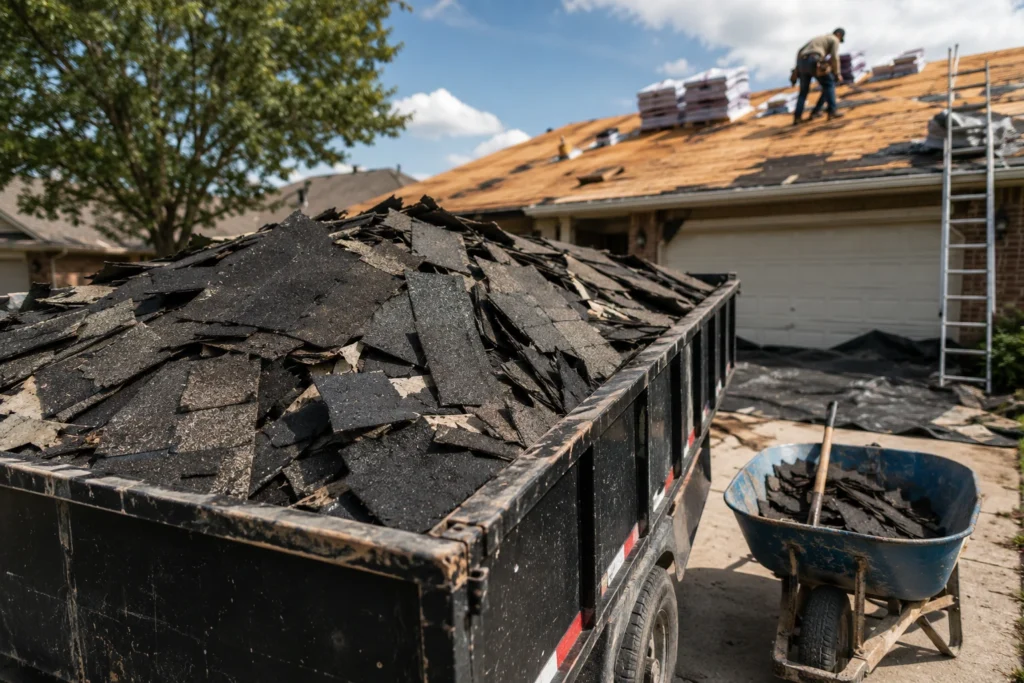
Old roofing materials must be removed before new materials can be installed. This process involves labor, transportation, and disposal expenses. However, some estimates fail to account for all tear-off requirements.
Dumpster Charges
Many reroof projects require dedicated dumpsters. Additionally, larger projects may require multiple containers. These expenses can quickly become substantial. Therefore, dumpster costs should be reviewed carefully.
Dump Fees
Disposal facilities charge fees based on weight, volume, or material type. Consequently, dump fees represent a legitimate project cost. Yet they occasionally remain absent from roof claim estimates.
Additional Debris Removal
Some projects generate more debris than originally anticipated. For example:
- Multiple roofing layers
- Damaged decking
- Unexpected material removal
- Storm-related debris
As a result, additional disposal expenses may become necessary.
Magnetic Nail Sweeping
Roof replacements leave behind nails. Therefore, professional contractors often perform magnetic sweeps to protect property owners, vehicles, pets, and landscaping. Although relatively inexpensive, this service is frequently overlooked.
Site Protection Measures
Protecting the property during construction is critical. Common protective measures may include:
- Tarping landscaping
- Covering outdoor equipment
- Protecting windows
- Shielding HVAC components
These costs are legitimate parts of many roofing projects.
Building Code-Related Omissions
Building codes evolve. Therefore, a roof installed twenty years ago may not meet today’s requirements. When damage triggers replacement, code upgrades may become necessary.
Why Code Upgrades Matter
Insurance estimates sometimes focus on replacing what existed before the loss. However, current code requirements may demand additional work. Consequently, the actual cost of repairs may exceed the original estimate.
Drip Edge Requirements
Many jurisdictions now require drip edge installation even when the original roof lacked it. Therefore, estimates should evaluate local code requirements carefully.
Ventilation Requirements
Modern roofing systems often require specific ventilation standards. Additionally, inadequate ventilation can create long-term performance problems. When ventilation upgrades become necessary, costs should be included in the claim.
Deck Re-Nailing Requirements
Certain building codes require roof deck re-nailing during replacement projects. Although the work may not be visible after installation, compliance remains important. As a result, this item frequently becomes a source of supplemental requests.
Manufacturer Installation Requirements
Roofing manufacturers often establish installation standards that exceed minimum code requirements. Therefore, estimates should account for both code compliance and manufacturer specifications whenever applicable.
Ordinance and Law Coverage
Many insurance policies contain ordinance and law coverage. This coverage may help pay for certain code-required upgrades. Consequently, policyholders should understand how these provisions may apply to their claim.
Waste Factor Errors and Material Quantity Issues
Even when all necessary line items appear, quantity errors can still create problems.
Understanding Waste Calculations
Roofing materials generate waste during installation. Cuts, angles, hips, ridges, valleys, and penetrations all contribute to material loss. Therefore, waste calculations play a significant role in estimate accuracy.
Why Roof Complexity Matters
Simple roofs generate less waste. Complex roofs generate more. For example, roofs with numerous valleys, dormers, and intersecting planes typically require additional materials. Consequently, generic waste factors may understate actual project requirements.
Common Measurement Errors
Measurement mistakes can occur for several reasons:
- Incorrect roof dimensions
- Overlooked roof sections
- Unaccounted accessories
- Inaccurate pitch calculations
As a result, estimates may fail to provide adequate funding.
Supplementing for Quantity Shortages
When quantity errors become apparent, contractors often submit supplements. However, resolving those disputes can take time. Therefore, accurate measurements from the beginning remain critical.
Why Missing Line Items Lead to Appraisal Disputes
Many claim disagreements begin during construction. Contractors discover omitted items. Property owners become frustrated. Meanwhile, insurers may request additional documentation. As discussions continue, disputes sometimes escalate.
Contractors Often Discover Missing Scope During Repairs
A roof inspection provides valuable information. However, some conditions only become visible after tear-off begins. Consequently, additional work may become necessary.
Estimates May Not Reflect Real-World Conditions
Roofing projects rarely unfold exactly as anticipated. Therefore, estimates prepared before construction may fail to capture every required repair.
Scope Disagreements Frequently Escalate
When supplements are denied or delayed, disagreements often grow. As a result, both sides may seek independent evaluations.
How Appraisal Can Help
The appraisal process may provide a structured method for resolving certain claim disputes. Additionally, independent appraisers can evaluate the scope and value of disputed items. Although every claim is unique, appraisal can sometimes help move stalled claims forward.
How Property Owners Can Identify Missing Xactimate Items
Property owners do not need to become roofing experts. However, asking the right questions can make a significant difference.
Review the Estimate Carefully
Read every line item. Compare listed materials to what your contractor recommends. Additionally, ask questions whenever something appears unclear.
Compare Contractor Findings
A detailed contractor proposal can reveal differences between scopes. Therefore, side-by-side comparisons are often valuable.
Obtain Independent Inspections
Independent evaluations can provide additional insight. Furthermore, they may identify items that were overlooked during the initial inspection.
Document Missing Components
Photographs, reports, and contractor documentation can strengthen discussions regarding scope deficiencies. Consequently, detailed records become extremely valuable.
When to Seek a Second Opinion
Some estimates are thorough. Others are not. If major differences exist between contractor findings and the insurance estimate, further review may be warranted. Potential warning signs include:
- Repeated supplement disputes
- Significant scope discrepancies
- Missing code-related items
- Unexplained estimate reductions
- Contractor concerns regarding funding
In these situations, an independent review may help clarify the issues.
Conclusion
Ultimately, many roof claim disputes involve scope rather than price. Although individual omissions may seem minor, they can collectively create substantial funding gaps. Therefore, understanding the most common Xactimate line items missing from roof claims can help property owners identify estimate deficiencies early. By carefully reviewing estimates, comparing contractor findings, and seeking professional guidance when necessary, homeowners can work toward a more complete and accurate claim outcome.
FAQs
Starter shingles, ridge caps, flashing components, drip edge, ventilation items, and labor-related charges are among the most frequently omitted items.
Some components are difficult to see during an inspection, while others may not be included due to incomplete scoping. As a result, necessary repairs may not appear in the original estimate.
Yes. Even small omissions can add up to thousands of dollars in additional repair costs that may not be reflected in the initial claim payment.
A pricing dispute involves the cost assigned to repairs, while a scope dispute concerns whether all required repairs were included in the estimate. Many roof claim disagreements stem from scope issues.
Yes. Contractors regularly review estimates and may identify omitted materials, labor charges, or code-required upgrades that need to be addressed.
Flashing is often difficult to inspect from the ground and may not be fully visible until roofing materials are removed. Consequently, flashing-related items are frequently supplemented during construction.
Yes. Current building codes may require upgrades that were not part of the original roof system. Ordinance and law coverage may help pay for certain code-related requirements.
Compare both scopes carefully and identify any differences in materials, labor, or code-related items. Understanding what is missing can help determine the reason for the discrepancy.
Absolutely. Incorrect measurements or inadequate waste calculations can result in material shortages and underfunded estimates.
If substantial disagreements remain after supplements are submitted or if important repair items continue to be disputed, an independent appraisal review may help evaluate the claim more thoroughly.