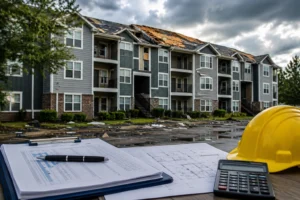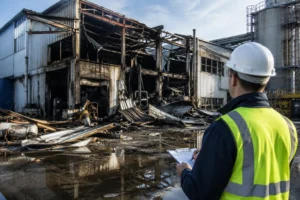

Commercial property losses can disrupt operations, strain finances, and create uncertainty for business owners. However, the damage itself is often only the beginning. Many disputes arise when policyholders and insurance companies disagree on the value of repairs or replacement costs. Fortunately, Commercial Property Insurance Appraisal Texas provides a structured method for resolving these disagreements without immediately turning to litigation. Whether the loss involves hail, wind, fire, or water damage, understanding the appraisal process can help property owners protect their financial interests and move claims toward resolution more efficiently.
Understanding Commercial Property Insurance Appraisal in Texas
Commercial insurance claims are rarely straightforward. Unlike residential properties, commercial buildings often contain multiple systems, specialized construction materials, tenant improvements, expensive equipment, and unique operational considerations. Consequently, determining the true cost of a loss can become complicated. A Commercial Property Insurance Appraisal Texas process is designed to resolve disagreements involving the amount of a covered loss. Most commercial insurance policies contain an appraisal clause. This provision allows either the policyholder or insurance carrier to request appraisal when both parties agree that damage exists but disagree on the amount necessary to repair or replace that damage. Importantly, appraisal focuses on valuation rather than coverage.
| Appraisal Handles | Appraisal Does Not Handle |
|---|---|
| Amount of loss disputes | Coverage disputes |
| Repair cost disagreements | Policy interpretation |
| Replacement cost disputes | Legal liability issues |
| Scope of damages | Bad faith allegations |
Therefore, business owners should understand that appraisal helps determine financial value, not policy coverage.
When Commercial Appraisal Is Commonly Used
Commercial property owners frequently encounter appraisal situations following significant losses. Some of the most common examples include:
Hail Damage Claims
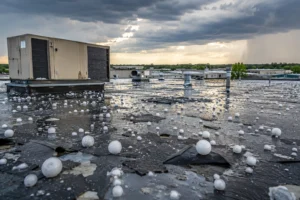
Texas experiences some of the most severe hailstorms in the country. As a result, commercial roofing systems frequently sustain damage that may not be fully visible from ground level. Property owners and insurers may disagree about whether repairs are sufficient or whether full replacement is necessary.
Wind Damage Claims
High winds can affect roofing systems, exterior cladding, signage, windows, and structural components. Even when both parties agree damage occurred, disagreements often arise regarding the extent of repairs required.
Fire Damage Losses
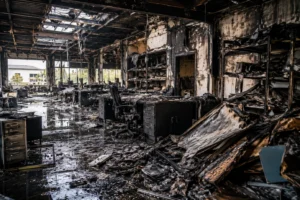
Fire losses create particularly complex valuation challenges. Beyond visible destruction, smoke contamination, electrical system impacts, HVAC contamination, and structural concerns can dramatically increase repair costs.
Water Damage Claims
Water intrusion often creates hidden damage. Moreover, moisture can spread into wall cavities, insulation, flooring systems, and structural materials. Determining the full scope of necessary repairs frequently becomes a point of contention.
Why Commercial Property Claims Frequently Lead to Disputes
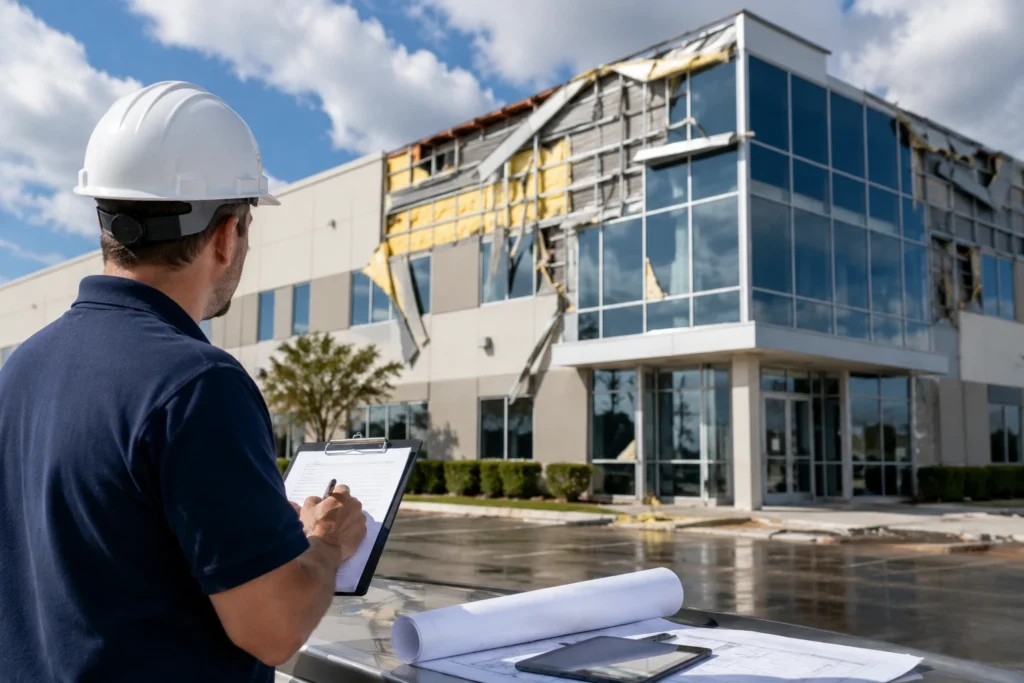
The larger the claim, the greater the likelihood of disagreement. Commercial claims involve far more moving parts than most residential losses. Multiple stakeholders may be involved, including property owners, tenants, contractors, engineers, consultants, and insurance representatives. Naturally, each party may view the damage differently.
Complex Building Systems
Commercial buildings contain numerous interconnected systems. Examples include:
- Roofing assemblies
- HVAC systems
- Electrical infrastructure
- Plumbing systems
- Fire suppression systems
- Elevators
- Exterior facades
- Interior build-outs
Damage affecting one system may create impacts elsewhere. For example, a roofing failure can lead to water intrusion, electrical damage, tenant improvements, and operational disruptions.
Larger Financial Stakes
When claims involve hundreds of thousands or even millions of dollars, scrutiny naturally increases. Every line item matters. Questions frequently arise regarding:
- Quantity calculations
- Labor costs
- Material pricing
- Code compliance
- Equipment replacement
- Specialized construction methods
Consequently, valuation disagreements often become unavoidable.
Common Commercial Property Claim Disputes in Texas
Although every loss is unique, several disputes appear repeatedly throughout Texas commercial claims.
Roof Damage Disputes
Roofing claims generate a substantial percentage of appraisal cases. Common areas of disagreement include:
- Repair versus replacement
- Matching issues
- Manufacturer requirements
- Code upgrades
- Hidden damage
- Fastener failures
- Insulation impacts
Large commercial roofing systems can contain thousands of individual components. Therefore, valuation becomes particularly challenging.
Fire Damage Valuation Disputes
Fire losses often extend far beyond visibly burned areas. Property owners frequently discover additional damage involving:
- Smoke migration
- Soot contamination
- Electrical systems
- HVAC ductwork
- Structural members
- Tenant spaces
As a result, repair costs may increase substantially beyond initial estimates.
Storm and Hail Claims
Storm-related claims remain a major source of commercial appraisal activity throughout Texas. Disputes often involve:
- Roofing systems
- Mechanical equipment
- Skylights
- Exterior metal panels
- Gutters and downspouts
- Building envelopes
Because hail impacts can vary across a property, differing opinions regarding damage severity are common.
How the Commercial Property Insurance Appraisal Process Works
Many business owners hear the term appraisal but never fully understand the process. Fortunately, the procedure is relatively straightforward.
Step 1: Appraisal Is Invoked
Either party may demand appraisal under the terms of the insurance policy. Before proceeding, the policy language should be reviewed carefully to ensure all requirements are satisfied. Most importantly, timing matters. Waiting too long can complicate matters, particularly if repairs have already begun.
Step 2: Each Side Selects an Appraiser
The policyholder chooses an appraiser. The insurance company chooses its own appraiser. These appraisers independently evaluate the loss and work toward determining the amount of damage. Because commercial losses are often complex, selecting an experienced appraiser is critical.
Step 3: An Umpire Is Selected
If the two appraisers cannot agree on all aspects of the claim, an umpire becomes involved. The umpire serves as a neutral third party. Rather than advocating for either side, the umpire helps resolve outstanding disagreements. Therefore, selecting a knowledgeable umpire is an important part of the process.
Step 4: Inspection and Evaluation
This stage often involves extensive investigation. The appraisal team may review:
- Damage photographs
- Contractor estimates
- Engineering reports
- Maintenance records
- Building plans
- Repair invoices
- Material specifications
Property inspections are frequently conducted to verify conditions firsthand. In complex losses, multiple site visits may occur. Modern technology has improved how commercial property damage is documented and evaluated. During complex losses, property owners, contractors, and appraisers may use aerial imagery, 3D modeling, and digital measurements to support their findings. Discussions surrounding Insurance Settlement often arise when determining the most effective way to capture roof conditions, building dimensions, and interior damage before the appraisal process begins. Commercial properties often contain interconnected systems that require careful evaluation after a loss. In some cases, consultants may analyze building performance using concepts related to Finite element method when investigating structural concerns following major storm or fire events. Water infiltration can spread far beyond the visible point of entry. Understanding how moisture migrates through building materials sometimes involves principles similar to Capillary action particularly when evaluating hidden damage within walls, insulation, and flooring assemblies.
Step 5: Appraisal Award Is Issued
Once sufficient information has been gathered, the appraisers and umpire work toward a final determination. When agreement is reached, an appraisal award is issued. In many situations, the award becomes binding regarding the amount of loss. As a result, commercial property owners often gain a clearer path toward claim resolution.
Documentation Every Commercial Property Owner Should Preserve
Strong documentation strengthens virtually every insurance claim. Unfortunately, many property owners begin collecting evidence only after disputes develop. That approach can create challenges later. Instead, documentation should begin immediately after the loss.
Essential Building Records
Keep copies of:
- Roof inspection reports
- Maintenance logs
- Construction records
- Building plans
- Equipment inventories
- Prior repair invoices
- Contractor proposals
These documents can provide valuable context during appraisal.
Loss Documentation
The most persuasive evidence is often collected shortly after the event. Important records include:
- Photographs
- Video documentation
- Emergency mitigation invoices
- Temporary repair receipts
- Contractor estimates
- Engineering reports
Ultimately, the more complete the documentation, the easier it becomes to establish the full scope of damage.
Benefits of Commercial Property Insurance Appraisal
When a significant claim dispute develops, business owners often feel trapped between competing opinions. Fortunately, appraisal offers several advantages that can help move the process forward.
Faster Resolution Than Litigation
Lawsuits can take months or even years to resolve. By comparison, appraisal is often completed much more quickly. While every claim differs, appraisal generally provides a more efficient path toward determining the amount of loss. As a result, businesses can often begin planning repairs and recovery sooner.
Reduced Legal Expenses
Litigation can become expensive. Attorney fees, court costs, expert witnesses, and lengthy discovery processes can quickly increase expenses. Appraisal typically involves fewer procedural requirements, which may reduce overall costs. Consequently, more resources can remain focused on restoring the property rather than funding legal battles.
Access to Specialized Expertise
Commercial property losses frequently involve technical construction issues. Appraisers and umpires often possess experience evaluating:
- Commercial roofing systems
- Structural components
- Fire damage
- Water intrusion
- Mechanical equipment
- Building code requirements
Therefore, valuation decisions are often based on practical industry knowledge.
More Accurate Damage Valuation
Many disputes arise because certain damage elements were overlooked or underestimated. Appraisal allows all parties to examine:
- Repair scope
- Replacement requirements
- Code upgrades
- Material pricing
- Labor costs
Ultimately, this process can produce a more complete assessment of the loss.
Commercial Property Types Commonly Involved in Texas Appraisals
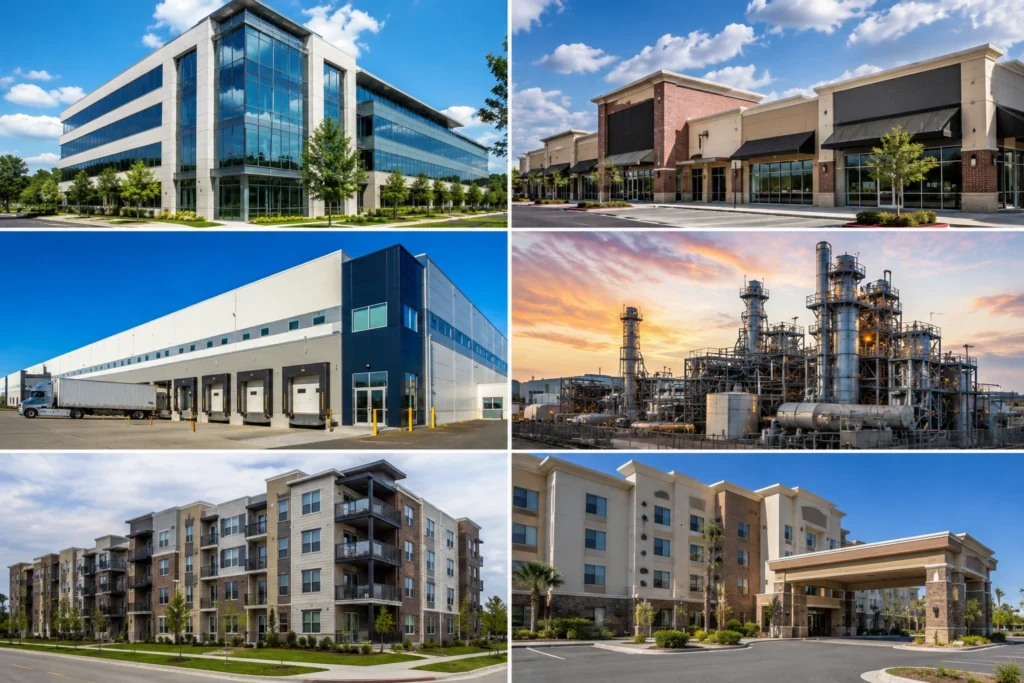
Virtually any commercial property can become involved in an appraisal dispute. However, certain property types appear more frequently than others.
Office Buildings
Office buildings often contain extensive interior improvements, HVAC systems, electrical infrastructure, and tenant-specific build-outs. Consequently, even moderate losses can become complex.
Retail Centers
Shopping centers frequently involve multiple tenants and shared building systems. Damage valuation may affect not only property owners but also tenants operating within the space.
Warehouses and Distribution Centers
Large roofing systems make warehouses particularly vulnerable to hail and wind claims. Additionally, equipment, inventory, and operational disruptions may further complicate valuation.
Industrial Facilities
Manufacturing plants often contain specialized machinery and production equipment. As a result, determining repair versus replacement costs can become a major issue.
Apartment Complexes
Multi-family properties regularly experience appraisal disputes involving:
- Roofing systems
- Exterior siding
- Common areas
- Interior unit damage
- Mechanical systems
Because multiple buildings may be involved, claim values can increase rapidly.
Hospitality and Healthcare Properties
Hotels, assisted living facilities, and healthcare buildings frequently require specialized repairs that can significantly impact claim valuations.
Challenges Unique to Texas Commercial Property Claims
Texas presents several unique risks that contribute to claim disputes.
Severe Weather Exposure
Texas consistently experiences some of the nation’s most destructive weather events. Common causes of commercial property claims include:
- Hailstorms
- Hurricanes
- Windstorms
- Tornadoes
- Severe thunderstorms
Accordingly, commercial property owners often face recurring claim situations throughout the life of a building.
Rapidly Changing Construction Costs
Construction pricing rarely remains static. Material shortages, labor demand, transportation costs, and supply chain disruptions can all influence repair estimates. As a result, valuation disagreements frequently emerge between contractors and insurers.
Building Code Compliance Issues
Local building requirements can significantly affect repair costs. In some cases, damaged portions of a building must be upgraded to meet current codes during reconstruction. These additional expenses may become a point of contention if not properly considered during claim evaluation.
Selecting the Right Commercial Insurance Appraiser in Texas
Not all appraisers possess the same level of experience. Choosing the right professional can significantly affect the appraisal process.
Look for Commercial Loss Experience
Commercial claims differ substantially from residential losses. Seek an appraiser with experience involving:
- Large-loss claims
- Commercial roofing systems
- Fire damage
- Water damage
- Industrial properties
- Multi-family properties
The more relevant experience they possess, the better equipped they will be to evaluate complex damages.
Construction Knowledge Matters
A strong commercial appraiser should understand building systems and construction practices. This knowledge helps identify:
- Hidden damage
- Code requirements
- Repair methodologies
- Replacement considerations
Consequently, important claim components are less likely to be overlooked.
Familiarity With Texas Claims
Texas weather creates unique loss patterns. An appraiser familiar with regional storm damage, roofing systems, and commercial construction trends can often provide valuable insight throughout the process.
Organizational Skills Are Critical
Commercial claims often involve thousands of pages of documentation. An effective appraiser should be capable of organizing:
- Estimates
- Photographs
- Engineering reports
- Invoices
- Inspection records
Strong organization helps present a more complete picture of the loss.
Mistakes Commercial Property Owners Should Avoid
Even strong claims can encounter problems when avoidable mistakes occur.
Waiting Too Long to Act
Time matters. Delays can make inspections more difficult and may complicate documentation efforts. Therefore, property owners should evaluate appraisal options as soon as significant disagreements arise.
Incomplete Documentation
Missing records can weaken a claim. Property owners should preserve every relevant document, estimate, photograph, and invoice whenever possible.
Relying Solely on Initial Estimates
Initial estimates do not always capture the full scope of damage. Additional inspections frequently uncover hidden issues that affect repair costs.
Overlooking Hidden Damage
Some of the most expensive damage remains out of sight. Examples include:
- Moisture intrusion
- Insulation damage
- Electrical impacts
- Structural deterioration
- HVAC contamination
Ignoring these items may result in substantial undervaluation.
Choosing an Inexperienced Appraiser
Commercial losses require specialized expertise. Selecting an appraiser without relevant experience may place the policyholder at a disadvantage.
How a Texas Insurance Appraiser Helps Improve Claim Accuracy
An experienced Texas insurance appraiser provides more than estimate review. They often assist with:
Independent Damage Evaluation
A thorough inspection helps identify visible and hidden damages that may affect claim value.
Scope Review
Commercial estimates can contain omissions. An appraiser evaluates whether all damaged components have been properly included.
Cost Analysis
Material pricing, labor costs, equipment expenses, and code-related upgrades are reviewed carefully.
Evidence Presentation
Supporting documentation plays a major role in appraisal. A qualified appraiser helps organize and present evidence effectively.
Pursuing Fair Valuation
Ultimately, the objective is not inflation or exaggeration. Rather, the goal is achieving an accurate valuation based on the actual damage sustained.
When Should a Business Consider Commercial Property Insurance Appraisal?
Several warning signs suggest appraisal may be appropriate. Common indicators include:
- Significant differences between estimates
- Large commercial losses
- Repeated claim delays
- Repair-versus-replacement disputes
- Scope disagreements
- Underpaid settlement offers
- Questions regarding code-related repairs
If these issues arise, reviewing the policy’s appraisal provision may be worthwhile.
Conclusion
Commercial property losses can create significant financial pressure. However, when valuation disputes arise, business owners are not without options. Commercial Property Insurance Appraisal Texas offers a structured process for resolving disagreements regarding the amount of loss while often avoiding prolonged litigation. Most importantly, early documentation, knowledgeable professionals, and a clear understanding of the appraisal process can help property owners pursue a more accurate claim outcome. Consequently, businesses can focus less on disputes and more on restoring operations and moving forward.
FAQs
It is a process used to resolve disagreements between a commercial property owner and an insurance company regarding the amount of a covered loss.
Appraisal is typically used when both parties agree damage exists but disagree on the cost to repair or replace the damage.
No. Appraisal focuses on the value of the loss and generally does not decide whether a claim is covered under the policy.
The property owner selects one appraiser, and the insurance company selects another. The two appraisers then choose an umpire.
In many cases, the appraisal award is binding regarding the amount of loss, although policy and legal factors may affect specific situations.
Office buildings, warehouses, retail centers, apartment complexes, industrial facilities, hotels, and many other commercial properties may utilize appraisal.
The timeline varies depending on the complexity of the loss, but appraisal is often faster than pursuing litigation.
Yes. Hail and wind losses are among the most common types of commercial property claims that proceed to appraisal in Texas.
Photographs, estimates, inspection reports, and repair records help support the valuation of damages and strengthen the appraisal process.
Businesses often consider appraisal when estimates differ significantly, settlement offers appear inadequate, or disputes over repair scope continue without resolution.