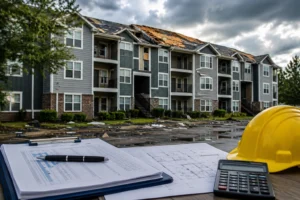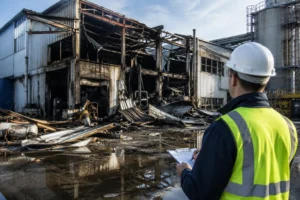

Insurance claims often come down to one thing: documentation. Consequently, property owners, contractors, and insurance appraisers increasingly compare EagleView vs Matterport for Insurance Claims when evaluating damage and resolving disputes. While both technologies help document losses, they serve very different purposes. Therefore, understanding their strengths can help create stronger evidence, support more accurate estimates, and improve outcomes during the insurance appraisal process.
Understanding the Importance of Accurate Documentation in Insurance Claims
Many insurance disputes begin with a simple disagreement. One party believes the damage is extensive. Another believes it is limited. Without reliable documentation, those disagreements can quickly escalate. Common claim disputes often involve:
- Missing damage
- Incorrect measurements
- Incomplete estimates
- Scope-of-loss disagreements
- Repair versus replacement debates
- Code upgrade requirements
The challenge is that property damage is often temporary. Roofs get repaired. Water-damaged drywall gets removed. Fire-damaged materials are discarded. Once that evidence disappears, proving the original condition becomes significantly more difficult. That is why documentation should be collected as early as possible. The goal is not simply to create records. The goal is to create objective evidence that can withstand scrutiny during negotiations, appraisal proceedings, or even litigation.
What Is EagleView?
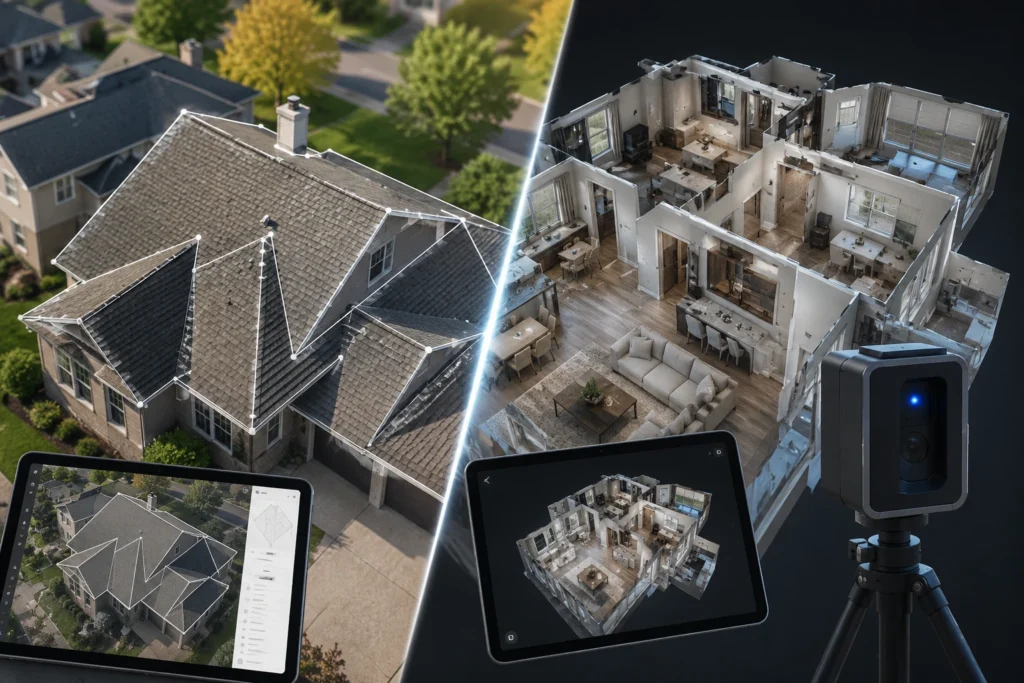
EagleView is one of the most recognized roof measurement platforms used throughout the insurance and construction industries. Rather than physically measuring a roof with tape measures and ladders, EagleView generates detailed reports using aerial imagery and advanced measurement technology. The result is a comprehensive roof diagram that provides critical information needed for estimating and claim evaluation.
How EagleView Works
EagleView relies on:
- High-resolution aerial photography
- Satellite imagery
- Aircraft imagery
- Proprietary measurement software
Using those resources, the platform creates detailed reports showing roof dimensions, slopes, ridges, valleys, hips, and other roofing components. In many situations, measurements can be obtained without anyone climbing onto the roof. That alone can improve safety and reduce inspection times. As property owners increasingly ask, What to Do If Insurance Missed Roof Damage it is important to understand that modern roof documentation may involve a combination of aerial imagery, drone technology, aircraft photography, and sophisticated measurement software to improve accuracy and safety.
Information Included in EagleView Reports
Typical reports include:
| Measurement Category | Information Provided |
|---|---|
| Roof Area | Total square footage |
| Roof Pitch | Slope calculations |
| Ridge Length | Linear measurements |
| Valley Length | Linear measurements |
| Eaves and Rakes | Edge dimensions |
| Waste Calculations | Roofing material estimates |
| Roof Diagram | Scaled visual layout |
These measurements often become the foundation for roofing estimates used in insurance claims.
Who Uses EagleView?
EagleView is commonly used by:
- Insurance carriers
- Roofing contractors
- Public adjusters
- Insurance appraisers
- Engineers
- Consultants
For roof-related claims, EagleView has become a standard documentation tool across much of the industry.
What Is Matterport?
Matterport approaches documentation from a completely different angle. Instead of aerial measurements, Matterport creates immersive 3D digital models of properties. Think of it as a virtual walkthrough. Except it captures far more than photographs alone. Matterport scans create what many professionals call a “digital twin” of a property. Users can virtually walk through rooms, inspect damage, and take measurements directly from the model. For insurance claims, that capability can be extremely valuable. Matterport systems often rely on advanced sensing technologies that process large amounts of spatial data. Similar concepts are used in fields involving photogrammetry, where measurements and models are created from photographs and imagery.
How Matterport Works
Matterport systems typically use:
- 360-degree cameras
- LiDAR scanning technology
- Depth sensors
- Cloud-based processing
The scanning process captures thousands of data points throughout the property. Those points are then assembled into a navigable 3D model. The finished result allows users to move room by room and inspect conditions from virtually anywhere. The scanning process captures thousands of data points and converts them into a navigable three-dimensional model through sophisticated spatial mapping techniques. This process shares principles with point cloud data, a method commonly used to represent physical environments digitally.
Information Included in Matterport Models
Matterport documentation may include:
- Room dimensions
- Floor plans
- Interactive walkthroughs
- High-resolution imagery
- Structural layouts
- Damage documentation
Unlike traditional photographs, the user is not limited to a fixed camera angle. The model preserves the environment in a way that photographs often cannot.
Who Uses Matterport?
Matterport has become increasingly popular among:
- Restoration contractors
- Insurance adjusters
- Insurance appraisers
- Attorneys
- Engineers
- Property owners
Its ability to preserve conditions immediately after a loss makes it particularly useful for complex claims.
EagleView vs Matterport for Insurance Claims: Key Differences
The comparison between EagleView vs Matterport for Insurance Claims becomes clearer when you examine what each technology is designed to accomplish. They are not direct competitors. They solve different problems.
Measurement Methodology
EagleView primarily measures roofs from above. Matterport documents structures from within. As a result, each tool excels in different environments. EagleView provides highly detailed roof measurements without requiring roof access. Matterport creates a comprehensive visual record of property conditions.
Interior Documentation
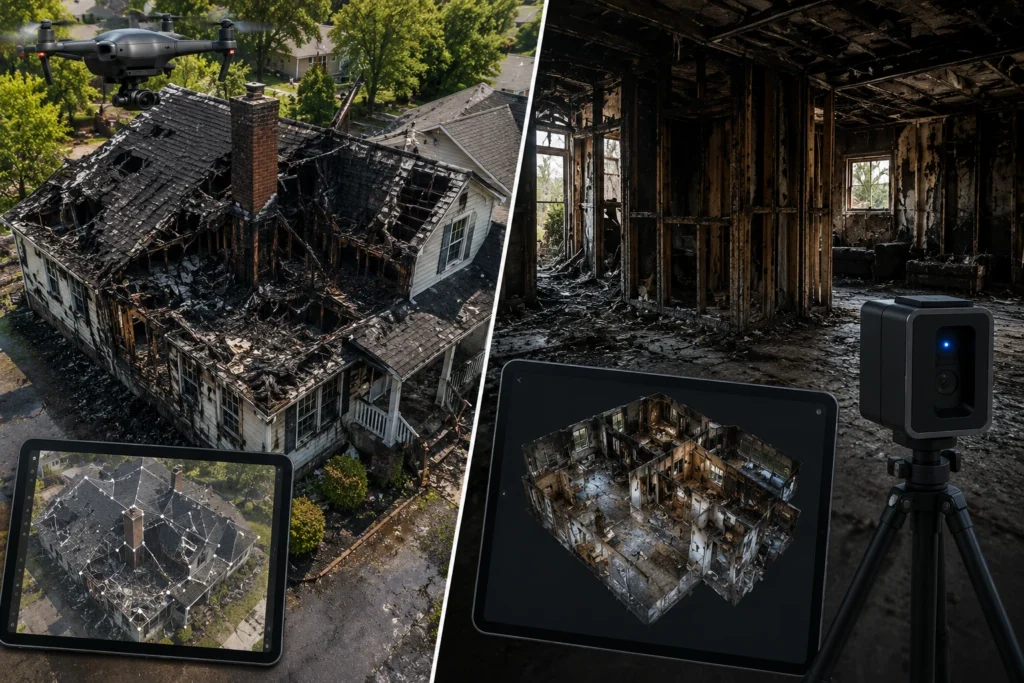
This is where Matterport gains a substantial advantage. EagleView offers little to no insight into interior conditions. Matterport, on the other hand, can document:
- Water damage
- Fire damage
- Smoke damage
- Structural movement
- Flooring conditions
- Ceiling damage
For interior losses, Matterport often becomes one of the strongest forms of evidence available.
Roof Inspection Strengths
Roof claims represent EagleView’s specialty. The platform was specifically designed to measure roofing systems accurately and efficiently. For claims involving:
- Hail damage
- Wind damage
- Hurricane damage
- Roof replacement disputes
EagleView frequently provides the measurements needed to evaluate repair costs.
Visual Documentation Quality
This category heavily favors Matterport. While EagleView produces highly useful reports, they remain largely measurement-based. Matterport allows users to virtually step inside the property and observe conditions firsthand. That visual impact can be powerful during claim negotiations.
EagleView vs Matterport for Roof Damage Claims
Roof damage claims represent one of the most common types of insurance losses. This is where the EagleView vs Matterport for Insurance Claims discussion becomes particularly interesting.
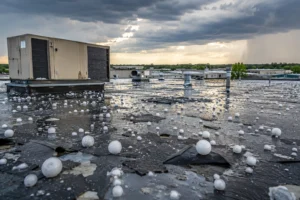
Hail Damage Claims
Hail claims often involve questions regarding:
- Impact locations
- Roof dimensions
- Material quantities
- Repair scope
EagleView helps answer many of those questions by providing precise roof measurements. Contractors and appraisers frequently use these measurements to verify estimate quantities.
Wind Damage Claims
Wind claims can create disputes regarding:
- Missing shingles
- Lifted roofing materials
- Repairability
- Replacement requirements
Accurate roof measurements become critical when preparing estimates. Small measurement errors can translate into significant differences in claim value.
Hurricane Claims
Hurricane losses often affect entire roofing systems. Large and complex roofs can be difficult to measure manually. EagleView streamlines that process while reducing safety risks associated with roof access.
Roof Replacement Disputes
One of the most common appraisal disputes involves quantity disagreements. How many squares of roofing are actually present? How much ridge cap is required? How much waste should be included? EagleView reports frequently help answer those questions objectively.
| Feature | EagleView | Matterport |
|---|---|---|
| Roof Measurements | Excellent | Good |
| Roof Pitch Calculations | Excellent | Limited |
| Surface Area Reporting | Excellent | Moderate |
| Interior Documentation | Poor | Excellent |
| Virtual Inspection | Limited | Excellent |
For roofing disputes, EagleView often becomes the stronger primary tool.
EagleView vs Matterport for Water Damage Claims
Water damage losses often extend far beyond what is immediately visible. A small ceiling stain may indicate a much larger problem hidden behind walls, beneath flooring, or inside structural cavities. Consequently, documenting conditions quickly becomes essential.
Documenting Moisture-Related Damage
Water losses frequently affect multiple building components simultaneously. These may include:
- Drywall
- Flooring
- Cabinets
- Insulation
- Trim
- Structural framing
Photographs can help. However, they often fail to show the full relationship between affected areas. Matterport provides a more complete visual record. By creating a digital model of the property, the system allows adjusters, appraisers, contractors, and property owners to revisit conditions long after mitigation begins.
Capturing Hidden Areas
Water damage investigations often require multiple inspections. Additional damage may be discovered after demolition begins. Matterport helps establish a baseline record of conditions before materials are removed. That documentation can become valuable evidence if disputes arise later.
Supporting Dry-Out Documentation
Restoration contractors frequently use Matterport to document:
- Equipment placement
- Affected rooms
- Moisture migration paths
- Structural conditions
This information can help justify mitigation costs and support claim documentation.
Why Matterport Often Excels in Water Loss Claims
When comparing EagleView vs Matterport for Insurance Claims, water losses generally favor Matterport. The ability to visually preserve interior damage creates a level of documentation that roof measurement reports alone cannot provide.
EagleView vs Matterport for Fire Damage Claims
Fire losses create some of the most complex insurance claims. Damage can affect both the exterior and interior of a property. Smoke, heat, water, and structural concerns often overlap. As a result, multiple documentation tools may be required.
Exterior Fire Damage Documentation
EagleView can help document:
- Roof damage
- Structural measurements
- Exterior dimensions
- Roofing quantities
These measurements may assist in preparing repair or replacement estimates.
Interior Fire and Smoke Damage Documentation
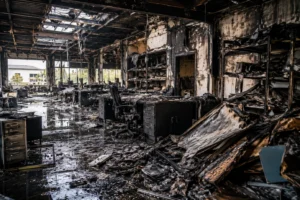
This is where Matterport becomes particularly valuable. Fire-damaged properties often contain extensive interior damage that must be documented before cleanup begins. Matterport can preserve:
- Smoke staining
- Structural damage
- Damaged contents
- Burn patterns
- Room conditions
Years later, stakeholders can still review those conditions through the digital model.
Structural Damage Recording
Serious fires may impact:
- Roof framing
- Trusses
- Ceilings
- Load-bearing walls
Detailed visual records help engineers and appraisers evaluate those conditions more effectively.
Which Technology Provides Better Evidence?
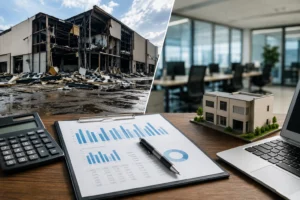
For interior fire losses, Matterport generally provides stronger documentation. For roof measurement and exterior quantity calculations, EagleView often remains the preferred solution. In many fire claims, using both technologies delivers the most complete evidence package.
How Insurance Appraisers Use EagleView Reports
Insurance appraisers frequently encounter disputes involving roof measurements. Even small quantity differences can significantly affect claim values.
Verifying Roof Measurements
EagleView provides an independent source for:
- Roof area calculations
- Slope measurements
- Linear measurements
- Roofing quantities
This information helps appraisers evaluate competing estimates.
Identifying Scope Omissions
Disputes often arise because important roofing components were overlooked. Examples include:
- Ridge caps
- Starter shingles
- Drip edge
- Valley metal
- Flashing
Accurate roof diagrams make it easier to identify missing items.
Supporting Replacement Calculations
Roof replacement costs depend heavily on accurate measurements. EagleView reports provide the foundation for many estimate calculations.
Resolving Quantity Disputes
One contractor may calculate 35 roofing squares. Another may calculate 41. Appraisers frequently use EagleView reports to determine which measurement is more accurate.
How Insurance Appraisers Use Matterport Models
Matterport has become increasingly useful during appraisal proceedings. The ability to review damage remotely creates several advantages.
Reviewing Damaged Areas Remotely
Appraisers may not always inspect a property immediately after a loss. Matterport allows them to examine preserved conditions even months later.
Preserving Conditions Before Repairs
One of the biggest challenges in insurance claims is disappearing evidence. Repairs begin. Demolition occurs. Damaged materials are removed. Matterport preserves those conditions before they change.
Supporting Expert Opinions
Engineers, consultants, and appraisers can reference the model when preparing reports. This creates greater consistency throughout the claim process.
Presenting Evidence During Appraisal
Visual evidence often carries significant weight. Matterport models allow participants to virtually walk through damaged areas rather than relying solely on photographs. That can improve understanding and reduce disputes.
Strengths and Weaknesses of EagleView
No technology is perfect. Understanding limitations is just as important as understanding advantages.
Advantages
EagleView offers several benefits:
- Fast report generation
- Accurate roof measurements
- Improved inspection safety
- Industry-wide acceptance
- Strong support for roofing estimates
For roof-related claims, these advantages are substantial.
Limitations
However, EagleView also has limitations. These include:
- Minimal interior documentation
- Limited visual evidence
- Dependence on image quality
- Inability to document hidden damage
It excels at measurement but not necessarily at visual preservation.
Strengths and Weaknesses of Matterport
Matterport offers a very different set of strengths.
Advantages
Benefits include:
- Detailed visual evidence
- Virtual walkthrough capability
- Long-term condition preservation
- Remote accessibility
- Strong litigation support
For complex losses, these capabilities can be extremely valuable.
Limitations
Matterport also presents challenges. These include:
- On-site scanning requirements
- Longer capture times
- Equipment costs
- Learning curve for some users
Despite these limitations, many professionals consider the documentation value well worth the effort.
Can EagleView and Matterport Be Used Together?
Absolutely. In fact, many claim professionals believe the strongest documentation packages use both technologies.
Why Many Professionals Combine Both Tools
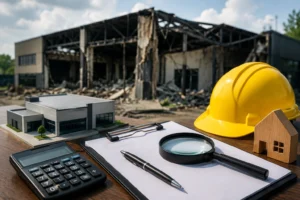
Each platform fills gaps left by the other. EagleView provides measurements. Matterport provides visual evidence. Together, they create a more complete picture of the loss.
Example of a Comprehensive Claim Documentation Strategy
Exterior Documentation
Use EagleView to obtain:
- Roof measurements
- Slope calculations
- Quantity reports
Interior Documentation
Use Matterport to capture:
- Room conditions
- Damage locations
- Structural concerns
- Contents damage
Supporting Estimates
The combined documentation package can strengthen:
- Repair estimates
- Replacement estimates
- Appraisal submissions
- Expert reports
Benefits During Insurance Appraisal Disputes
Insurance appraisal often revolves around evidence. The more objective the evidence, the easier it becomes to resolve disagreements. Combining EagleView and Matterport helps reduce uncertainty.
Cost Comparison: EagleView vs Matterport
Cost is often part of the decision-making process.
Typical EagleView Costs
Pricing generally varies based on:
- Property size
- Report type
- Roof complexity
However, the cost is often modest compared to the value of accurate measurements.
Typical Matterport Costs
Matterport expenses may include:
- Scanning services
- Equipment costs
- Hosting fees
The investment is usually higher than a standard roof report.
Return on Investment During Large Claims
For large losses, documentation costs are often small compared to potential claim differences. A few thousand dollars in additional claim recovery can easily justify the expense.
When Additional Documentation Pays for Itself
Additional documentation may provide substantial value when:
- Claims are disputed
- Damages are extensive
- Multiple parties are involved
- Appraisal is anticipated
Which Tool Is Better for Insurance Claims?
The answer depends on the type of loss.
Best Choice for Roof Claims
EagleView typically performs best for:
- Hail claims
- Wind claims
- Roof replacement disputes
- Quantity verification
Best Choice for Interior Damage Claims
Matterport generally provides superior documentation for:
- Water losses
- Fire damage
- Smoke damage
- Structural concerns
Best Choice for Commercial Property Claims
Large commercial claims often benefit from both technologies. Each addresses different aspects of the loss.
Best Choice for Insurance Appraisal Cases
Insurance appraisal disputes frequently require:
- Accurate measurements
- Detailed visual evidence
Therefore, combining both tools often creates the strongest case.
| Scenario | Recommended Tool |
|---|---|
| Roof Replacement Dispute | EagleView |
| Hail Claim | EagleView |
| Water Damage Loss | Matterport |
| Fire Loss | Matterport |
| Commercial Building Claim | Both |
| Insurance Appraisal Dispute | Both |
Conclusion
Ultimately, the debate over EagleView vs Matterport for Insurance Claims is not about choosing a single winner. Rather, it is about selecting the right tool for the right purpose. EagleView excels at roof measurements and quantity verification, while Matterport shines when documenting interior damage and preserving property conditions. Therefore, property owners, contractors, and insurance appraisers should evaluate the specific needs of each claim before choosing a documentation strategy. In many cases, combining both technologies provides the strongest evidence, supports more accurate valuations, and helps resolve appraisal disputes more efficiently.
FAQs
EagleView focuses primarily on roof measurements and aerial property analysis, while Matterport creates immersive 3D models that document interior and exterior property conditions.
Yes. EagleView is widely used throughout the insurance and roofing industries because it provides detailed roof measurements that can help resolve quantity and scope disputes.
Matterport can capture exterior areas, but it is generally not as effective as EagleView for measuring roof dimensions, slopes, and roofing quantities.
Matterport is usually the better choice because it can document room conditions, moisture-related damage, and affected building materials in a detailed visual format.
Many insurance carriers use EagleView reports when evaluating roof damage claims, estimating repair costs, and verifying roofing measurements.
Yes. Matterport models provide visual evidence that appraisers, contractors, and other experts can review remotely throughout the dispute resolution process.
Not always. However, large or complex claims often benefit from both technologies because they provide different types of documentation.
Drone inspections are becoming more common because they improve safety and capture detailed imagery, but many claims still rely on multiple inspection methods and measurement tools.
Commercial claims frequently benefit from both EagleView and Matterport, especially when roof measurements and interior damage documentation are equally important.
Accurate documentation can reduce disputes, support more complete estimates, and provide stronger evidence when claim values are challenged.