Key takeaways
- Xactimate values the loss with regional price lists; contractors price real costs.
- Scope gaps, waste, pricing dates and overhead and profit drive most differences.
- Itemized contractor estimates are much harder for adjusters to dismiss.
- Compare estimates line by line and support each difference with evidence.
- Appraisal resolves amount-of-loss disputes when coverage is accepted.
Xactimate vs contractor estimates comes down to purpose and pricing. Xactimate is estimating software insurers use to price repairs line by line from regional price lists. A contractor estimate reflects what that contractor will actually charge, based on real crew, supplier and site costs. They often differ because of scope gaps, pricing assumptions, waste, overhead and profit and code items.
What is Xactimate?
Xactimate is property estimating software developed by Xactware, a Verisk business. It is the most widely used estimating platform in the U.S. property insurance industry. Adjusters use it to build estimates by selecting line items, such as "remove and replace laminated comp shingles" or "paint drywall, two coats," and entering quantities. The software applies unit prices from a price list for the property's area.
How Xactimate pricing works
Xactimate price lists are built from market research on labor, materials and equipment and are updated regularly, often monthly, by region. Each unit price bundles materials, labor and sometimes equipment for that task.
| Pricing factor | How it affects Xactimate estimates |
|---|---|
| Labor rates | Vary by trade and region |
| Material costs | Change as supplier pricing moves |
| Equipment | Rental rates for lifts, dumpsters and safety gear |
| Market conditions | Post-storm demand may lag behind real prices |
| Price list date | An older list may not reflect current costs |
For a deeper look, read how Xactimate pricing works in Texas and why Xactimate estimates differ by ZIP code.
Who uses Xactimate?
- Staff and independent insurance adjusters
- Public adjusters
- Roofing and restoration contractors who work insurance claims
- Insurance appraisers and umpires
Because so many parties use it, Xactimate acts as a common language for claims. That makes it easier to compare estimates item by item, which is a big advantage in a dispute. It also means the quality of an Xactimate estimate depends heavily on who writes it and how thoroughly they inspected the property.
Xactimate vs Symbility
Symbility is another claims estimating platform used by some insurers. It works on a similar principle: line items, quantities and regional pricing. The comparison issues are the same, so everything in this guide about Xactimate vs contractor estimates applies to Symbility estimates too. Appraisers and estimators who work in both platforms can translate one into the other for an apples-to-apples review.
What is a contractor estimate?
A contractor estimate is a bid to perform the work. Contractors build it from their own costs: crew wages, subcontractor quotes, supplier pricing, equipment, insurance, overhead and the profit they need to stay in business. Many contractors price by the job or by the square rather than by line item.
What contractors account for
- Visible damage and the work needed to repair it properly
- Real material quantities, including waste and cut-offs
- Steep pitches, multiple stories and difficult access
- Safety requirements and equipment
- Local code requirements and permits
- Specialty or discontinued materials
- Supplier delays and current market prices
- Project supervision and coordination of trades
A contractor estimate tends to reflect what it really takes to complete the job on your property, but a lump-sum bid can be hard for an adjuster to compare with a line-item estimate.
Xactimate vs contractor estimates: side-by-side comparison
| Feature | Xactimate estimate | Contractor estimate |
|---|---|---|
| Prepared by | Adjuster, appraiser or contractor using software | The contractor bidding the job |
| Purpose | Value the covered loss | Price the work to be performed |
| Pricing basis | Regional price list averages | Actual costs plus margin |
| Format | Detailed line items with quantities | Line items or lump sum |
| Hidden damage | Added later through supplements | May include allowances |
| Overhead and profit | Applied separately, sometimes omitted | Built into the price |
| Ease of comparison | High when both sides use it | Lower if not itemized |
Why do Xactimate and contractor estimates differ?
Different goals
An adjuster's job is to value the covered damage they observed. A contractor's job is to complete the repair correctly and profitably. Neither is necessarily wrong, but they start from different questions. The adjuster asks what the policy owes for the damage documented. The contractor asks what it will cost to deliver a finished, code-compliant repair that carries their warranty.
Scope differences
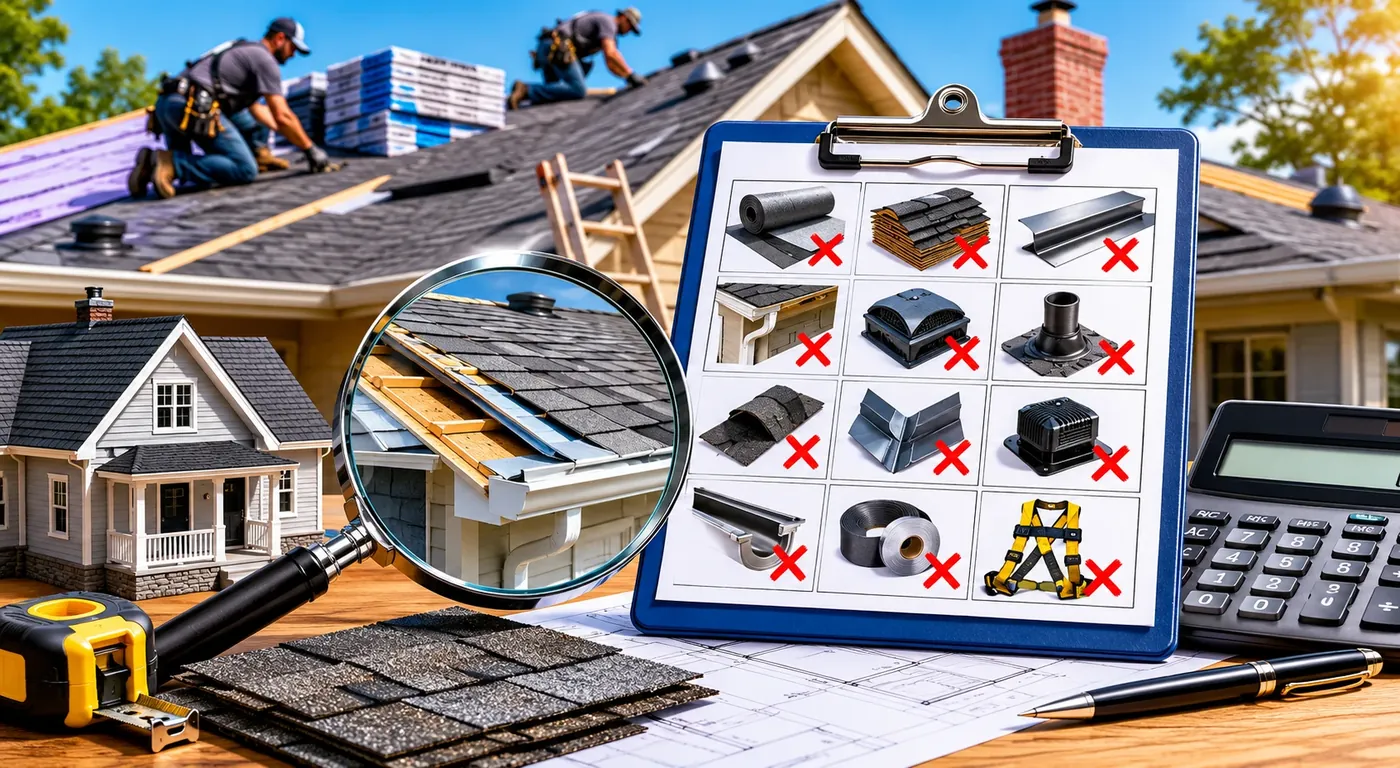
Scope is usually the biggest source of difference. Contractors often include items that the carrier's estimate leaves out:
- Drip edge, starter course and ridge cap on roofs
- Step, counter and apron flashing
- Ventilation components and pipe jacks
- Gutters, downspouts and screens
- Code-required items like underlayment upgrades
- Detach and reset of satellite dishes, solar panels or fixtures
- Hidden water damage behind walls or under floors
See common Xactimate line items missing from roof claims for a longer list.
Pricing differences
Even with identical scope, totals can differ. A price list may lag behind post-storm demand, may not reflect specialty materials, or may be dated months before the repair. Contractors price from actual quotes at the time of the job.
Quantity and waste
Roofs with many hips, valleys and dormers waste more material than simple gables. If the carrier applies a lower waste factor than the roof's geometry requires, the material quantity will be short. Measurement differences from aerial reports versus hand measurements also add up.
Overhead and profit
When a job requires a general contractor to coordinate several trades, overhead and profit (often figured as 10 percent each in the industry, though there is no fixed rule) is commonly a legitimate cost. Some carrier estimates omit it, which alone can create a noticeable gap.
Can your insurance company ignore a contractor estimate?
An insurer is not required to pay whatever a contractor bids. It is, however, expected to evaluate the claim reasonably, and a detailed contractor estimate is evidence the adjuster should consider. Texas Insurance Code Chapter 541 prohibits certain unfair settlement practices, such as failing to attempt a fair settlement once liability is reasonably clear.
In practice, carriers respond far better to estimates that match their own format. A contractor estimate that lists line items, quantities and photos of each damaged component is much harder to set aside than a one-page bid. Read more in can your insurance company ignore contractor estimates. This is general information, not legal advice.
How to reconcile Xactimate and contractor estimates
- Get both estimates in full, including the carrier's line-item detail and price list date.
- Convert to the same format if possible, so line items can be compared directly.
- Match items one by one and mark what is missing, what has different quantities and what is priced differently.
- Support each difference with photos, measurements, code references or supplier quotes.
- Ask for a price list update if the carrier's estimate uses outdated pricing.
- Submit a written supplement with the documentation attached.
- Escalate to appraisal if the carrier accepts coverage but will not agree on the amount.
What a strong contractor estimate includes
- Every damaged area listed separately, such as each roof slope, elevation or room
- Quantities with units: squares, square feet, linear feet or each
- Unit prices for materials and labor, or a clear breakdown by trade
- Waste factors explained by the roof's actual geometry
- Steep-pitch, high-roof and access charges where they apply
- Code items with the requirement noted
- Photos referenced to each line item
An estimate built this way gives the adjuster something to verify rather than something to argue with.
Often, the gap between Xactimate vs contractor estimates shrinks dramatically once both are in the same format. What remains is usually a handful of real disagreements that can be negotiated or decided through appraisal. Our article on insurance estimate vs actual repair cost covers related issues like depreciation and hidden damage.
Xactimate and contractor estimates in Texas claims
Texas sees large waves of hail and wind claims each spring across Dallas-Fort Worth, Austin, San Antonio and the Panhandle, plus hurricane claims along the Gulf Coast. After a major storm, demand for roofers and materials surges. That is exactly when gaps between price lists and real contractor pricing tend to widen.
Texas also has specific protections for policyholders. Under the Prompt Payment of Claims Act (Tex. Ins. Code ch. 542), insurers generally must accept or reject a claim within 15 business days of receiving requested information and pay within 5 business days after accepting it. Most Texas property policies also contain an appraisal clause, which lets an appraisal panel decide the amount of loss when the two sides cannot agree.
When appraisal resolves estimate disputes
Appraisal is designed for exactly this kind of disagreement: both sides agree the loss is covered but disagree on what it costs. Each party selects an appraiser, the appraisers try to agree on the amount, and an umpire decides any items they cannot settle. Most appraisal panels work in Xactimate or Symbility so every item can be compared directly.
Before invoking appraisal, compare the likely cost with the amount in dispute. Our appraisal cost calculator helps you decide whether the numbers justify it.
TX Insurance Appraiser prepares independent Xactimate estimates and Symbility estimates for Texas homeowners and businesses, and Joseph Dittman serves as the policyholder's appraiser when a dispute moves to appraisal.
Next steps
Do not assume the carrier's Xactimate estimate is final or that your contractor's bid is automatically right. Put both side by side, line by line. Document every missing item, quantity difference and pricing gap, and present the differences in a format the adjuster can verify. That approach resolves many disputes without appraisal, and builds a strong record if you need it.
Frequently asked questions
Is Xactimate pricing accurate?
Xactimate pricing is based on regional market research and is updated regularly, so it is a reasonable baseline for many repairs. It can lag behind real costs after major storms, may not reflect specialty materials and depends on the price list date used. Accuracy also depends on the adjuster capturing the full scope and correct quantities.
Should my contractor use Xactimate?
It helps. When a contractor's estimate is written in Xactimate or another itemized format, the adjuster can compare it directly with the carrier's estimate. That makes missing items and quantity differences obvious. Lump-sum bids are harder to evaluate and easier for an insurer to discount, even when the price is fair.
What is overhead and profit in an Xactimate estimate?
Overhead and profit covers a general contractor's business costs and margin for coordinating a job. It is applied as a percentage on top of line items, often 10 percent each by industry convention. Carriers commonly include it when a project needs multiple trades, but disputes over whether it applies are frequent.
Why is my contractor's estimate so much higher than the insurance estimate?
The usual causes are scope differences, such as missing flashing, vents or gutters, lower quantities or waste in the carrier estimate, outdated pricing and omitted overhead and profit. Comparing the estimates line by line and documenting each difference is the fastest way to find out how much of the gap is legitimate.
Can appraisal decide between Xactimate and a contractor estimate?
Appraisal decides the amount of loss rather than choosing one estimate over another. The appraisers review the damage and the competing estimates and set values for each item, with an umpire resolving any disagreements. In Texas, appraisers can assess damage but do not decide coverage questions.

About the author: Joseph Dittman
Joseph is the lead appraiser at TX Insurance Appraiser and a Texas-licensed public adjuster (Rise Public Adjusting LLC, TDI license #3356839). He has spent his career inspecting hail, wind, water and fire losses and negotiating property claims across Texas. More about Joseph.
This article is general information about property insurance claims in Texas and is not legal advice. Policy language and facts vary; review your policy or consult a Texas attorney for legal questions.