
Flat roof insurance claim challenges can quickly turn a straightforward property loss into a complicated dispute. While flat roofs are common on commercial buildings and many residential properties throughout Texas, they often create unique problems during the insurance claims process. Moreover, much of the damage that affects a flat roof is hidden beneath the surface, making it difficult to identify, document, and properly value. Consequently, property owners frequently encounter disagreements involving coverage, repair methods, replacement costs, and claim settlements. Understanding these challenges can help you make informed decisions and better protect your financial interests after a loss.
What Makes Flat Roof Insurance Claims Different?
Unlike traditional sloped roofs, flat roofing systems manage water differently. Instead of shedding water rapidly, they rely on drainage systems, membranes, flashing components, and insulation layers working together as a complete waterproofing system. As a result, damage often develops in ways that are not immediately visible. Common flat roofing systems found throughout Texas include:
- TPO roofing
- EPDM roofing
- PVC roofing
- Modified bitumen
- Built-up roofing (BUR)
- Spray polyurethane foam roofing
Many modern flat roofing systems use advanced polymer materials that provide flexibility, durability, and weather resistance. However, storm impacts can affect these materials in ways that are not immediately visible from the surface. Because each roofing system responds differently to weather events, claim evaluations can become far more complex than many property owners expect.
Why Damage Is Harder to Identify
A shingle roof with missing shingles often provides obvious evidence of storm damage. However, flat roofs rarely tell such a simple story. Many flat roof insurance claim challenges arise because substantial damage may exist beneath the membrane while the roof surface appears relatively normal. Potential hidden issues include:
- Wet insulation
- Moisture intrusion
- Delaminated materials
- Damaged roof decking
- Compromised seams
- Hidden punctures
Without specialized testing, these problems can remain undetected for months.
Common Causes of Flat Roof Insurance Claims
Texas weather places tremendous stress on flat roofing systems. From hailstorms and hurricanes to severe thunderstorms and extreme heat, roofing materials endure year-round exposure. Consequently, flat roof claims can involve multiple types of damage.
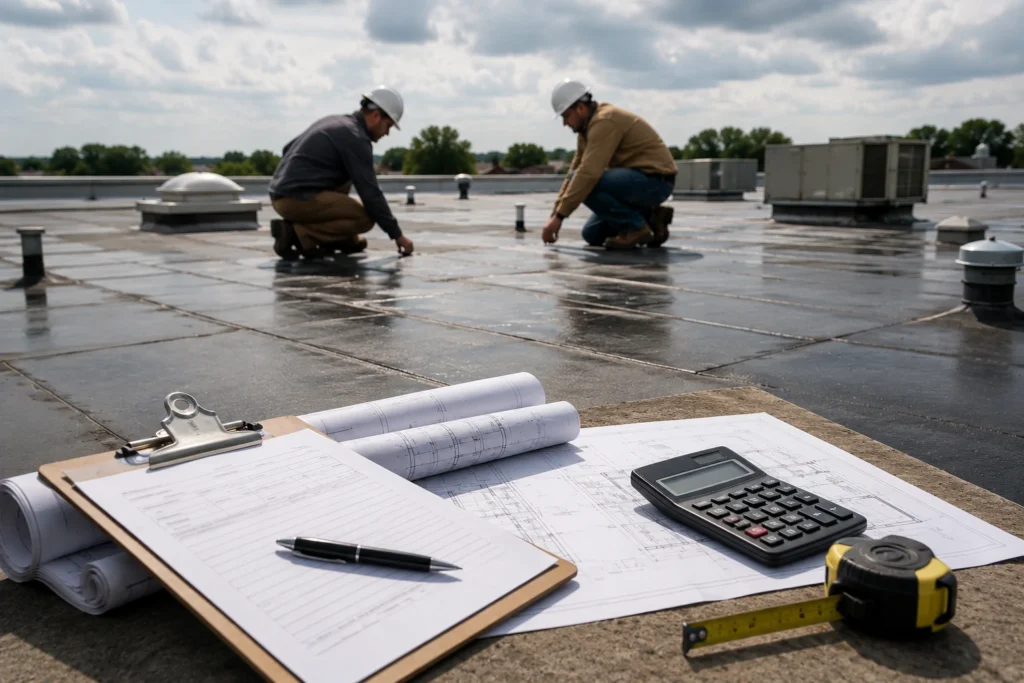
Hail Damage
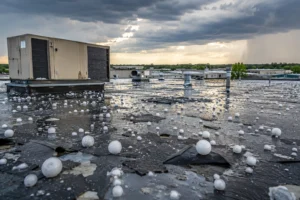
Hail remains one of the leading causes of flat roof insurance claims. Unlike asphalt shingles, membrane roofing systems often experience damage that is less obvious but equally serious. Common hail-related damage includes:
- Surface punctures
- Fractures
- Compression damage
- Membrane weakening
- Seam separation
Initially, the roof may appear functional. However, moisture can gradually enter the roofing assembly and create hidden problems long after the storm has passed. This delayed damage frequently contributes to claim disputes.
Wind Damage
Many property owners underestimate the impact wind can have on flat roofs. Strong winds generate uplift pressure that places stress on membranes, fasteners, and flashing systems. Common forms of wind damage include:
- Membrane lifting
- Loose flashing
- Detached edge metal
- Fastener failures
- Open seams
Although some of these conditions appear minor at first, they can eventually lead to significant water intrusion.
Water Intrusion and Ponding
Standing water remains one of the most challenging issues affecting flat roofs. When water remains on a roof for extended periods, the risk of deterioration increases significantly. Potential consequences include:
| Issue | Potential Result |
|---|---|
| Ponding Water | Membrane deterioration |
| Blocked Drains | Overflow damage |
| Saturated Insulation | Reduced energy efficiency |
| Structural Loading | Deck stress |
| Long-Term Moisture | Mold development |
Insurance carriers sometimes classify ponding as a maintenance issue rather than storm-related damage. Meanwhile, property owners and roofing professionals may reach very different conclusions. Therefore, these disagreements often become a central component of flat roof insurance claim challenges.
Hidden Damage Is One of the Biggest Claim Challenges
One of the most frustrating aspects of flat roof claims is that visible damage rarely reflects the full scope of the loss. In fact, a small surface issue may conceal extensive moisture intrusion beneath the roofing system. For this reason, many experienced roofing professionals compare flat roof damage to an iceberg. What appears on the surface may represent only a fraction of the actual problem.
Moisture Can Travel
Water rarely remains where it enters the roof. Instead, it can travel considerable distances before becoming visible inside the structure. This creates several complications:
- Leak locations may differ from entry points
- Interior damage may appear far from roof impacts
- Moisture may remain trapped for months
- Saturated insulation can spread beyond visible damage
Consequently, visual inspections alone may fail to identify the complete scope of loss.
Why Moisture Mapping Matters
Many professional roof evaluations include moisture mapping to identify hidden water intrusion. Moisture mapping inspections often rely on thermography technology to identify temperature differences that may indicate trapped moisture beneath the roofing system. These inspections can reveal hidden damage that would otherwise remain undetected during a standard visual assessment. Common testing methods include:
- Infrared inspections
- Electronic leak detection
- Nuclear moisture surveys
- Core sampling
These tools frequently provide evidence that visual inspections cannot. As a result, moisture mapping often becomes a critical component of claim documentation and dispute resolution.
Coverage Disputes Frequently Arise
Not every disagreement centers on repair costs. Instead, many disputes involve whether the damage is covered at all.
Storm Damage Versus Wear and Tear
Among all flat roof insurance claim challenges, this is one of the most common. Insurance policies generally cover sudden and accidental damage. However, they typically exclude deterioration, wear and tear, deferred maintenance, and age-related conditions. Following a storm, insurers may attribute roofing problems to:
- Age
- Deferred maintenance
- Normal deterioration
- Installation defects
- Long-term exposure
Contractors and property owners may reach entirely different conclusions. Therefore, establishing the true cause of damage often becomes a critical issue.
Documentation Becomes Critical
Strong documentation can significantly strengthen a claim. Helpful records include:
- Maintenance logs
- Prior inspection reports
- Roof warranties
- Repair invoices
- Pre-loss photographs
- Contractor evaluations
The more evidence available regarding the roof’s pre-loss condition, the easier it becomes to demonstrate that storm damage occurred.
Cosmetic Damage Versus Functional Damage
Another common source of dispute involves whether damage is cosmetic or functional. Insurance carriers sometimes acknowledge that hail impacted the roof while arguing that the damage does not affect performance. Property owners frequently disagree.
What Is Cosmetic Damage?
Cosmetic damage generally affects appearance rather than functionality. Examples may include:
- Minor surface marks
- Small dents
- Discoloration
- Surface abrasions
If the roof continues performing as intended, insurers may limit coverage.
What Is Functional Damage?
Functional damage affects the roof’s ability to protect the building from water intrusion and environmental exposure. Examples include:
- Membrane punctures
- Seam failures
- Water infiltration
- Compromised waterproofing
- Damaged flashing systems
The distinction matters because functional damage often supports broader repair or replacement requirements. Unfortunately, determining where cosmetic damage ends and functional damage begins is not always straightforward. Consequently, this gray area continues to create significant claim disputes throughout the insurance industry.
Flat Roof Repair Estimates Can Be Highly Complex
Once damage has been identified, another challenge often emerges: determining the proper repair scope. Unfortunately, flat roofing systems rarely offer simple repair solutions. Unlike some residential roofing materials, flat roofing components function as an interconnected system. Consequently, repairing one section may affect the performance of surrounding areas.

Partial Repairs Versus Full Replacement
Insurance carriers frequently prefer repairs whenever possible because repairs typically cost less than full replacement. However, many roofing contractors argue that partial repairs may not always be practical. Several factors contribute to this disagreement:
- Material compatibility concerns
- Aging roofing systems
- Discontinued products
- Matching challenges
- Warranty limitations
For example, replacing a damaged section of membrane may create weak points where old and new materials meet. As a result, future leaks may develop despite the repair itself being properly completed.
Seam Integrity Concerns
Many flat roofing systems rely heavily on seams. These seams create waterproof barriers that prevent moisture intrusion. However, introducing new materials into an older roofing system can create challenges involving:
- Adhesion
- Expansion and contraction
- Material compatibility
- Long-term durability
Therefore, what initially appears to be a small repair can sometimes justify a broader replacement recommendation.
Specialized Labor and Material Costs
Flat roof repairs often require specialized expertise. Unlike conventional roofing systems, many flat roof products require:
- Manufacturer-certified installers
- Specialized welding equipment
- Moisture testing
- Detailed preparation procedures
Consequently, repair costs may exceed expectations. Insurance estimates that fail to account for these specialized requirements can significantly undervalue the claim.
Building Code Requirements
Modern building codes may also affect repair costs. In many situations, code requirements trigger additional work involving:
- Insulation upgrades
- Drainage improvements
- Edge securement systems
- Wind uplift requirements
Therefore, claim estimates must account for both storm damage and applicable code compliance requirements.
Why Flat Roof Claims Are Frequently Underpaid
One of the most frustrating outcomes for property owners is receiving a settlement that falls short of actual repair costs. Unfortunately, this occurs more often than many people realize.
Missed Damage Areas
During claim inspections, some roofing components receive less attention than others. Commonly overlooked areas include:
- Flashing systems
- Roof penetrations
- HVAC curbs
- Drainage assemblies
- Edge metal
- Parapet walls
- Expansion joints
Even small omissions can create substantial differences in claim value.
Hidden Moisture Damage
As discussed earlier, moisture intrusion often extends beyond visible damage. However, if moisture testing is not performed, claim estimates may fail to include:
- Wet insulation removal
- Deck replacement
- Additional labor
- Disposal costs
Consequently, settlement amounts may not fully reflect actual repair requirements.
Incomplete Scope of Loss
In many disputes, the primary issue is not pricing. Instead, the issue involves missing items. A roofing estimate can appear thorough while still excluding critical components needed to complete repairs properly. While most flat roof disputes involve membrane systems, the same estimating problems appear across many roofing types. In fact, reviewing an Can You Dispute a Scope of Loss? often reveals similar issues, including omitted components, inaccurate material pricing, hidden damage, and disagreements over whether repairs or full replacement are necessary. These estimating challenges can significantly affect the final settlement amount if they are not identified and addressed early in the claims process.
Pricing Discrepancies
Pricing disagreements create another layer of complexity. Factors affecting roofing costs include:
| Cost Factor | Potential Impact |
|---|---|
| Labor Rates | Regional pricing variations |
| Material Costs | Supply chain fluctuations |
| Equipment | Specialized roofing tools |
| Disposal Fees | Increased project expenses |
| Safety Requirements | Additional labor costs |
Therefore, even when both parties agree on damage, they may still disagree on repair pricing.
The Importance of Independent Roofing Evaluations
When claim disputes arise, independent evaluations often provide valuable clarity. More importantly, they help establish objective documentation.
Contractor Assessments
Experienced roofing contractors understand the unique characteristics of flat roofing systems. Their evaluations frequently identify:
- Hidden damage
- Repair limitations
- Code-related requirements
- Moisture concerns
As a result, contractor reports often become an important part of the claims process.
Engineering Reports
In some situations, insurers and contractors reach very different conclusions. When this occurs, engineering evaluations may be requested. Engineering assessments can help address questions involving:
- Cause of loss
- Structural concerns
- Wind-related damage
- Hail impacts
- Material failures
Therefore, expert opinions can become essential during complex disputes.
Moisture Testing Supports Documentation
Moisture testing often provides objective evidence that strengthens a claim. Instead of relying solely on visual observations, property owners can present measurable findings regarding:
- Saturated insulation
- Water migration
- Hidden moisture intrusion
Consequently, disputes involving hidden damage become easier to evaluate.
When Appraisal May Help Resolve a Flat Roof Claim Dispute
Not every disagreement requires litigation. In fact, many disputes can be resolved through appraisal.
Signs a Claim May Need Further Review
Certain situations frequently indicate the need for additional evaluation. Examples include:
- Low settlement offers
- Repair versus replacement disputes
- Scope disagreements
- Underpaid claims
- Pricing disputes
When these issues arise, property owners may explore available dispute resolution options.
Understanding the Insurance Appraisal Process
Many property insurance policies contain appraisal provisions. Generally, appraisal allows each party to select an independent appraiser. Those appraisers then evaluate the amount of loss. If disagreements remain, an umpire may participate in resolving differences. Unlike litigation, appraisal often focuses specifically on valuation issues. Therefore, it can provide a more efficient path toward resolution.
Benefits of Appraisal
The appraisal process offers several potential advantages:
- Independent review
- Faster resolution
- Reduced legal expenses
- Focus on claim valuation
- Objective damage assessment
While appraisal is not appropriate for every dispute, it frequently plays a valuable role in resolving flat roof insurance claim challenges.
Steps Property Owners Should Take After Flat Roof Damage
The actions taken immediately after a loss can significantly affect claim outcomes. Therefore, proactive documentation becomes extremely important.
Document Everything
Begin gathering evidence as soon as it is safe to do so. Helpful documentation includes:
- Photographs
- Videos
- Interior damage records
- Weather information
- Contractor findings
The more documentation available, the stronger the claim file becomes.
Schedule Professional Inspections
Professional evaluations frequently uncover damage that property owners cannot see. Whenever possible, consider obtaining inspections from qualified roofing professionals familiar with flat roofing systems.
Review the Insurance Estimate Carefully
Never assume the estimate includes every necessary repair item. Instead, compare the estimate against contractor findings and inspection reports. Pay close attention to:
- Material quantities
- Repair methods
- Labor charges
- Code requirements
- Moisture-related repairs
Even small omissions can significantly affect settlement amounts.
Maintain Organized Records
Strong recordkeeping helps support the claim throughout the process. Keep copies of:
- Inspection reports
- Maintenance records
- Repair invoices
- Correspondence
- Claim documents
Organization can make dispute resolution substantially easier.
Understand Your Rights
Finally, take time to understand your policy. Knowing your available options can help you make informed decisions when disagreements arise.
Conclusion
Flat roof insurance claim challenges often involve far more than visible roof damage. Hidden moisture, repair-versus-replacement disputes, pricing disagreements, and coverage questions can quickly complicate the process. Therefore, property owners should focus on thorough documentation, independent inspections, and careful review of claim estimates. By taking proactive steps and understanding available dispute resolution options, they can place themselves in a much stronger position to pursue a fair and accurate claim outcome.
FAQs
Flat roofs often sustain hidden damage beneath the membrane, making it harder to identify and document the full extent of the loss during an inspection.
Coverage depends on the cause of the ponding and the policy language. Insurers may argue it resulted from maintenance issues rather than a covered storm event.
Yes. Hail can weaken membranes, damage seams, or create hidden punctures that may not result in leaks until weeks or months later.
Insurers may determine that age, deterioration, or long-term exposure contributed to the damage instead of a sudden covered event, leading to coverage disputes.
Moisture mapping uses specialized testing methods to locate hidden water intrusion beneath roofing materials. It can help document damage that visual inspections may miss.
Not necessarily. Some roofs can be repaired effectively, while others may require replacement due to material compatibility issues, widespread damage, or code requirements.
Underpayments often occur when estimates omit damaged components, fail to identify hidden moisture, or underestimate labor and material costs.
Property owners should retain photographs, inspection reports, maintenance records, repair invoices, and all claim-related correspondence.
Yes. Property owners can obtain independent inspections, submit additional documentation, and explore dispute resolution options available under their policy.
Appraisal may be helpful when there is a disagreement regarding the amount of loss, repair costs, or the scope of covered damage after a claim has been evaluated.