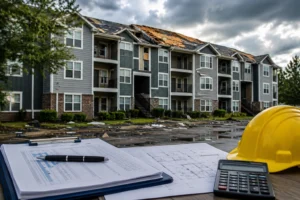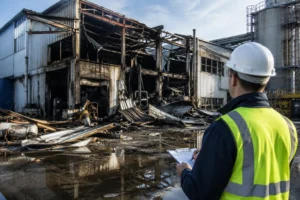

Metal roofs are built to last. However, when hail, wind, or falling debris causes damage, obtaining an accurate Insurance Estimate for Metal Roof Damage can become surprisingly complicated. While many homeowners focus on claim approval, the real challenge often lies in whether the estimate includes everything needed to restore the roof properly. Therefore, understanding how these estimates are prepared and where mistakes commonly occur can make a significant difference in the outcome of your claim.
What Is an Insurance Estimate for Metal Roof Damage?
An insurance estimate is the insurance carrier’s assessment of the cost to repair or replace damaged property. For metal roofing claims, the estimate serves as the foundation for determining how much money the carrier will pay under the policy. Typically, the process includes:
- Property inspection
- Roof measurements
- Damage evaluation
- Material pricing
- Labor calculations
- Scope preparation
Insurance adjusters often rely on estimating software such as Xactimate to generate repair costs. While these systems are useful tools, they are only as accurate as the information entered into them. If measurements are incorrect, damage is overlooked, or necessary components are omitted, the resulting estimate may significantly undervalue the loss.
Common Causes of Metal Roof Damage
Metal roofs withstand harsh weather exceptionally well. Nevertheless, they are not immune to damage. Several events frequently lead to insurance claims.
Hail Damage
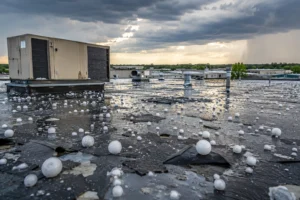
Hail is one of the leading causes of metal roof insurance claims. Unlike shingles that may crack or lose granules, metal roofing often develops dents and impact marks. In some cases, hail causes functional damage that affects the roof’s ability to perform properly. Common hail-related issues include:
- Panel denting
- Seam damage
- Coating damage
- Fastener impacts
- Flashing deformation
Metal roofing systems respond differently to hail impacts because factors such as panel thickness, protective coatings, and material properties influence how damage appears. In engineering, the study of surface interaction and wear is known as Tribology and these principles often help explain why similar hail events can produce different damage patterns on metal roofs.
Wind Damage
Likewise, strong winds can create problems even when damage is not immediately visible. Wind-related damage may include:
- Lifted panels
- Fastener failure
- Loose seams
- Detached flashing
- Water intrusion points
Falling Debris
Tree limbs and airborne debris can create concentrated impact damage. Even relatively small impacts may require panel replacement if matching materials are unavailable.
Water Intrusion
Sometimes the most expensive damage occurs after the storm. When water enters through compromised roofing components, property owners may experience:
- Interior staining
- Drywall damage
- Insulation damage
- Mold concerns
- Structural deterioration
Why Metal Roof Claims Are More Complex Than Asphalt Roof Claims
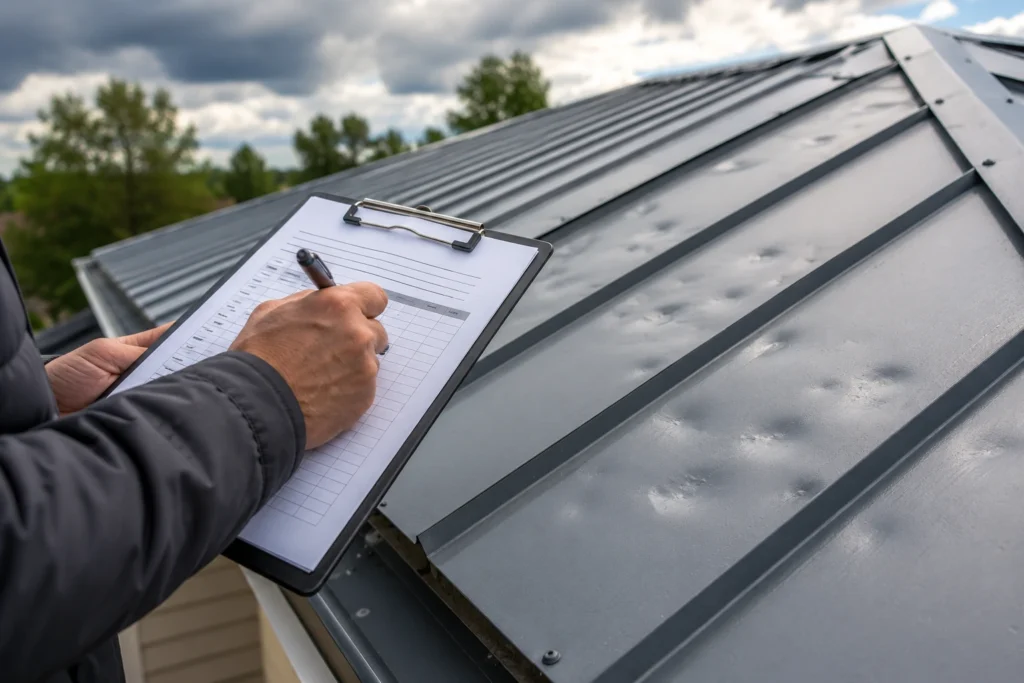
Many homeowners assume a roof is a roof. Insurance companies know otherwise. Metal roofing systems often involve specialized engineering and installation requirements that create additional challenges during claim evaluations.
Multiple Roofing Systems
The term “metal roof” covers numerous systems, including:
| Metal Roof Type | Characteristics |
|---|---|
| Standing Seam | Concealed fasteners and interlocking panels |
| Corrugated Metal | Exposed fastener design |
| R-Panel Systems | Common on residential and commercial structures |
| Stone-Coated Steel | Metal substrate with decorative finish |
| Structural Metal Panels | Engineered load-bearing systems |
Each system requires different repair approaches.
Matching Challenges
One of the most disputed aspects of a metal roof claim involves matching. A carrier may propose replacing only a few damaged panels. Sounds reasonable. Until the contractor discovers the original panels are discontinued. Or the color has faded after years of exposure. Or the manufacturer no longer produces the profile. Suddenly, a simple repair becomes impossible.
Repairability Concerns
Unlike shingles, individual metal panels are often interconnected. Replacing a damaged panel may require removing adjacent panels, trim, flashing, and accessories. As a result, labor requirements and project complexity can increase dramatically.
What Should Be Included in a Metal Roof Insurance Estimate?
A complete Insurance Estimate for Metal Roof Damage should account for every component necessary to restore the property properly. Unfortunately, omissions happen frequently.
Roof Measurements
Accurate measurements form the backbone of every estimate. Necessary measurements include:
- Roof area
- Pitch
- Ridge length
- Valley length
- Hip length
- Eave length
- Waste calculations
Even minor measurement errors can affect settlement values significantly. Modern roof inspections increasingly rely on drone imagery and advanced measurement technologies. Some systems use Photogrammetry, a process that extracts measurements from photographs to create highly accurate roof diagrams and damage assessments.
Metal Panel Replacement
The estimate should address:
- Damaged panel removal
- Replacement materials
- Installation labor
- Fastener systems
- Manufacturer requirements
Underlayment
Many estimates focus heavily on visible roofing materials while overlooking underlayment. This layer provides critical moisture protection. Depending on the system, replacement may involve:
- Synthetic underlayment
- High-temperature underlayment
- Ice and water barriers
Flashing Components
Flashing is essential for water management. Common flashing items include:
- Valley flashing
- Wall flashing
- Chimney flashing
- Step flashing
- Counter flashing
- Pipe flashing
Missing flashing items are among the most common estimate deficiencies.
Fasteners and Clips
Metal roofing systems depend on specialized fastening systems. These components often include:
- Concealed clips
- Expansion clips
- Exposed fasteners
- Specialty screws
- Attachment hardware
Failure to include these items can create major cost discrepancies.
Roof Accessories
Many roofs include additional components that must be detached and reinstalled during repairs. Examples include:
- Skylights
- Solar panels
- Satellite equipment
- Ventilation systems
- Snow retention systems
These costs should appear separately within the estimate.
Common Items Missing From Metal Roof Insurance Estimates
Not every estimate is incomplete. However, certain omissions appear repeatedly.
Underestimated Panel Quantities
Adjusters sometimes focus only on visibly damaged areas. Contractors often discover that additional panels must be removed to access the damaged section.
Missing Flashing Replacement
Flashing may become damaged during removal or may no longer meet manufacturer requirements after repair. Yet many estimates fail to include replacement costs.
What to Do If Insurance Missed Roof Damage
Roof damage is not always discovered during an insurance inspection. Sometimes hail impacts, wind damage, or flashing failures are overlooked, and homeowners only learn about the problem after a contractor performs a more detailed evaluation. If you’re wondering what to do if insurance missed roof damage, acting quickly can make a significant difference. Fortunately, several options may still be available, even after an inspection has been completed.
Incomplete Waste Factors
Waste calculations account for material loss during installation. Complex roof designs often require higher waste percentages. Therefore, underestimating waste can result in material shortages and increased project costs.
Missing Permit Fees
Permit requirements vary by jurisdiction. Many municipalities require permits for significant roof work. If permits are omitted, homeowners may face unexpected expenses.
Overhead and Profit
Complex claims involving multiple trades often justify contractor overhead and profit. These charges are frequently disputed despite being necessary for project coordination.
Cosmetic vs Functional Metal Roof Damage
This issue generates countless claim disputes.
What Is Cosmetic Damage?
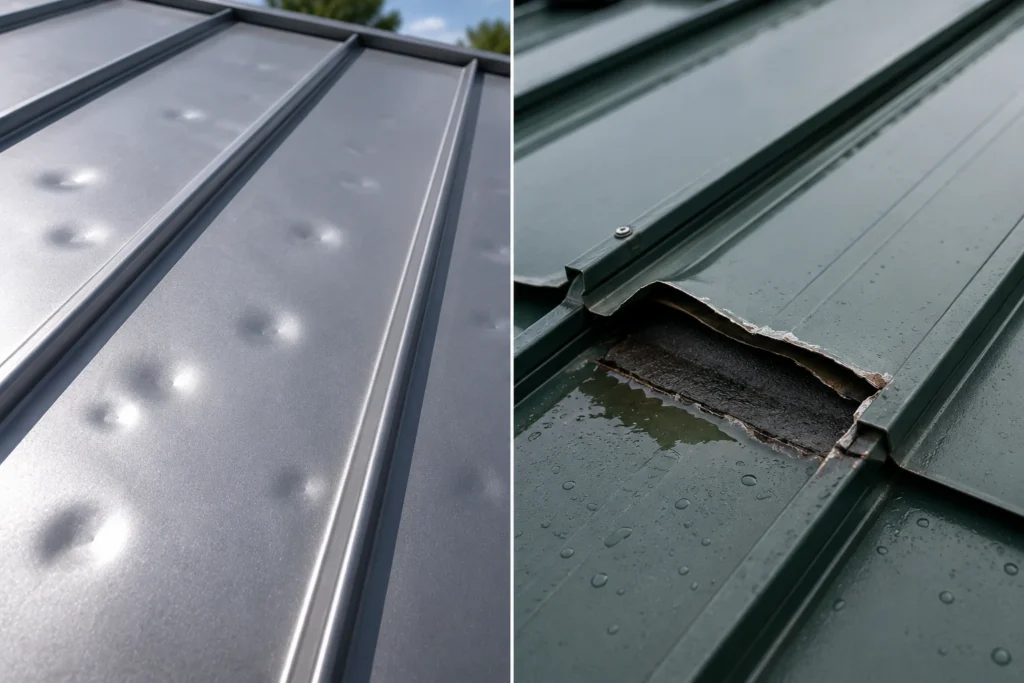
Cosmetic damage affects appearance without necessarily impacting performance. Examples include:
- Minor dents
- Surface blemishes
- Aesthetic imperfections
Many policies contain cosmetic damage exclusions for metal roofs.
What Is Functional Damage?
Functional damage affects the roof’s ability to protect the structure. Examples include:
- Punctures
- Seam separation
- Coating failure
- Fastener damage
- Water intrusion pathways
Functional damage typically receives greater consideration during claim evaluations.
Why the Difference Matters
The classification of damage can determine whether thousands or tens of thousands of dollars are paid under a claim. That makes documentation absolutely essential. Photographs, contractor reports, engineering evaluations, and manufacturer guidance often become critical evidence during disputes.
When a Metal Roof Cannot Be Properly Repaired
Insurance carriers frequently prefer repairs. Property owners often prefer repairs as well if they restore the roof fully. However, problems arise when repairs cannot reasonably return the roof to its pre-loss condition. Several factors may prevent successful repairs:
- Discontinued materials
- Inability to match color
- Structural concerns
- Manufacturer restrictions
- Building code requirements
In these situations, replacement may become the only practical solution. A thorough Insurance Estimate for Metal Roof Damage should evaluate these issues before determining whether repair or replacement is appropriate.
How Insurance Carriers Determine Repair vs Replacement
One of the biggest questions in any metal roof claim is whether the damage justifies repairs or a full replacement. Insurance companies generally prefer repairs because they cost less. However, the lowest-cost option is not always the correct solution. Several factors influence this decision.
Extent of Damage
First, adjusters evaluate how much of the roof has been affected. Questions often include:
- How many panels are damaged?
- Is the damage isolated or widespread?
- Are critical roof components affected?
- Has the damage compromised performance?
The greater the damage, the more likely replacement becomes necessary.
Repair Feasibility
Next, the carrier considers whether repairs can reasonably restore the roof. For example, replacing a single standing seam panel may require dismantling large portions of the roofing system. What appears simple on paper can become extremely labor-intensive in reality.
Material Availability
Matching materials remain one of the most common dispute areas. If replacement panels cannot be sourced, repairing only a portion of the roof may create a patchwork appearance that fails to restore the property to its pre-loss condition.
Building Code Requirements
Furthermore, local building codes may require upgrades during repairs. In some jurisdictions, substantial damage can trigger code requirements that affect:
- Underlayment
- Fasteners
- Attachment methods
- Ventilation
- Structural components
A complete Insurance Estimate for Metal Roof Damage should account for these requirements whenever applicable.
Understanding Actual Cash Value vs Replacement Cost
Many homeowners are surprised when their first insurance payment seems lower than expected. In many cases, this difference involves depreciation.
Actual Cash Value (ACV)
Actual Cash Value represents the value of the damaged roof after depreciation is applied. Factors affecting ACV include:
- Roof age
- Material condition
- Expected lifespan
- Prior wear and tear
Older roofs typically receive greater depreciation deductions.
Replacement Cost Value (RCV)
Replacement Cost Value reflects the amount required to replace the damaged property with materials of similar kind and quality. RCV generally represents the full repair or replacement cost before depreciation.
Recoverable Depreciation
Many policies allow policyholders to recover depreciation after repairs are completed. This amount is commonly known as recoverable depreciation. Homeowners often receive:
- Initial ACV payment
- Repair completion
- Recovery of withheld depreciation
Understanding this process helps prevent confusion during claim settlement.
How Metal Roofs Are Depreciated
Metal roofs often have longer expected service lives than asphalt shingles. As a result, depreciation calculations may differ significantly. However, every policy is different. Therefore, reviewing policy language carefully remains essential.
Red Flags That Your Estimate May Be Inaccurate
Not every estimate contains errors. Still, certain warning signs should prompt a closer review.
The Estimate Seems Unusually Low
A dramatically lower estimate compared to contractor proposals may indicate missing scope items. Price differences alone do not prove an error. However, significant discrepancies deserve investigation.
Missing Roofing Components
Look carefully for critical items such as:
- Flashing
- Ridge caps
- Trim
- Underlayment
- Fasteners
- Roof accessories
Missing components often create substantial valuation differences.
Generic Descriptions
Detailed estimates usually provide specific line items. Vague descriptions can make it difficult to determine exactly what is included.
Limited Damage Documentation
A thorough estimate should include measurements, photographs, and supporting observations. If documentation appears sparse, further review may be warranted.
Contractor Estimates Are Significantly Higher
Professional roofing contractors work with material and labor costs daily. When multiple qualified contractors consistently identify additional scope items, those findings should not be ignored.
Frequent Supplement Requests
Repeated supplements often indicate that the original estimate may have been incomplete. While supplements are common, excessive revisions can signal underlying scope issues.
What Homeowners Should Do If They Disagree With the Insurance Estimate
Disagreements do not automatically mean the carrier acted improperly. However, property owners should take steps to verify the estimate’s accuracy.
Request Clarification
Start by asking questions. Request explanations for:
- Scope decisions
- Pricing assumptions
- Repair methodology
- Excluded items
Sometimes misunderstandings can be resolved quickly.
Obtain an Independent Inspection
Independent roofing inspections often provide valuable insight. Contractors may identify issues overlooked during the initial evaluation.
Compare Estimates Line by Line
Rather than comparing only total prices, compare individual items. Pay attention to:
| Item | Insurance Estimate | Contractor Estimate |
|---|---|---|
| Panel Count | Included? | Included? |
| Flashing | Included? | Included? |
| Underlayment | Included? | Included? |
| Fasteners | Included? | Included? |
| Accessories | Included? | Included? |
Line-by-line comparisons often reveal important differences.
Gather Supporting Documentation
Helpful documentation may include:
- Photographs
- Drone imagery
- Contractor reports
- Engineering reports
- Manufacturer documentation
- Weather reports
The more evidence available, the easier it becomes to support your position.
How the Insurance Appraisal Process Can Help Resolve Metal Roof Disputes
When disagreements persist, policyholders may have another option. Insurance appraisal.
What Is Insurance Appraisal?
Its purpose is to resolve disagreements regarding the amount of loss. Importantly, appraisal typically focuses on valuation disputes rather than coverage disputes.
How the Process Works
The process generally follows these steps:
- Appraisal is invoked.
- Each side selects an appraiser.
- The appraisers evaluate the loss.
- An umpire is selected if necessary.
- A binding award may be issued.
Compared to litigation, appraisal is often faster and less expensive.
Common Metal Roof Disputes Resolved Through Appraisal
Appraisal frequently addresses:
- Repair versus replacement disagreements
- Quantity disputes
- Scope disputes
- Pricing disputes
- Matching issues
These issues commonly arise in metal roofing claims because repair complexity can vary significantly.
Appraiser vs Adjuster
Many homeowners confuse these roles. An adjuster investigates and evaluates the claim on behalf of the carrier. An appraiser evaluates the amount of loss during the appraisal process. Their responsibilities are very different.
Why Documentation Is Critical in Metal Roof Claims
Documentation can make or break a claim. The strongest claims typically include evidence from multiple sources.
Photographs
Clear photographs help establish:
- Damage location
- Damage severity
- Roof condition
- Repair challenges
Take photographs immediately after discovering damage whenever possible.
Drone Imagery
Drone inspections provide perspectives that may be difficult to obtain from the ground. They can also assist with measurement verification.
Engineering Reports
In some cases, engineering evaluations provide important information regarding:
- Functional damage
- Structural concerns
- Repair feasibility
- Performance impacts
Contractor Estimates
Detailed contractor estimates often provide valuable support during claim reviews. The most effective estimates typically include:
- Material quantities
- Labor requirements
- Scope descriptions
- Supporting photographs
Manufacturer Documentation
Manufacturer guidelines may clarify:
- Repair limitations
- Installation requirements
- Compatibility concerns
- Warranty implications
Weather Reports
Storm data may help establish the timing and severity of a loss event. This information can become particularly important when damage causation is disputed.
Conclusion
Ultimately, a fair Insurance Estimate for Metal Roof Damage requires more than a quick roof inspection. It requires accurate measurements, complete scope development, proper pricing, and careful consideration of repairability, matching, and code requirements. Therefore, homeowners should review every estimate carefully rather than focusing solely on the settlement amount. Small omissions can create large financial gaps. Most importantly, when disagreements arise over the amount of loss, additional documentation, professional evaluations, and the appraisal process may provide a path toward a more accurate resolution.
FAQs
Most homeowners’ insurance policies cover sudden and accidental damage caused by covered perils such as hail, wind, or falling objects.
Yes, in some cases. If the damage affects the roof’s functionality, repairability, or matching requirements, replacement may be justified instead of repairs.
Contractors often identify additional labor, materials, code requirements, or roofing components that may have been omitted from the original insurance estimate.
Cosmetic damage affects appearance without necessarily impacting performance, while functional damage affects the roof’s ability to protect the structure from weather and water intrusion.
Some policies contain cosmetic damage exclusions for metal roofs. However, whether damage is truly cosmetic or functional may require further evaluation.
Frequently overlooked items include flashing, underlayment, fasteners, permit fees, waste factors, and detach-and-reset costs for roof accessories.
Depreciation is generally based on factors such as roof age, condition, expected lifespan, and material type. The calculation varies depending on the policy and carrier.
Start by obtaining an independent inspection and comparing estimates line by line. Supporting documentation can help justify additional scope or costs.
Yes. Local code requirements may require upgrades or additional work that increases repair costs and should be considered during claim evaluation.
Insurance appraisal can help resolve disagreements regarding the amount of loss, including repair-versus-replacement disputes, pricing differences, and scope disagreements without going to court.