
A major commercial loss can create two separate problems at the same time. Therefore, understanding Business Interruption vs Property Damage Claims is essential for business owners seeking a fair insurance recovery. While both claims often arise from the same event, they cover very different losses. Consequently, failing to understand the distinction can result in significant financial gaps during the recovery process.
What Is a Property Damage Claim?
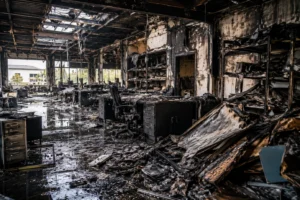
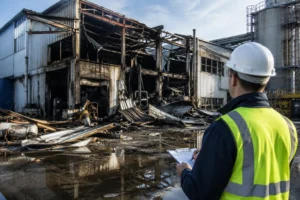
Property damage claims focus on direct physical damage caused by a covered event. Their primary purpose is to restore damaged property to its pre-loss condition. However, determining the true scope and cost of repairs is not always straightforward. As a result, disputes frequently develop between policyholders and insurance carriers.
Understanding Property Damage Coverage
Commercial property insurance may provide coverage for damage caused by:
- Fire
- Windstorms
- Hail
- Hurricanes
- Water damage from covered sources
- Vandalism
- Certain equipment failures
Coverage ultimately depends on policy language, exclusions, endorsements, and limits.
Types of Physical Damage Typically Covered
A property damage claim can involve many parts of a commercial property.
| Property Component | Potential Damage |
|---|---|
| Roofing Systems | Wind, hail, and uplift damage |
| Exterior Walls | Impact damage and water intrusion |
| Structural Components | Fire and storm damage |
| Mechanical Systems | HVAC damage and failures |
| Electrical Systems | Fire or water-related damage |
| Interior Finishes | Drywall, flooring, and ceiling damage |
| Equipment | Operational and production equipment damage |
Initially, some damage may appear minor. For example, a hailstorm may seem to affect only a roof. As a result, repair costs can increase dramatically.
What Property Damage Claims Usually Pay For
Property damage claims may include compensation for:
- Building repairs
- Demolition and debris removal
- Temporary protective measures
- Equipment replacement
- Material replacement
- Labor costs
- Certain code-required upgrades
Unfortunately, initial insurance estimates do not always account for every necessary repair.
Common Property Damage Claim Disputes
Property damage disputes often arise when there is disagreement about the extent of damage or the cost of repairs.
Undervalued Repair Estimates
Consequently, contractors and restoration professionals may later discover additional repairs that were not included in the original scope.
Repair Versus Replacement
For example, aging roofing systems may require replacement to restore proper functionality. Likewise, matching issues and material availability can influence repair decisions.
Code Upgrade Omissions
Building codes evolve over time.
Hidden Damage and Supplemental Claims
Not every loss is visible during the first inspection. For property owners seeking Supplemental Insurance Claims Explained, a supplemental claim is submitted when additional damage, omitted repairs, underestimated costs, or code-required upgrades are discovered after the original estimate has been prepared. Consequently, thorough documentation becomes critical when pursuing additional compensation.
What Is a Business Interruption Claim?
This distinction is central to understanding Business Interruption vs Property Damage Claims. One claim focuses on the building. The other focuses on the business.
Understanding Business Interruption Coverage
Consider a manufacturing facility damaged by a hurricane. The building may require extensive repairs. Meanwhile, production may stop for weeks or months. Consequently, revenue declines while many expenses continue. This is where business interruption coverage becomes important.
What Business Interruption Insurance Typically Covers
Business interruption insurance may help cover:
- Lost business income
- Continuing operating expenses
- Employee payroll
- Rent or mortgage obligations
- Utility expenses
- Taxes and fixed costs
Therefore, business interruption coverage helps businesses maintain financial stability during recovery.
Extra Expense Coverage Explained
Many policies also include extra expense coverage. This coverage may reimburse expenses incurred to reduce operational downtime and accelerate recovery. Examples include:
- Temporary relocation expenses
- Equipment rentals
- Emergency operational adjustments
- Temporary staffing costs
- Alternative workspace arrangements
Although these expenses may increase short-term spending, they can significantly reduce overall losses. As a result, they often play an important role in the claim process.
When Business Interruption Coverage Applies
Business interruption coverage generally applies when:
- Covered property damage occurs
- Business operations are interrupted
- Financial losses result from the interruption
Once these conditions are met, the restoration period begins. During this period, financial records are typically reviewed to determine the amount of income that was lost. Furthermore, historical performance, seasonal trends, growth patterns, and future projections may all be analyzed when calculating damages.
Understanding the Financial Side of a Loss
Property damage is often easier to identify. A damaged roof can be measured. destroyed HVAC system can be inspected. flooded office can be documented. Lost income is different. Business interruption losses frequently require extensive financial analysis to determine what the business would have earned had the loss never occurred. Therefore, these claims are often more complex and may take longer to resolve. Moreover, disagreements frequently arise regarding projected revenue, restoration timelines, operational capacity, and ongoing expenses. For that reason, understanding both sides of a commercial insurance claim is essential. Physical repairs may restore the property. However, business interruption coverage is often what helps restore the business itself.
Business Interruption vs Property Damage Claims: The Key Differences
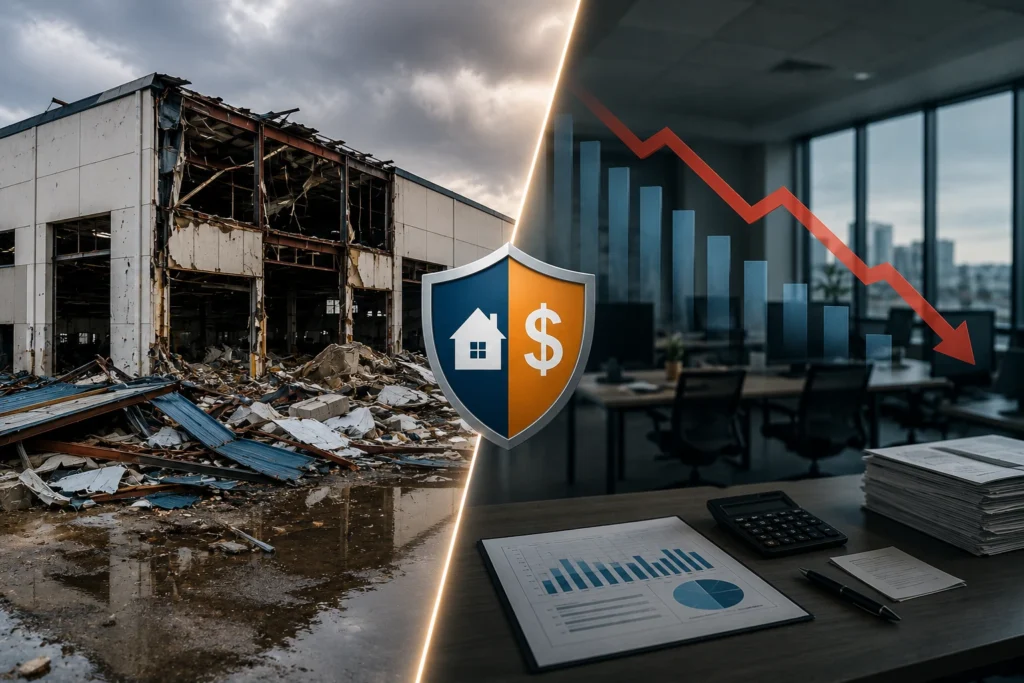
Understanding Business Interruption vs Property Damage Claims becomes easier when the differences are viewed side by side. Although both claims may arise from the same event, they are designed to compensate for different types of losses.
Physical Loss vs Financial Loss
Property damage claims focus on tangible assets. Examples include:
- Damaged roofs
- Broken windows
- Water-damaged interiors
- Destroyed equipment
- Structural repairs
Business interruption claims, on the other hand, focus on the financial consequences of a loss. Examples include:
- Lost revenue
- Reduced production
- Interrupted operations
- Ongoing expenses during closure
Therefore, one claim addresses what was physically damaged, while the other addresses what the business could not earn.
How Losses Are Measured
Property damage losses are typically evaluated through:
- Contractor estimates
- Repair invoices
- Engineering reports
- Material costs
- Replacement values
Business interruption losses are often measured through:
- Profit and loss statements
- Revenue history
- Payroll records
- Sales reports
- Financial projections
Consequently, business interruption claims often require more extensive financial analysis.
Evidence Requirements
The documentation required for each claim differs significantly.
| Property Damage Claims | Business Interruption Claims |
|---|---|
| Photographs | Profit and loss statements |
| Contractor estimates | Tax returns |
| Engineering reports | Sales records |
| Repair invoices | Payroll reports |
| Inspection reports | Bank statements |
As a result, businesses should begin collecting both physical and financial documentation immediately after a loss occurs.
Settlement Timelines
Business interruption claims may take longer. Revenue projections, operational records, seasonal fluctuations, and future business expectations often require extensive review. Therefore, financial disputes can extend the claim process considerably.
How Property Damage and Business Interruption Claims Work Together
Although these claims serve different purposes, they are closely connected. In fact, one often influences the other.
The Two Claims Often Arise From the Same Event
A single event may trigger both claims. Examples include:
- Hurricane damage to a shopping center
- Fire damage to a manufacturing facility
- Wind damage to an office building
- Water damage to a warehouse
The physical damage creates the need for repairs. Meanwhile, the interruption creates financial losses.
Why One Claim Can Affect the Other
The relationship between these claims is important. Consequently, disagreements involving property damage can directly affect business interruption calculations.
Real-World Commercial Loss Example
Consider a commercial office building that sustains severe storm damage. The roof fails. Water enters multiple tenant spaces. Several businesses are forced to close temporarily. The property damage claim may cover:
- Roof replacement
- Interior repairs
- Electrical repairs
- Cleanup costs
Meanwhile, the business interruption claim may cover:
- Lost rental income
- Lost business revenue
- Continuing operating expenses
Therefore, both claims become essential to achieving a complete recovery.
Documentation Needed for Property Damage Claims
Strong documentation often determines the strength of a claim. The more evidence available, the easier it becomes to support the scope of damage.
Essential Evidence
Property owners should collect:
- Photographs
- Videos
- Contractor estimates
- Engineering reports
- Inspection reports
- Repair invoices
- Maintenance records
Furthermore, documentation should be gathered as soon as possible after the loss occurs.
Why Accurate Documentation Matters
Accurate documentation helps:
- Support repair costs
- Validate the scope of damage
- Identify hidden issues
- Reduce disputes
- Strengthen settlement negotiations
Consequently, poor documentation can lead to delayed or reduced settlements.
Documentation Needed for Business Interruption Claims
Business interruption claims rely heavily on financial records. Without supporting documentation, calculating lost income becomes difficult.
Financial Records Commonly Requested
Insurance carriers often request:
- Profit and loss statements
- Tax returns
- Payroll records
- Sales reports
- Bank statements
- Vendor agreements
- Lease agreements
The goal is to establish what the business was earning before the loss occurred.
Calculating Lost Income
Several factors may be considered. These include:
- Historical revenue
- Seasonal trends
- Market conditions
- Growth patterns
- Contract obligations
In some cases, financial experts may perform sophisticated analyses. Certain forecasting methods share similarities with concepts used in Bayesian inference, where new information is incorporated to refine future expectations. Therefore, business interruption calculations can become highly detailed.
Common Reasons Insurance Companies Dispute Business Interruption Claims
Business interruption claims are frequently disputed because financial projections involve assumptions.
Disagreements Over Revenue Calculations
Questions often arise regarding:
- Expected sales
- Future growth
- Historical performance
- Market conditions
As a result, parties may reach very different conclusions regarding the amount of income lost.
Questions About Restoration Time
The length of the restoration period significantly affects claim value. Disputes often arise over:
- Contractor availability
- Material delays
- Permit delays
- Repair schedules
The longer repairs take, the greater the potential business interruption loss.
Coverage Interpretation Disputes
Policy language can become a major source of disagreement. For example, disputes may involve:
- Waiting periods
- Coverage limitations
- Exclusions
- Definitions of covered income
Therefore, careful policy review is often necessary.
Failure to Consider Full Operational Impact
Businesses do not always experience complete shutdowns. Sometimes operations continue at reduced capacity. Examples include:
- Reduced customer traffic
- Limited production
- Restricted access
- Partial closures
These losses can be substantial.
Common Reasons Property Damage Claims Are Disputed
Property damage disputes frequently focus on repair scope and valuation.
Scope of Damage Disagreements
Insurers and contractors may disagree regarding:
- Hidden damage
- Structural concerns
- Moisture intrusion
- Secondary damage
Consequently, repair estimates can vary significantly.
Repair vs Replacement Arguments
This remains one of the most common disputes. Insurance carriers may advocate for repairs. Contractors may recommend replacement. The difference in cost can be substantial.
Building Code and Ordinance Issues
Modern building codes often require upgrades during major repairs. These requirements may include:
- Fire protection improvements
- Accessibility upgrades
- Electrical modifications
- Structural enhancements
As a result, repair costs may increase considerably.
The Financial Consequences of Undervalued Claims
Undervalued claims can create long-term financial problems.
When Property Damage Is Underestimated
Property owners may face:
- Out-of-pocket repair costs
- Incomplete repairs
- Delayed restoration
- Additional financial strain
When Business Interruption Is Underestimated
Financial consequences may include:
- Cash flow shortages
- Missed payroll obligations
- Operational disruptions
- Lost growth opportunities
Why Both Claims Must Be Evaluated Together
Property damage and business interruption losses often overlap. Repair timelines influence income losses. Operational disruptions influence financial recovery. Consequently, a complete claim evaluation should consider both categories simultaneously.
How the Insurance Appraisal Process Can Help Resolve Disputes
When disagreements cannot be resolved through negotiation, appraisal may provide an alternative solution.
Understanding the Appraisal Process
Rather than pursuing lengthy litigation, parties may submit valuation disputes to appraisers and an umpire.
Property Damage Appraisal
Property damage appraisal may help resolve disputes involving:
- Repair costs
- Replacement costs
- Scope of damage
- Construction pricing
Business Interruption Appraisal
Business interruption appraisal may address:
- Lost income calculations
- Restoration periods
- Continuing expenses
- Financial valuation disputes
Benefits of Appraisal
Potential benefits include:
- Faster resolution
- Independent evaluation
- Reduced legal expenses
- More efficient claim handling
Best Practices for Maximizing Both Types of Claims
Proper claim management can significantly improve outcomes.
After a Loss Occurs
Take the following steps immediately:
- Document all damage
- Preserve evidence
- Mitigate additional damage
- Notify the insurer promptly
During the Claims Process
Maintain organized records. Track:
- Repair expenses
- Business income losses
- Temporary operating costs
- Communication with insurers
Furthermore, keeping detailed records often strengthens claim support.
Before Accepting a Settlement
Carefully review:
- Repair estimates
- Scope of work
- Income loss calculations
- Coverage determinations
Insurance valuation often involves complex risk analysis. In broader financial disciplines, methodologies rooted in actuarial science are frequently used to evaluate uncertainty and forecast future costs. Therefore, a thorough review of claim calculations is always worthwhile.
Conclusion
Ultimately, understanding Business Interruption vs Property Damage Claims is essential for commercial property owners. While one claim addresses physical damage, the other addresses financial losses caused by operational disruption. Consequently, both must be evaluated carefully to ensure a complete recovery. When disputes arise, proper documentation, accurate valuation, and the appraisal process can help move a claim toward a fair resolution.
FAQs
Property damage claims cover physical repairs to damaged property, whereas business interruption claims compensate for lost income and ongoing expenses caused by the disruption.
Yes. In fact, both claims are often filed after the same event because physical damage and financial losses frequently occur together.
Generally, business interruption coverage may compensate for income that would likely have been earned if the loss had not occurred. However, supporting financial documentation is usually required.
Business interruption claims often involve detailed financial analysis and revenue projections. Consequently, they are typically more complex than standard property damage claims.
Typically, insurers request profit and loss statements, tax returns, payroll records, and sales reports. Furthermore, additional financial records may be needed to support the calculation of lost income.
Disputes commonly arise over repair costs, hidden damage, replacement requirements, and building code upgrades. As a result, contractors and insurers may have significantly different valuations.
A supplemental claim is submitted when additional damage or costs are discovered after the original estimate is prepared. Therefore, it allows policyholders to seek compensation for newly identified losses.
Yes. If repairs take longer to complete, the period of operational disruption may increase. Consequently, the amount of lost income may also rise.
Appraisal allows independent appraisers to evaluate disputed loss values without lengthy litigation. Therefore, it is often used to resolve disagreements involving claim valuation.
First, document all damage thoroughly and preserve evidence. Additionally, keep detailed records of expenses and income losses to strengthen both property damage and business interruption claims.