
Key takeaways
- Appraisal resolves disputes over the amount of a covered commercial loss, not coverage.
- Each side names an appraiser; an umpire decides items the appraisers cannot agree on.
- Hail, wind, fire, and water losses are the most common Texas commercial appraisals.
- Strong documentation and a commercially experienced appraiser drive accurate awards.
- Appraisal is typically faster and less costly than litigation.
Commercial property insurance appraisal in Texas is a policy-based process for resolving disputes over the amount of a covered business property loss. Each side names an appraiser, a neutral umpire breaks any deadlock, and the signed award sets the value of the loss, usually faster and at lower cost than litigation.
Commercial claims are bigger and more complicated than most residential claims. A single hail storm can damage acres of roofing, rooftop HVAC units, skylights, and storefront glass. When the carrier's estimate falls far short of the real cost to repair, business owners need a practical way to close the gap.
This guide explains how commercial property insurance appraisal works in Texas, when it fits, what it cannot do, and how to prepare so the process produces an accurate number.
What is commercial property insurance appraisal?
Most Texas commercial property policies contain an appraisal clause. It allows either the insured or the insurer to demand appraisal when the two sides disagree on the amount of loss. The process is contractual, so the exact steps depend on your policy language.
Appraisal focuses on value, not coverage. Under the Texas Supreme Court's decision in State Farm Lloyds v. Johnson (2009), appraisers decide the amount of loss and may assess damage and causation questions as part of that, but they do not decide whether the policy covers the claim.
| Appraisal generally handles | Appraisal generally does not handle |
|---|---|
| Amount of loss disputes | Coverage disputes |
| Repair scope and cost disagreements | Policy interpretation |
| Replacement cost and ACV valuation | Legal liability questions |
| Extent of physical damage | Bad faith or extra-contractual claims |
When is commercial appraisal used in Texas?
Commercial property insurance appraisal makes the most sense when the carrier accepts that a loss is covered but undervalues it. Common Texas scenarios include:
- Hail damage: disputes over whether a commercial roof needs repair or replacement, and the cost of TPO, modified bitumen, metal, or built-up systems. See commercial roof hail damage claims.
- Wind damage: torn membranes, damaged parapets and coping, displaced rooftop equipment, and water intrusion.
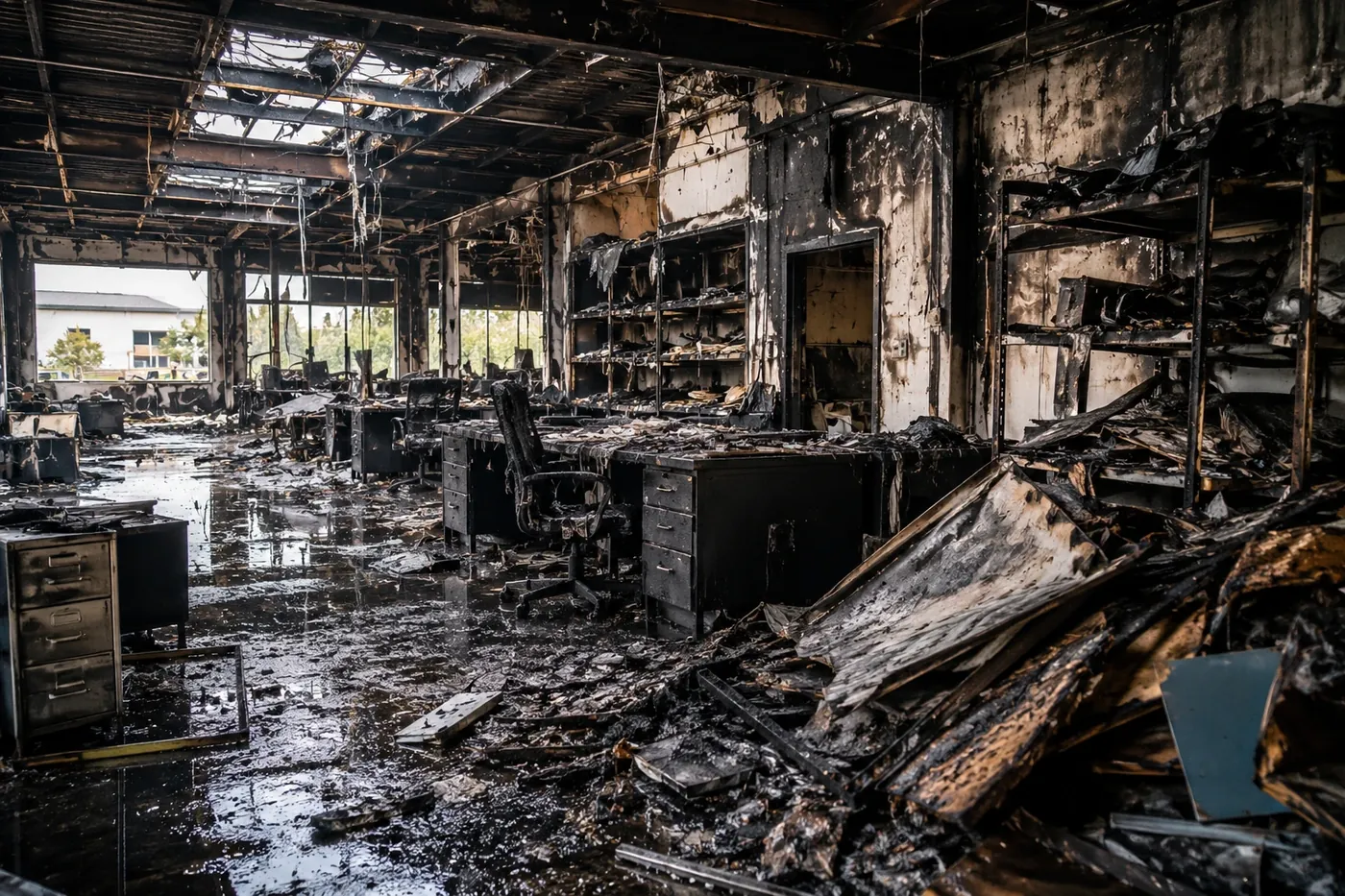
- Fire losses: structural repair, smoke remediation, and code-upgrade valuation. See fire damage commercial insurance claims.
- Water damage: interior finishes, drying, mold, and equipment after storm-driven or plumbing water intrusion.
Appraisal is a weaker fit when the carrier has denied the claim outright on coverage grounds, when the dispute is about policy exclusions, or when the gap between estimates is too small to justify appraiser and umpire fees. In those situations, a coverage opinion from a Texas attorney or continued negotiation may make more sense. Many claims involve both issues, and appraisal can still settle the amount while coverage arguments proceed separately.
Why commercial property claims lead to disputes
Commercial losses involve more square footage, more building systems, and more money than a typical home claim. That creates more room for disagreement.
Complex building systems
Commercial buildings include roofing assemblies, rooftop HVAC, fire suppression, electrical distribution, elevators, and specialized finishes. Each requires trade-specific knowledge to scope and price. A generalist estimate often misses components or applies residential assumptions to commercial construction.
Larger financial stakes
On a large commercial roof, small differences in unit pricing or quantities multiply into large dollar gaps. Differences in depreciation, overhead and profit, and code-upgrade treatment compound the effect.
Common dispute points
- Repair versus full roof replacement
- Whether hail caused functional damage to membranes or metal panels
- Matching and discontinued materials
- Code-required upgrades such as insulation, drainage, or edge metal
- Labor access, crane, and safety costs on multistory buildings
How the commercial property insurance appraisal process works
While policy wording varies, most Texas commercial appraisals follow these steps:
- Appraisal is invoked. One party sends a written demand identifying the claim and the disagreement over amount of loss.
- Each side selects an appraiser. Policies typically require a competent and disinterested appraiser, named within a set period, often 20 days.
- An umpire is selected. The two appraisers choose a neutral umpire. If they cannot agree, either party can usually ask a court in the county where the property sits to appoint one. Learn about umpire services.
- Inspection and evaluation. Appraisers inspect the property, review reports and photos, and build or compare line-item estimates.
- Award issued. If the appraisers agree, they sign an award. If not, the umpire decides the disputed items, and any two signatures make the award.
What happens during a commercial appraisal inspection
On a commercial property, the inspection is where the case is won or lost. Appraisers typically walk every roof section, test-cut or core membranes where appropriate, inspect rooftop units and penetrations, and review interior areas with water intrusion. Large properties may require several days on site, drone imagery, or a 3D scan to capture conditions consistently across buildings.
Your appraiser should coordinate access with property managers and tenants, document conditions as they are found, and note any temporary repairs. Inspection notes and photos then feed directly into the line-item estimate that each appraiser presents.
Keeping the business running during appraisal
Appraisal rarely requires a business to close. Inspections can usually be scheduled around operating hours, and many owners make temporary repairs to protect the property while the process continues. Keep receipts and photos of any emergency work so it can be included in the amount of loss. If you plan permanent repairs before the award, talk with your appraiser first so the damage is fully documented.
Texas courts generally enforce appraisal awards on the amount of loss, with limited exceptions. See is insurance appraisal legally binding in Texas for more.
Documentation every commercial property owner should preserve
The appraiser with the best evidence usually carries the most weight. Gather:
- The complete policy, declarations, and endorsements
- Building plans, roof specifications, and warranty documents
- Maintenance records and prior roof inspection reports
- Date-stamped photos, drone imagery, and video of the damage
- Weather data showing hail size or wind speeds on the date of loss
- All carrier correspondence, estimates, and engineering reports
- Contractor and independent estimates, plus invoices for emergency repairs
Benefits of commercial property insurance appraisal
| Factor | Appraisal | Litigation |
|---|---|---|
| Typical timeline | Weeks to several months | Often a year or more |
| Cost | Appraiser fees plus shared umpire fee | Attorney fees, experts, court costs |
| Decision-makers | Construction and estimating professionals | Judge or jury |
| Scope | Amount of loss | Coverage, liability, and damages |
Expertise and more accurate valuation
Appraisal puts the valuation in the hands of people who understand construction and estimating. Rather than arguing in general terms, the appraisers work line by line through scope, quantities, and pricing. That focus tends to produce a number grounded in what the repairs will actually cost, which benefits both sides.
For many business owners, the biggest advantage is speed. Every month without a resolution is a month of delayed repairs, disrupted tenants, or lost revenue. You can weigh the cost of appraisal against the amount in dispute with our appraisal cost calculator.
Commercial property types commonly involved in Texas appraisals
- Office buildings: roofing, curtain walls, interior build-outs, and HVAC systems.
- Retail centers: long low-slope roofs, storefront systems, and multiple tenant spaces.
- Warehouses and distribution centers: massive metal or membrane roofs and dock equipment.
- Industrial facilities: specialized equipment and process systems.
- Apartment complexes: many buildings with similar damage that must be scoped consistently.
- Churches, hotels, and healthcare properties: unique finishes, occupancy concerns, and code requirements.
Larger losses bring added complexity; see large loss insurance appraisal in Texas.
Challenges unique to Texas commercial property claims
Texas commercial owners face some of the most demanding claim conditions in the country:
- Severe weather: large hail in North Texas and the Panhandle, Gulf Coast hurricanes, and straight-line winds across Central Texas.
- Changing construction costs: material and labor pricing shifts can make an estimate written months ago obsolete.
- Local code variation: cities from Dallas to San Antonio adopt and amend codes differently, affecting upgrade costs.
- Statutory deadlines: Chapter 542 prompt-payment rules and Chapter 542A's 61-day pre-suit notice for weather claims shape strategy.
Timing matters as well. Many commercial policies contain suit-limitation periods and deadlines for completing repairs to collect replacement cost holdback. Mark those dates early, because a long negotiation can quietly run the clock. If the claim may head toward litigation, Chapter 542A notice requirements should be part of the plan from the start.
The Texas Department of Insurance publishes consumer resources on commercial claims and complaint options. This is general information, not legal advice; consult a Texas attorney about coverage or bad-faith issues.
How to choose a commercial insurance appraiser in Texas
Look for an appraiser who brings:
- Commercial loss experience: familiarity with low-slope roofing, rooftop equipment, and multi-building properties.
- Construction and estimating knowledge: fluency in Xactimate or Symbility and real-world repair methods.
- Texas claims familiarity: knowledge of local pricing, weather patterns, and appraisal case law.
- Organization: the ability to manage thousands of photos and documents and present them clearly.
- Independence: an appraiser who is competent and disinterested, as most policies require.
Avoid common mistakes: waiting too long to act, relying on the carrier's initial estimate, overlooking hidden damage, and hiring an appraiser without commercial experience.
When should your business consider appraisal?
Consider commercial property insurance appraisal when the carrier has accepted coverage but its estimate is well below credible repair costs, negotiations and supplements have stalled, and the amount in dispute justifies the cost of the process.
Act promptly, organize your documentation, and choose an appraiser with real commercial experience. Done well, appraisal gives Texas business owners a binding, expert-driven valuation and a path back to repairs and normal operations.
Frequently asked questions
Do Texas commercial property policies include an appraisal clause?
Most commercial property policies used in Texas include an appraisal provision allowing either party to demand appraisal when they disagree on the amount of loss. The wording, deadlines, and procedures vary by form and carrier, so review your specific policy. Some policies modify or limit appraisal through endorsements.
Can commercial appraisal decide whether my claim is covered?
No. Under Texas law, appraisers determine the amount of loss and may evaluate damage and causation as part of that valuation, but they do not resolve coverage or policy interpretation disputes. If the carrier denies coverage entirely, appraisal alone usually cannot fix that, and you may need legal advice.
How long does a commercial property appraisal take in Texas?
Commercial appraisals commonly take a few months, depending on property size, the number of buildings, and whether an umpire is needed. Smaller single-building claims may resolve in several weeks, while large multi-building or fire losses can take longer. Organized documentation and prompt inspections shorten the timeline.
Who pays for commercial property insurance appraisal?
Under most appraisal clauses, each party pays its own appraiser, and the umpire's fees and other appraisal expenses are split equally between the insured and the insurer. Check your policy language, since some forms allocate costs differently. Weigh those costs against the dollar amount in dispute before invoking.
Is a commercial appraisal award binding in Texas?
Texas courts generally enforce appraisal awards as binding on the amount of loss, with narrow exceptions such as fraud, an award made without authority, or an award that does not reflect the parties' agreement. Coverage questions and certain statutory claims can remain open, so consult a Texas attorney about your specific situation.

About the author: Joseph Dittman
Joseph is the lead appraiser at TX Insurance Appraiser and a Texas-licensed public adjuster (Rise Public Adjusting LLC, TDI license #3356839). He has spent his career inspecting hail, wind, water and fire losses and negotiating property claims across Texas. More about Joseph.
This article is general information about property insurance claims in Texas and is not legal advice. Policy language and facts vary; review your policy or consult a Texas attorney for legal questions.