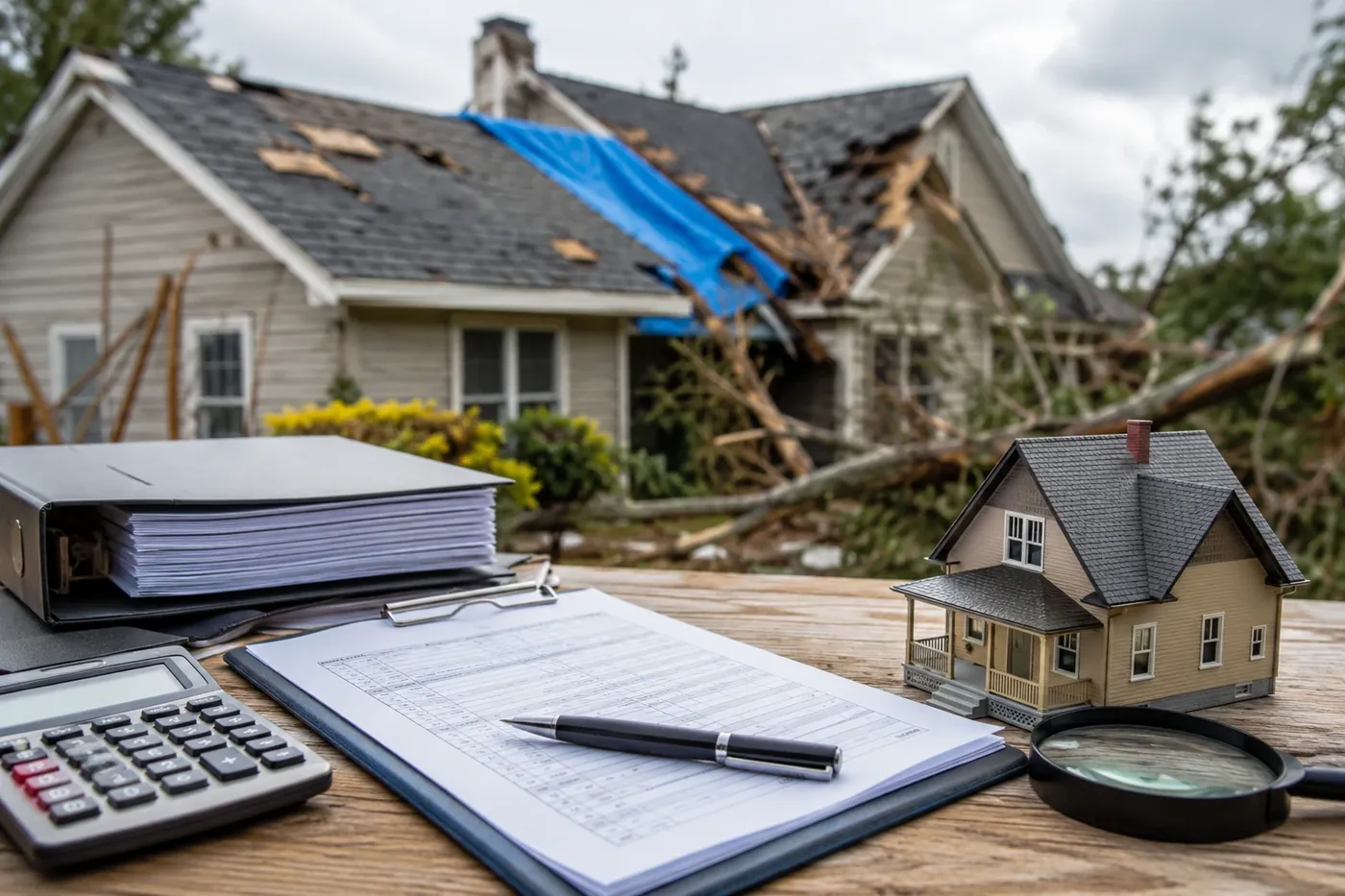
Key takeaways
- Construction claim appraisals value the repair work, not the property’s market value.
- Scope disagreements are often bigger than pricing disagreements.
- Hidden damage, codes, matching and depreciation complicate every valuation.
- Using the carrier’s estimating platform makes line-by-line comparison easier.
- Separate RCV, depreciation and ACV for clear, correct payments.
Property appraisals in construction claims determine what it will really cost to repair or rebuild damaged property after an insured loss. They are complex because hidden damage, multiple trades, building codes, shifting material and labor prices, matching and depreciation all affect the number. An accurate appraisal accounts for each of these, line by line.
What are property appraisals in construction claims?
In the insurance world, a property appraisal in a construction claim is not a real estate appraisal of what a home or building would sell for. It is a valuation of the construction work needed to restore the property after covered damage: tearing out what is damaged, rebuilding it, and handling everything in between.
These valuations come up in two ways. First, every claim involves some form of estimate, from the carrier's adjuster, a contractor or an independent estimator. Second, when the policyholder and the insurer disagree on the amount of loss, most Texas property policies allow either side to invoke formal appraisal. In that process, each side appoints an appraiser, an umpire resolves disagreements, and the award sets the amount of loss.
Either way, the core task is the same: figure out the fair cost of the construction work. That sounds simple. In practice, it is one of the most technical parts of any property claim.
Why construction claim appraisals are so complex
Construction costs are built from thousands of decisions about materials, methods, labor and sequencing. A small difference in any one of them can change the final number. These are the factors that most often complicate property appraisals in construction claims.
Hidden and progressive damage
Water travels inside walls. Hail fractures shingle mats beneath intact-looking granules. Fire smoke migrates through ductwork into rooms the flames never touched. Much of the damage in a construction claim is not visible on the first inspection, and some of it keeps getting worse until it is addressed.
Scope disagreements
Scope is the list of work that must be done. Disputes over scope, such as whether drywall must be replaced to a certain height, whether a roof needs full replacement, or whether cabinets can be detached and reset, are often bigger than disputes over price.
Multiple trades and sequencing
Even a moderate loss can require demolition, framing, drywall, insulation, electrical, plumbing, HVAC, roofing, flooring, painting and cleaning. Coordinating those trades in the right order adds cost, which is why overhead and profit for a general contractor is a frequent point of contention.
Pricing volatility
Material and labor costs change over time and can spike after major storms when demand surges in one area. Estimating databases update regularly, but they may lag what contractors actually charge in a busy post-storm market.
Building codes
Repairs often must meet current code, not the code in effect when the building was built. That can add items such as upgraded underlayment, electrical work or structural connections. Our guide to ordinance and law coverage explains how those costs may be paid.
Matching and uniformity
Replacing part of a floor, a section of siding or a few roof slopes can leave mismatched materials. Whether a broader repair is needed to achieve a reasonably uniform appearance depends on the facts and the policy language.
Depreciation
Actual cash value payments subtract depreciation from replacement cost. How much depreciation applies, and to which items, can significantly change what the policyholder receives before repairs are completed.
Replacement cost vs actual cash value in construction claims
Most construction claim appraisals report both replacement cost value (RCV) and actual cash value (ACV). Understanding the difference helps you read any estimate or award.
| Term | What it means | Why it matters |
|---|---|---|
| Replacement cost value (RCV) | The cost to repair or replace with materials of like kind and quality, without deduction for depreciation | Sets the full value of the construction work |
| Depreciation | A reduction for age, wear and condition | Often withheld until repairs are completed under replacement cost policies |
| Actual cash value (ACV) | RCV minus depreciation | Usually the first payment under a replacement cost policy, or the full payment under an ACV policy |
| Recoverable depreciation | Depreciation that can be recovered after repairs | Requires proof of completion within the policy's time limits |
Depreciation disputes are common in construction claims because age and condition are open to interpretation. Installation invoices, maintenance records and photos of pre-loss condition help keep depreciation realistic.
An award that separates RCV, depreciation and ACV for each section makes it much easier for the carrier to issue correct payments afterward.
Estimating tools used in construction claims
Most insurance carriers write property estimates in Xactimate or Symbility. Both programs use regional price lists and standardized line items so estimates can be compared item by item. Using the same platform as the carrier makes disagreements easy to isolate: the panel can see exactly which lines differ and why.
Software is only as good as the inputs. Accurate quantities, the right line items and pricing that reflects the local market still require an experienced estimator. Contractors often price work differently, which is why we wrote about Xactimate vs contractor estimates and the common gap between an insurance estimate and the actual repair cost.
TX Insurance Appraiser prepares both Xactimate estimates and Symbility estimates, so we can work in whichever format a claim requires.
Key considerations for an accurate construction appraisal
Whether you are reviewing a carrier's estimate or preparing for formal appraisal, these considerations separate an accurate valuation from an incomplete one:
- Complete inspection. Every room, elevation, roof slope and building system affected by the loss should be inspected and documented.
- Accurate measurements. Quantities drive cost. Roof squares, wall and ceiling areas, linear footage of trim and flooring square footage should be measured, not guessed.
- Correct repair methods. The estimate should reflect how the work will actually be done, including manufacturer requirements and code.
- All necessary line items. Demolition, protection, cleanup, debris removal, permits, accessories and finishing details are easy to miss.
- Market-based pricing. Support database pricing with local contractor and supplier quotes when the market has moved.
- Fair depreciation. Depreciation should reflect actual age and condition, supported by records when possible.
- Clear documentation. Photos, moisture readings, diagrams and 3D scans make every line defensible.
How small differences add up in a construction claim
To see why property appraisals in construction claims are so sensitive, consider an illustrative water loss in a single-story home. The figures below are hypothetical, but the pattern is typical.
The carrier's estimate replaces drywall two feet up the wall in three rooms, replaces carpet in those rooms and paints the affected walls. The homeowner's estimator finds several differences:
- Moisture readings show water wicked four feet up the wall, not two, doubling the drywall and insulation quantity.
- The laminate flooring runs continuously into the hallway and kitchen, so replacing it in three rooms alone is not practical.
- Base cabinets in the kitchen sat in water and need to be detached, dried and possibly replaced.
- Painting a partial wall leaves a visible line, so full walls and ceilings in affected rooms need paint.
- Multiple trades are involved, so general contractor overhead and profit is reasonable.
None of these items is unusual, and none involves a dispute about price. Each one is a scope question. Yet together they can easily double the value of the claim. This is why experienced appraisers spend so much time on scope before they ever argue about unit costs.
Residential vs commercial construction claims
Residential claims usually involve fewer systems and more standardized materials, but they still raise disputes over scope, matching and depreciation. Commercial claims add layers of complexity: larger structures, specialty roofing and mechanical systems, tenant improvements, business income, accessibility and fire code requirements, and phased work around ongoing operations.
The appraisal process is the same in both, but the evidence and estimating depth needed for commercial claims is much greater. Our guide to residential vs commercial insurance appraisal covers the differences in detail.
Construction claim appraisals in Texas
Texas property owners face hail, wind, hurricanes, freezes, fires and water losses, sometimes all within a few years. Each type creates different construction challenges, and each region has its own building practices and pricing. A roof claim in Lubbock and a water claim in Houston call for different expertise, but both depend on an accurate valuation of the construction work.
Texas law also shapes these claims. Insurance Code chapter 542 sets deadlines for carriers to acknowledge, decide and pay claims. Under State Farm Lloyds v. Johnson (Tex. 2009), appraisers decide the amount of loss and may consider the extent of damage and causation, but not coverage. This is general information, not legal advice; consult a Texas attorney for questions about your rights.
Next steps for your construction claim
If the carrier's estimate does not match what contractors say the work will cost, start by identifying where the gap comes from: scope, quantities, pricing, depreciation or missing items. Once you know the source, you can address it with targeted evidence, a supplement or, if needed, formal appraisal. Our appraisal cost calculator can help you decide whether appraisal is worth pursuing for your claim.
TX Insurance Appraiser is led by Joseph Dittman, a Texas-licensed public adjuster who has spent his career inspecting property losses and writing line-item estimates from the policyholder side. On appraisal assignments, he serves as the policyholder's appraiser or, when appointed, as umpire.
Frequently asked questions
Is an insurance property appraisal the same as a real estate appraisal?
No. A real estate appraisal estimates what a property would sell for. An insurance property appraisal in a construction claim values the cost to repair or rebuild covered damage. The two use different methods and answer different questions, and a home’s market value has little to do with its repair cost.
Why do insurance estimates differ so much from contractor bids?
Differences usually come from scope, quantities, pricing and missing items. Carrier estimates rely on database pricing and the adjuster’s view of what needs repair, while contractors price the work they would actually perform. Comparing both line by line usually shows where the gap comes from and which items need support.
What is the hardest part of valuing a construction claim?
Scope is often the hardest part. Deciding exactly what must be removed, replaced or upgraded requires understanding hidden damage, building codes, manufacturer requirements and matching. Once the scope is agreed, pricing disputes tend to be narrower and easier to resolve with market evidence and quotes.
Can appraisal resolve construction cost disputes in Texas?
Yes, when the insurer accepts coverage but disputes the amount of loss. Each side names an appraiser, an umpire decides disagreements, and a signed award sets the amount. Texas appraisers decide amount of loss and may consider extent of damage, but they do not decide coverage questions.

About the author: Joseph Dittman
Joseph is the lead appraiser at TX Insurance Appraiser and a Texas-licensed public adjuster (Rise Public Adjusting LLC, TDI license #3356839). He has spent his career inspecting hail, wind, water and fire losses and negotiating property claims across Texas. More about Joseph.
This article is general information about property insurance claims in Texas and is not legal advice. Policy language and facts vary; review your policy or consult a Texas attorney for legal questions.