Key takeaways
- Matching disputes ask whether undamaged areas must be replaced so repairs look uniform.
- Texas has no broad statewide matching rule; policy language and evidence usually decide.
- Discontinued products, weathering and continuous flooring create most matching problems.
- Product samples, manufacturer letters and contractor opinions are the strongest evidence.
- Appraisal can resolve matching disputes about repair scope, but not pure coverage exclusions.
Matching issues in insurance claims arise when replacement materials cannot reasonably match the undamaged materials around them, such as discontinued shingles, faded siding or flooring that runs through several rooms. The dispute is whether the carrier must pay to replace undamaged areas so the repair looks uniform. In Texas, the answer depends largely on your policy language.
A repaired roof that keeps the rain out but looks like a patchwork quilt is not what most homeowners have in mind when they file a claim. Matching disputes have become one of the most common disagreements between Texas policyholders and their carriers. This guide explains where matching problems come from, how insurers respond, what Texas law says and how to build a strong matching claim.
What are matching issues in insurance claims?
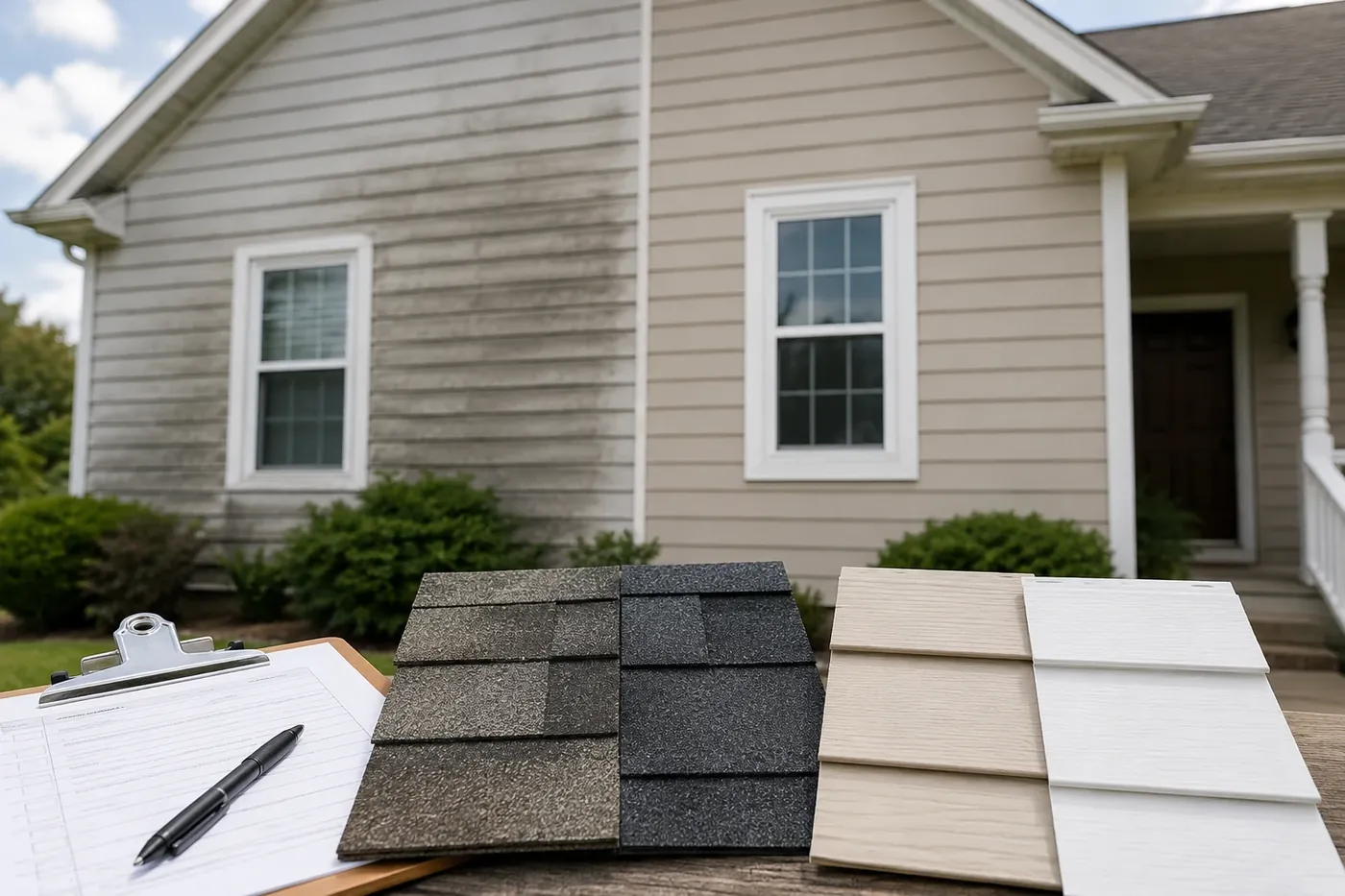
Matching refers to whether new materials used in a repair are reasonably uniform in color, texture, size and quality with the existing, undamaged materials. When an exact or close match is not available, the question becomes how far the repair must extend to produce a reasonable result.
For example, if hail damages two slopes of a roof and the original shingle line is discontinued, replacing only those slopes may leave a visible difference between new and old sections. The homeowner wants the full roof replaced; the carrier may offer to pay only for the damaged slopes. That gap is the matching dispute.
Why does matching matter so much?
Matching is not only about looks. A visible mismatch can affect resale value, HOA approval, and in some cases the performance of the system when incompatible products are mixed. Many policies promise repair or replacement with materials of "like kind and quality," and homeowners reasonably argue that a mismatched repair does not restore the property to its pre-loss condition.
- Property value: buyers and inspectors notice patched roofs and mismatched siding.
- HOA rules: many Texas associations require uniform exterior materials and colors.
- System compatibility: some manufacturers do not support mixing product lines on one roof plane.
- Peace of mind: homeowners expect a claim to restore their home, not leave it visibly damaged.
What are the most common matching disputes?
| Material | Why matching fails | Typical dispute |
|---|---|---|
| Roof shingles | Discontinued lines, color changes, weathering, different dimensions (e.g., older 3-tab vs. current sizes) | Partial slope repair vs. full roof replacement |
| Siding | Discontinued profiles, sun fading, different textures | Replacing one elevation vs. all elevations |
| Flooring | Dye lots, discontinued products, continuous runs through rooms | Replacing one room vs. all connected areas |
| Interior paint | Touch-up shows sheen and color difference | Spot painting vs. painting the full wall or room |
| Cabinets and countertops | Discontinued door styles or stone slabs | Replacing damaged units vs. the full run |
Roof shingle matching problems
Shingle matching is the most common matching issue in Texas because hail claims are so frequent. Even when the same product is still made, years of sun exposure change the color of installed shingles. When the line is discontinued, dimensional differences can prevent new shingles from lying properly alongside old ones. Our guide on why insurance companies deny full roof replacement covers how these arguments play out.
Siding, flooring and paint
Vinyl and fiber-cement siding fade unevenly, and discontinued profiles are common. Flooring that runs continuously through a kitchen, hallway and living room often cannot be patched in one room without a visible transition. Paint touch-ups rarely blend unless the full wall, or sometimes the full room, is repainted to a natural break.
Why do insurance companies resist matching requests?
From the carrier's view, matching means paying to replace undamaged property. On a roof or siding claim, that can multiply the cost of the loss. Common arguments include:
- The policy covers only "direct physical loss," and undamaged areas have no loss.
- A reasonable color match is available even if it is not identical.
- The difference is cosmetic or will weather in over time.
- The policy contains a matching limitation or cosmetic damage exclusion.
- Repairs can stop at a natural break such as a ridge, corner or doorway.
Some of these arguments are reasonable on specific facts; others are not. The outcome usually turns on evidence and policy wording, not on who argues louder.
Repair versus restoration: what does the policy promise?
Many homeowners policies promise to pay the cost to repair or replace damaged property with materials of like kind and quality. Carriers often read that narrowly: fix what was damaged. Policyholders read it more broadly: restore the home to its pre-loss condition, which includes a uniform appearance.
Read your policy's loss settlement section and any endorsements carefully. Some Texas policies now include specific language limiting matching or excluding cosmetic damage to roofs, while others are silent. Silence does not mean you lose, but it does mean the facts and documentation carry more weight.
How does Texas handle matching issues?
Some states have adopted regulations that require insurers to replace items in adjoining areas when a reasonable match is not possible. Texas does not have a broad statewide matching regulation of that kind. In Texas, matching disputes are generally decided by the policy language, the facts of the loss and how reasonable the proposed repair is. This is general information, not legal advice.
That makes documentation especially important for Texas homeowners. When the policy is silent, a well-supported argument that no reasonable match exists, backed by manufacturer information and expert opinion, is often what moves the carrier. The Texas Department of Insurance publishes consumer guidance on homeowners claims at tdi.texas.gov, which is worth reviewing if your dispute stalls.
Texas hail is a big reason matching comes up so often here. Storms across Dallas-Fort Worth, Austin, San Antonio and the Panhandle routinely damage some slopes or elevations and not others, leaving homeowners with partial repairs on discontinued products.
What documentation supports a matching claim?
- Photographs: close-ups of damaged and undamaged materials side by side, plus wide shots showing how a partial repair would look.
- Product identification: a sample shingle or siding piece, packaging, invoices or a product ID report confirming the exact material.
- Manufacturer statements: written confirmation that a product is discontinued or that new and old lines are not compatible.
- Contractor reports: a roofer's or flooring installer's explanation of why a reasonable match is not possible and where the natural break falls.
- Insurance correspondence: every estimate, letter and email in which the carrier explains its position.
Our claim documentation checklist helps you organize these materials, and what evidence helps during insurance appraisal explains how panels weigh them.
When do matching issues become insurance disputes?
Most matching problems start as a simple question to the adjuster. They turn into disputes when the carrier's estimate and the homeowner's expectations stay far apart after a reinspection or supplement request.
Common signs of a matching dispute
- The estimate replaces only damaged slopes, elevations or rooms and stops in the middle of a continuous surface.
- The carrier says a "close enough" product is available but cannot identify it by brand and color.
- Your contractor refuses to warranty a repair that mixes old and new product lines.
- The carrier cites a cosmetic or matching endorsement you had not noticed before.
Financial consequences and why acting quickly matters
The cost gap can be large. For example, if hail damages two of six roof slopes, an estimate for those two slopes might cover only a fraction of a full replacement. The homeowner then chooses between a mismatched roof and paying the difference out of pocket. The same math applies to siding wrapped around a house or flooring through an open floor plan.
Move quickly. Weathering continues, evidence gets lost once repairs begin, and policy and statutory deadlines keep running. Gather samples and photos before any work starts, and use our recoverable depreciation calculator to understand how much of a replacement-cost settlement is still owed after the initial payment.
Can insurance appraisal resolve matching disputes?
Often, yes. Matching disputes frequently come down to the scope of repair: how many slopes, how many rooms, where the natural break is. Those are amount-of-loss questions. Under State Farm Lloyds v. Johnson (Tex. 2009), Texas appraisers can determine the amount of loss and may consider the extent of damage, but they do not decide pure coverage questions. If your policy has a clear matching exclusion, that coverage issue generally stays outside appraisal; if the dispute is about what repair is reasonable, appraisal can be a strong fit.
Each side appoints an appraiser and the two try to agree. If they cannot, an umpire decides the remaining items, and an award signed by two of the three generally sets the amount of loss. TX Insurance Appraiser serves as the policyholder's appraiser across Texas, using detailed line-item estimates and, where helpful, Matterport 3D documentation to show exactly how a partial repair would look. Learn more about our insurance appraisal services.
Next steps when you face a matching problem
- Review your policy for loss settlement language, matching limits and cosmetic exclusions.
- Document everything with side-by-side photos and product samples before repairs start.
- Get independent opinions from contractors and, if possible, the manufacturer.
- Ask the carrier in writing to explain how its proposed repair will produce a reasonable match.
- Keep organized records of every estimate, call and letter.
- Consider an appraiser if the carrier will not budge and the cost difference is significant. Related reading: how to fight a low insurance settlement.
Frequently asked questions
Does insurance have to match my shingles in Texas?
Texas does not have a general regulation requiring insurers to match shingles. Whether your carrier must pay for additional slopes depends on your policy's loss settlement wording, any matching or cosmetic endorsements, and evidence that a reasonable match is not available. Discontinued products and incompatible dimensions often support broader replacement.
What does like kind and quality mean in an insurance policy?
Like kind and quality means replacement materials should be similar in type, function, grade and appearance to what was damaged. It does not always require an identical product, but a replacement that is noticeably different in color, size or quality may not meet that standard, which is often the starting point for a matching argument.
Will insurance replace my whole floor if only one room is damaged?
Sometimes. When flooring runs continuously through several rooms without a natural break and a matching product is unavailable, carriers may agree to replace the connected area. If the flooring changes at a doorway or threshold, insurers usually limit replacement to the damaged room. Evidence about the layout and product availability matters.
How do I prove my shingles are discontinued?
Keep a sample shingle and send it to the manufacturer or a product identification service, and ask your roofer to document the brand, line and color. Written confirmation that the product is no longer made, or that current products have different dimensions, is strong evidence for a broader replacement scope.
Can an umpire decide a matching dispute?
If the disagreement is about the amount of loss, such as how many slopes or rooms must be replaced to achieve a reasonable repair, the appraisers and umpire can generally decide it. If the carrier relies on a clear policy exclusion for matching, that coverage question usually falls outside appraisal and is decided by the parties or a court.

About the author: Joseph Dittman
Joseph is the lead appraiser at TX Insurance Appraiser and a Texas-licensed public adjuster (Rise Public Adjusting LLC, TDI license #3356839). He has spent his career inspecting hail, wind, water and fire losses and negotiating property claims across Texas. More about Joseph.
This article is general information about property insurance claims in Texas and is not legal advice. Policy language and facts vary; review your policy or consult a Texas attorney for legal questions.