Key takeaways
- Cosmetic damage changes a roof's appearance without reducing its function or service life.
- Functional damage affects water shedding, lifespan or structural integrity and is usually covered.
- Cosmetic exclusions are common on Texas metal roofs; read every endorsement.
- Gutters, AC units and interior damage may be covered even if roof panels are not.
- Appraisal can address how much damage is functional, but not whether an exclusion applies.
Cosmetic damage in roofing claims is damage that changes how a roof looks without reducing its ability to shed water or shortening its expected life, such as shallow hail dents on metal panels. Many Texas policies now exclude cosmetic damage, so whether damage is cosmetic or functional often decides whether a roof claim is paid.
Few words cause more confusion on a roof claim than "cosmetic." A homeowner sees a roof covered in hail marks; the carrier's letter says the damage is cosmetic and not covered. Understanding what cosmetic damage really means, how insurers evaluate it and what evidence shows damage is functional can change the outcome of your claim.
What is cosmetic damage in roofing claims?
In roofing claims, cosmetic damage generally refers to damage that affects the appearance of the roof but not its function. The roof still keeps water out, the materials still perform as designed, and the expected service life is not meaningfully reduced. The classic example is a standing-seam or ribbed metal roof dented by hail, where the panels and seams remain watertight.
The definition matters because many policies treat cosmetic and functional damage very differently. If your policy includes a cosmetic damage exclusion, damage that is only cosmetic may not be paid at all, even if it is widespread and obvious from the street.
Why the cosmetic label matters
Calling damage cosmetic can reduce a full roof replacement to zero. It can also affect resale value, HOA compliance and how you plan future maintenance. Because the stakes are high, the line between cosmetic and functional is one of the most contested issues in Texas hail claims.
What are common types of cosmetic roof damage?
- Hail dents on metal roofs: shallow dents in panels that do not crack coatings, distort seams or loosen fasteners.
- Minor granule displacement on shingles: scattered granule loss without fracturing the mat or exposing asphalt to sunlight.
- Dents on roof accessories: marks on vent caps, gutters or flashing that do not affect drainage or seal.
- Surface scratches and discoloration: scuffs or color variation from debris or weathering.
Notice the qualifiers. Granule loss that exposes the asphalt mat, or a dent that cracks a metal panel's coating, can cross into functional damage. The details are what count.
Cosmetic damage vs functional damage: what is the difference?
Functional damage reduces a roof's ability to shed water, shortens its expected service life or compromises its structural integrity. Our dedicated guide on what is functional damage in roof claims goes deeper, but the comparison below covers the essentials.
| Factor | Cosmetic damage | Functional damage |
|---|---|---|
| Water shedding | Not affected | Reduced or compromised |
| Expected service life | Essentially unchanged | Shortened |
| Asphalt shingles | Light granule scuffing | Fractured mat, bruising, exposed asphalt, broken seals |
| Metal panels | Shallow dents, intact coating | Cracked coating, distorted seams, loosened fasteners, punctures |
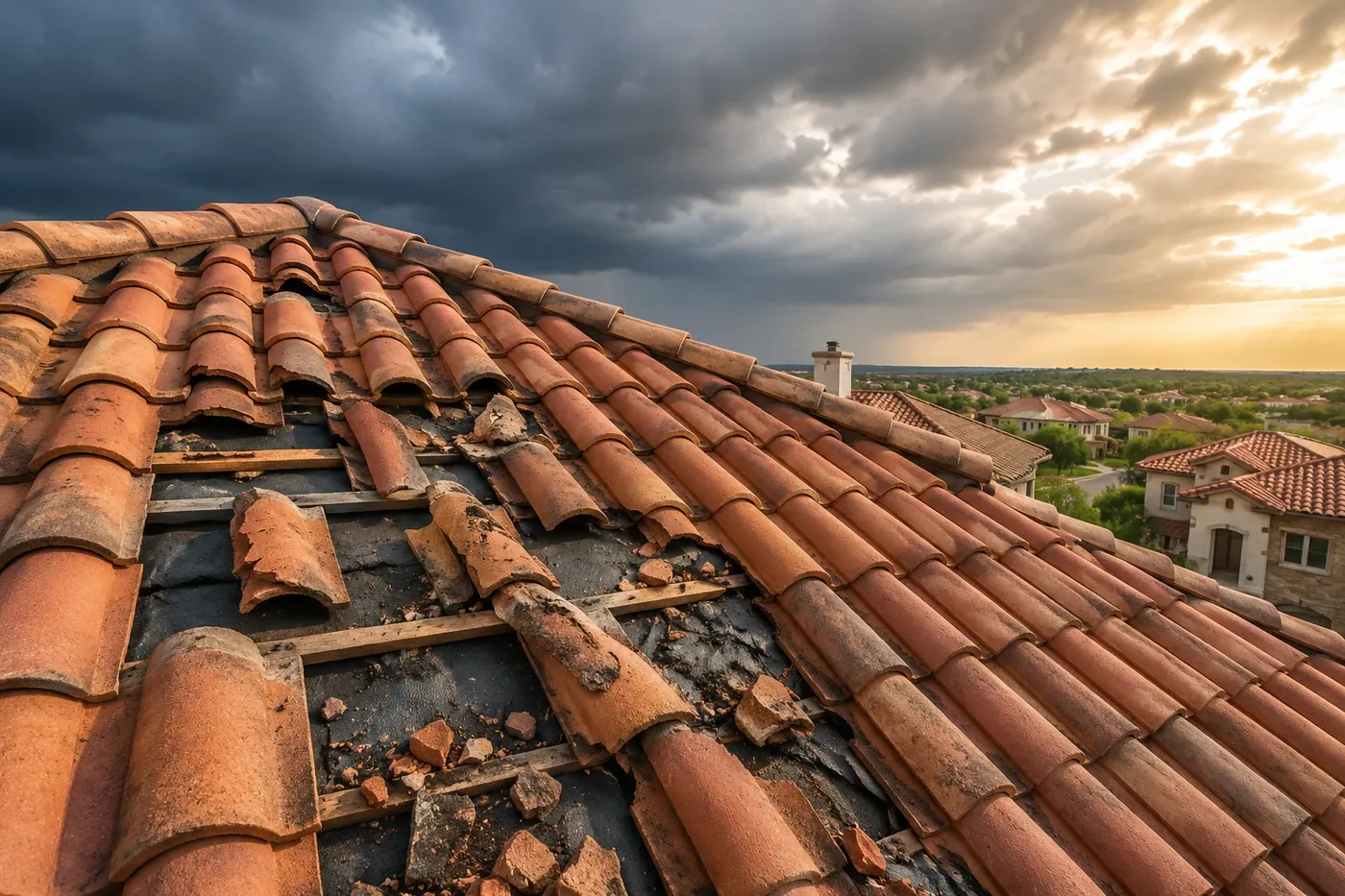
| Tile | Surface chips | Cracked or broken tiles |
| Typical coverage | Often excluded if policy has a cosmetic endorsement | Generally covered if caused by a covered peril |
How do insurance companies evaluate cosmetic roof damage?
Initial adjuster inspection
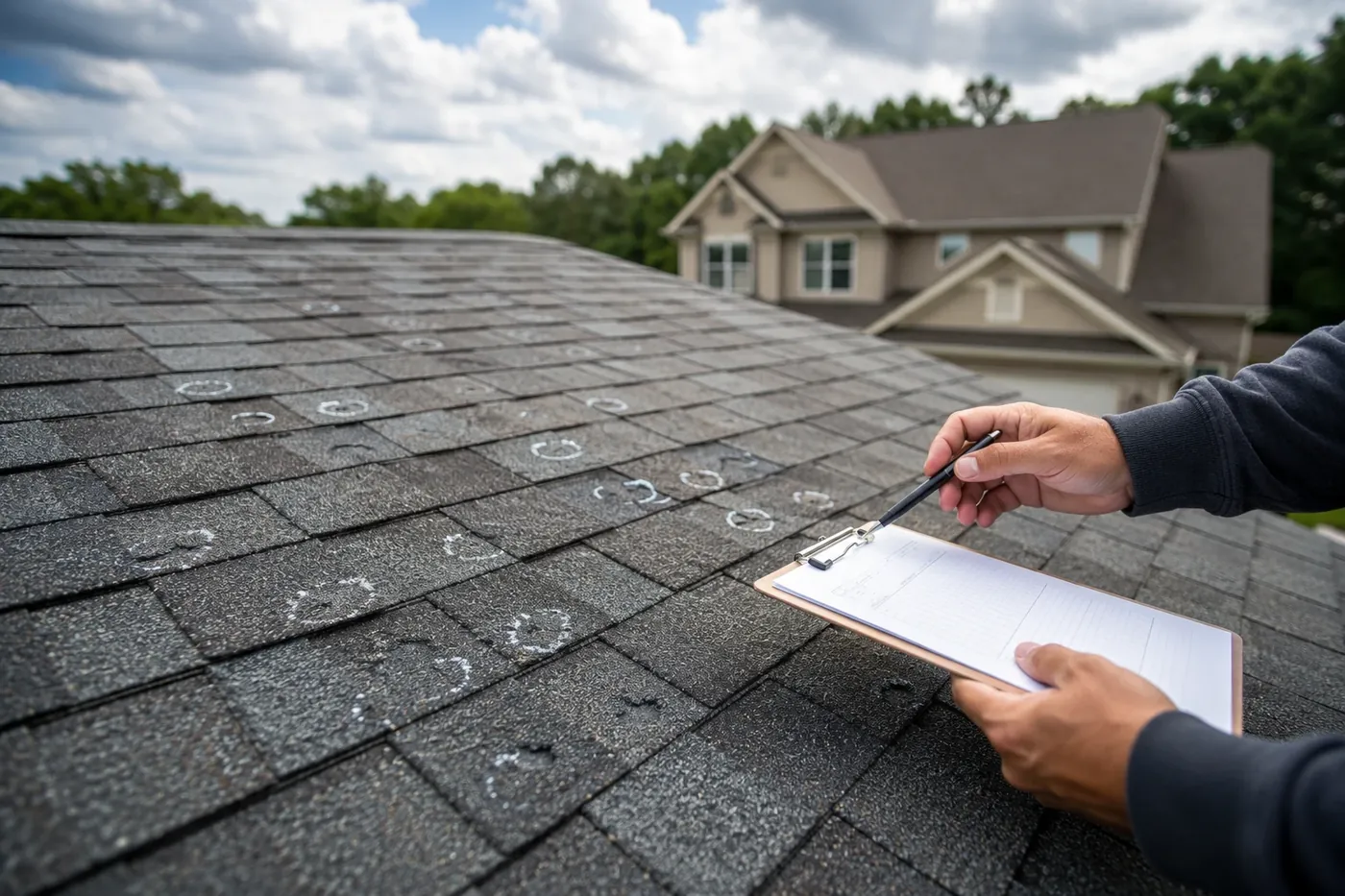
The field adjuster inspects the roof, marks hail hits in test squares and decides whether damage is functional. On shingles, the adjuster presses on hits to check for bruising and looks for exposed mat. On metal, the adjuster looks at dent depth, coating condition and seam integrity.
Engineering reviews
On larger or disputed claims, carriers sometimes hire engineers. Their reports carry weight, but they are opinions. They can be challenged with your own qualified inspection, photographs and manufacturer guidance.
Manufacturer guidance and policy language
Manufacturer installation and warranty documents can show whether damaged materials can be repaired or must be replaced. Ultimately, though, the policy language controls. A carrier cannot apply a cosmetic exclusion that is not in your policy, and it must apply the exclusion as written when it is.
What is a cosmetic damage exclusion?
A cosmetic damage exclusion, usually added by endorsement, removes coverage for hail or wind damage that only alters appearance. In Texas, these endorsements are common on metal roofs and increasingly appear on policies covering other roof types. Some endorsements define cosmetic damage specifically; others use general language that leaves room for disagreement.
- Check your declarations page and endorsements for terms like "cosmetic," "roof surface" or "metal roof limitation."
- Note whether the endorsement applies to all roof types or only to metal.
- Read how the endorsement defines damage that "affects the ability to prevent water intrusion" or similar language.
If you are not sure what your policy says, ask your agent for a certified copy of the full policy with all endorsements. The Texas Department of Insurance offers consumer guides to homeowners coverage at tdi.texas.gov.
Why does hail damage create so many cosmetic disputes?
Texas hail varies widely in size, density and wind angle, and the same storm can leave one roof with shallow dents and the next with fractured shingles. Common points of disagreement include:
- Whether shingle hits are bruises that fractured the mat or just surface marks.
- Whether metal dents have stressed seams, coatings or fasteners.
- Whether granule loss is from hail or normal aging.
- Whether damage is from the reported storm or an earlier one.
Evidence that may support functional damage includes close-up photos of fractured mats, cracked coatings, loose fasteners, water stains in the attic, and a qualified roofer's written findings. Collateral damage on soft metals helps establish hail size and direction.
When appraisers cannot agree on these issues, an umpire may decide the amount of loss. Learn how that works in what does an insurance umpire do.
What is the financial impact of a cosmetic damage determination?
A cosmetic determination can swing a claim from a full roof replacement to a small payment for accessories, or to nothing after the deductible. For example, if a carrier agrees a metal roof was hit by hail but classifies every panel dent as cosmetic, the estimate might include only dented ridge caps, vents and gutters. If you believe some panels are functionally damaged, the difference between those two views can be most of the roof's replacement cost.
Property value and resale
Even excluded cosmetic damage stays with the house. Buyers, home inspectors and future insurers may notice a dented or mottled roof. Some carriers will also note pre-existing cosmetic damage when you buy a new policy, which can complicate future claims. Keep thorough records so the condition of the roof after this storm is clear.
Long-term maintenance considerations
Damage that looks cosmetic today can become a maintenance problem later if coatings were compromised or shingles lost protective granules. Ask your roofer whether the damage will shorten the roof's life or require earlier repairs. That opinion is useful evidence, and it helps you plan if the claim is not paid in full. If depreciation is withheld on the portion that is paid, our recoverable depreciation calculator shows how much you may recover once work is completed.
Texas roofs, cosmetic damage and appraisal
Metal roofs have become popular across Texas, from Hill Country homes near Austin and New Braunfels to rural properties around Waco and the Panhandle. That popularity, combined with frequent hail, makes cosmetic damage disputes common here.
Can appraisal help? It depends on the dispute. Under State Farm Lloyds v. Johnson (Tex. 2009), Texas appraisers determine the amount of loss and may assess the extent and cause of damage, but they do not decide coverage. Whether specific dents are cosmetic or functional is often a damage question appraisers can evaluate; whether an exclusion applies at all is a coverage question. This is general information, not legal advice.
Appraisal tends to work well for disputes such as how many shingles are functionally damaged, whether repairs are feasible, and the cost to repair or replace accessories and functionally damaged areas. See can appraisal be used for roof claims and our insurance estimate for metal roof damage guide for more detail.
How can homeowners strengthen a roofing claim?
- Get an independent roof inspection from a qualified roofer who documents functional damage specifically.
- Document thoroughly with close-ups, scale references and photos of every slope, accessory and interior stain. Use our claim documentation checklist.
- Preserve weather information showing hail size and storm date for your location.
- Read your policy, including every endorsement, before arguing about coverage.
- Get professional guidance when the carrier's position and your evidence are far apart.
Common mistakes to avoid
- Assuming visible damage guarantees coverage.
- Accepting the first cosmetic determination without asking for the reasoning in writing.
- Making repairs before documenting the damage.
- Waiting so long that the carrier can argue a later storm caused the damage.
Next steps after a cosmetic damage determination
If your carrier calls your roof damage cosmetic, ask for the inspection photos, any engineering report and the specific policy language it relied on. Compare those with your own roofer's findings. If the disagreement is about how much damage is functional or what repairs cost, appraisal may be the most efficient path. Keep every request and response in writing so your record is complete if the dispute escalates.
TX Insurance Appraiser represents Texas policyholders as their appraiser and can review your estimate, photos and policy before you decide anything. Learn more about our insurance appraisal services.
Frequently asked questions
Is hail damage on a metal roof always cosmetic?
No. Shallow dents with intact coatings and seams are often considered cosmetic, but dents that crack coatings, distort seams, loosen fasteners or puncture panels can be functional. The difference depends on a careful inspection of each damaged area, so get a qualified roofer to document what the dents have actually done to the panels.
How do I know if my policy has a cosmetic damage exclusion?
Review your declarations page and the list of endorsements attached to your policy. Look for terms such as cosmetic damage, roof surface limitation or metal roof exclusion. If you cannot find your full policy, ask your agent or carrier for a certified copy that includes every endorsement in effect on the date of loss.
Can granule loss on shingles be functional damage?
Yes. Light scattered granule loss is often treated as cosmetic or wear, but hail impacts that remove granules and expose or fracture the asphalt mat can shorten the shingle's life and allow water intrusion. Close-up photos showing exposed mat and bruising under pressure help establish functional damage.
Can I dispute a cosmetic damage denial?
Yes. Ask the carrier for its inspection photos, engineering report and the exact policy language it relied on. Provide your own roofer's written findings and photos showing functional damage. If the disagreement is about the extent of damage or cost of repair, appraisal may be available; if it is purely about coverage, legal advice may be needed.
Does cosmetic roof damage affect home value?
It can. Buyers and home inspectors may notice dented metal or patchy shingles, and some HOAs require uniform roofs. Even when cosmetic damage is excluded from coverage, it is worth documenting so you have a clear record of the roof's condition for future claims, sales or maintenance planning.

About the author: Joseph Dittman
Joseph is the lead appraiser at TX Insurance Appraiser and a Texas-licensed public adjuster (Rise Public Adjusting LLC, TDI license #3356839). He has spent his career inspecting hail, wind, water and fire losses and negotiating property claims across Texas. More about Joseph.
This article is general information about property insurance claims in Texas and is not legal advice. Policy language and facts vary; review your policy or consult a Texas attorney for legal questions.